How do you check color vision without jumping straight to a diagnosis? You can screen it at home with an online or printed color blind test, but screening is not the same as a clinical exam. This guide explains what home tests can show, where they fall short, and when a proper eye exam in Waterloo makes more sense.
What it means to check color vision
Checking color vision means screening how well you tell certain colours apart, not proving a diagnosis. A home screen can flag a possible color vision deficiency, but it cannot confirm the cause, severity, or whether the change is congenital or acquired.
A color vision deficiency can affect red-green discrimination, blue-yellow discrimination, or in very rare cases most colour perception overall. Red-green defects are the ones standard Ishihara-style plates are mainly designed to detect.
An adult color blind test is useful when colours at work, school, driving, design tasks, or daily life do not look as expected. It is also reasonable when one eye seems different from the other, or when colour perception has changed over time, because a change in colour vision deserves professional review.
How to check color vision at home step by step
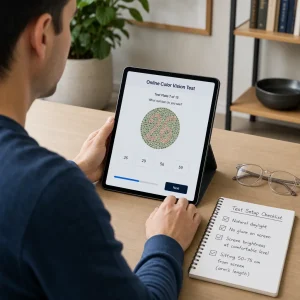
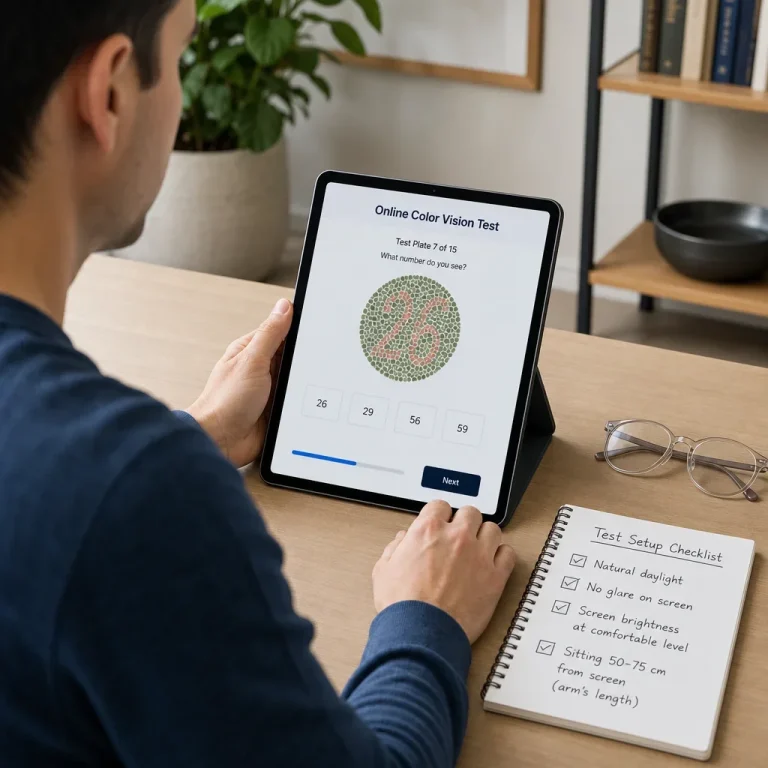
A good at home color blind test starts with setup, because bad setup can change the result. Use neutral room lighting, avoid glare and direct sun on the screen, and use a desktop or tablet if you can because screen quality is usually more stable than an older phone display.
Display settings matter more than most people think when you check eye colour vision online. Turn off Night Shift, True Tone, blue-light filtering, accessibility colour filters, vivid display modes, and browser extensions that alter colour before you start.
You should wear your usual clear prescription glasses if you need them to focus at screen distance. You should remove tinted lenses, darkened photochromic lenses, coloured contacts, and colour-enhancing glasses because they can distort plate colours.
Viewing distance should stay around 50 to 75 cm for many online Ishihara-style tests, and response time is commonly kept to about 3 to 7 seconds per plate when a test follows standard-style screening rules. These figures vary by test design, so follow the instructions for that specific test if they differ.
Testing both eyes together first is practical for home screening, and testing one eye at a time can help if results feel uneven. If the right and left eye give different answers, that is a stronger reason to book an in-person exam rather than keep repeating a color perception test online.
Retesting only helps after you fix the setup problem. If you repeat the same plates on several devices without correcting brightness, tint, glare, or lens issues, you may only be measuring the device and your memory, not your colour vision.
Quick pre-test checklist
- Use neutral indoor lighting.
- Avoid screen glare and direct sunlight.
- Turn off colour-altering display settings.
- Wear clear prescription glasses if needed for focus.
- Remove tinted lenses and coloured contacts.
- Sit about 50 to 75 cm from the screen.
- Answer each plate within about 3 to 7 seconds if instructed.
- Test each eye separately only if results seem uneven.
How the Ishihara test works
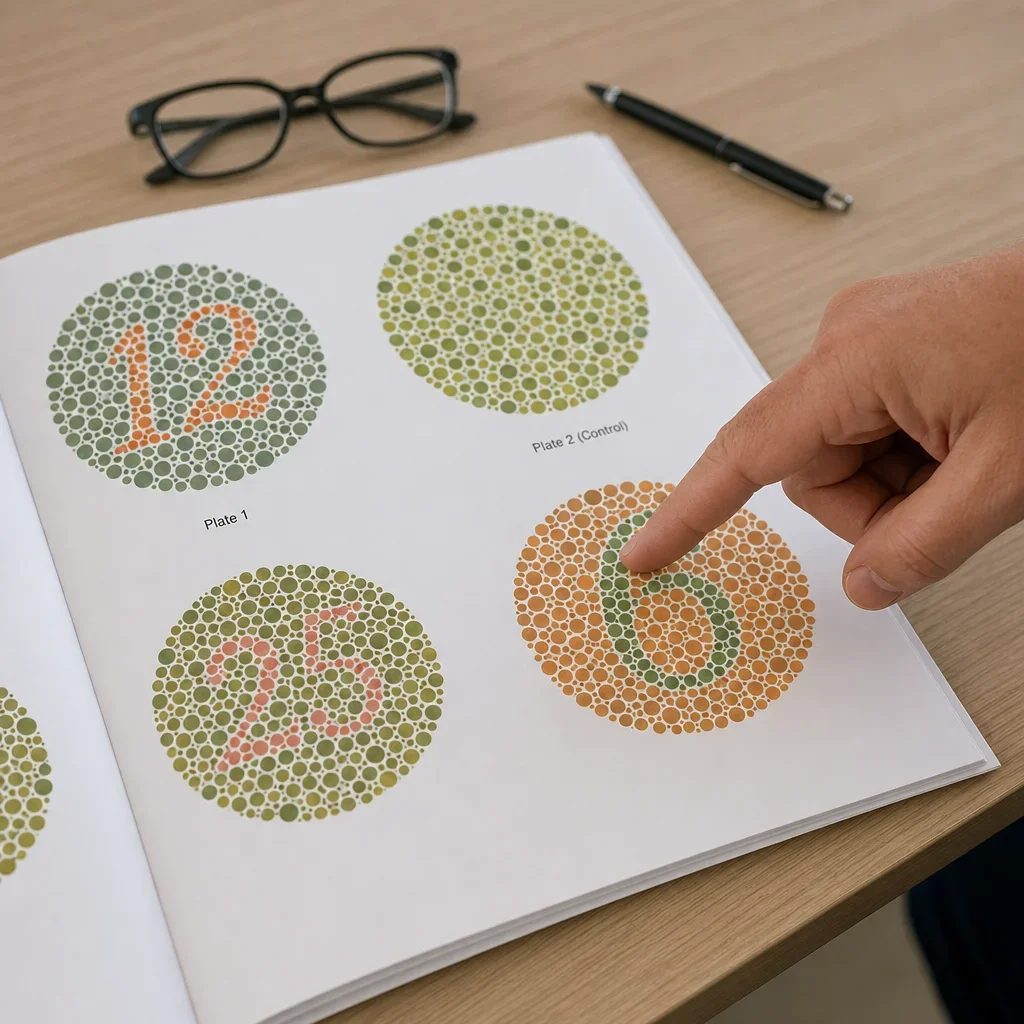
The Ishihara color blind test uses pseudoisochromatic plates, which are dot patterns made from colours and brightness levels that look similar to people with certain colour vision defects. Inside those dots is a number or path that someone with typical colour vision may see differently from someone with a red-green defect.
This chart for color vision is mainly a red-green screening tool, not an all-purpose colour vision exam. It can help sort likely normal from possible protan or deutan patterns, but it is not the right test for every colour problem.
Some plates act as demonstration or control plates, while others are meant to screen or help classify red-green deficiencies. Some versions use numbers, and some use tracing lines for people who cannot easily read numbers, including children or non-readers.
The full Ishihara edition is commonly described as 38 Ishihara plates, with shorter 24 plate Ishihara test and 14-plate screening versions also in use. Online versions may borrow these labels, but they do not automatically match the printed clinical edition or its testing conditions.
38 vs 24 vs 14 plate Ishihara tests: what each version can tell you
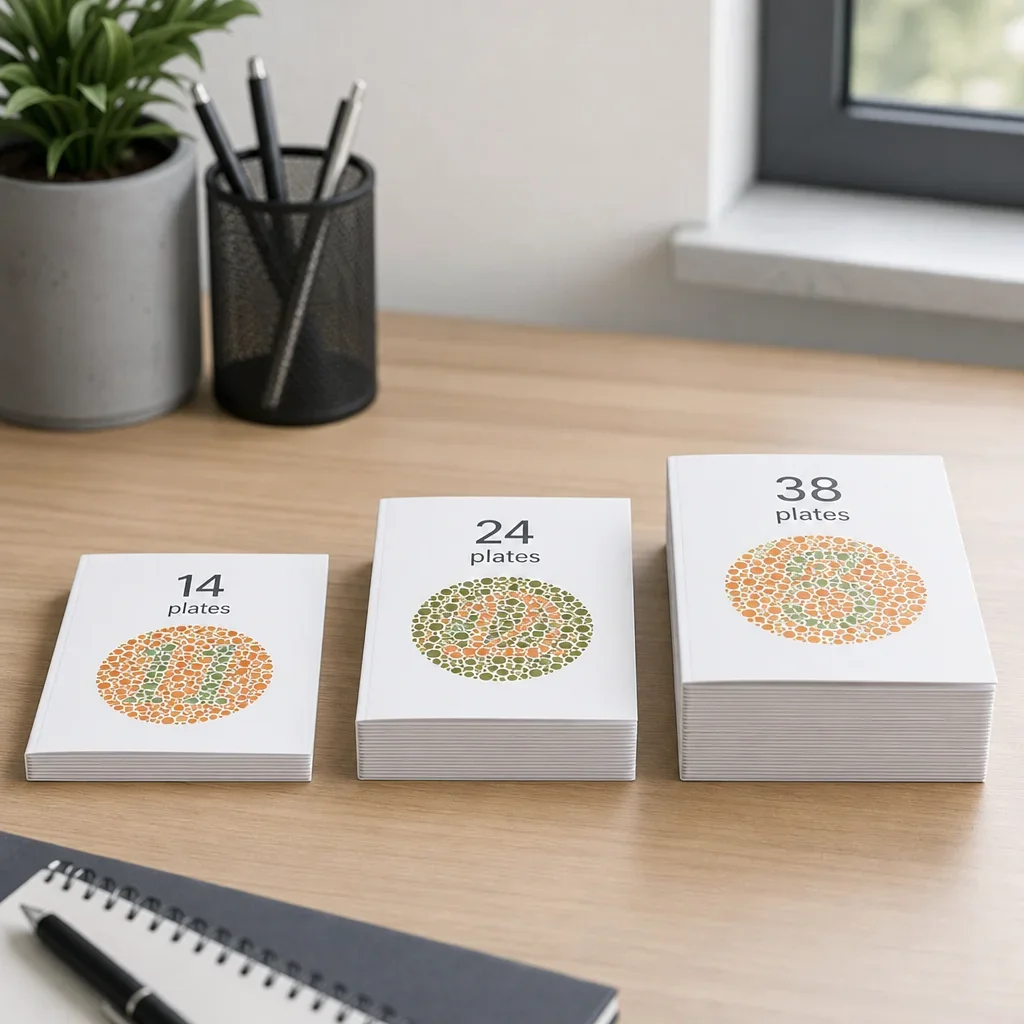
The difference between 14-, 24-, and 38 plate Ishihara test versions is depth, not just length. Shorter versions are built for faster screening, while longer versions can give more classification detail and a more reliable screen when the test is administered properly.
An online test that claims to be a 24 plate Ishihara test or full 38-plate version can still behave differently from the printed standard. Screen calibration, image compression, and display size can all change plate appearance.
| Version | Typical use | Strengths | Limits | Best used for |
|---|---|---|---|---|
| 14 plates | Quick screening | Fast and simple | Less detail for classification | Basic self-screening |
| 24 plates | Standard-style screening | More confidence than a very short test | Still mainly red-green focused | Better home screening if setup is good |
| 38 plates | Full printed edition style | Broadest plate set in this family | Online copies may not mirror official conditions | Clinical-style screening, not a web diagnosis |
If you want a fast answer, a shorter screen may be enough to tell you whether further testing is worth it. If you need clearer interpretation for school, work, or a recent change in colour perception, the longer plate sets still do not replace a proper exam.
How to interpret Ishihara results
You read an Ishihara result by looking at the pattern of responses, not one missed plate. The three common outcomes are seeing the expected figure, seeing a different figure, or not seeing a figure clearly at all.
Seeing the control plate clearly does not rule out all colour vision issues. A person can read a demonstration plate and still miss red-green screening plates later in the test.
If you see a different number than expected, that can point toward a red-green pattern the test is built to catch. If you cannot see a number on some plates, that can mean the target colour difference is falling into a confusion range for your eyes, or it can mean the screen conditions are poor.
One or two unusual answers on an online test do not confirm color blindness. A meaningful pattern across multiple plates matters more than a single miss, and your actual interpretation depends on the edition, scoring protocol, and whether the test was shown under proper conditions.
There is no single universal normal score you can apply to every online Ishihara clone. Passing cutoffs vary by edition and protocol, so a website that gives a rigid pass-fail score without naming the exact version should be treated as a screen, not a diagnosis.
Plain-language result guide
| What your answers look like | What it may mean | What it does not prove | Next step |
|---|---|---|---|
| Most plates read clearly and consistently | Likely normal screen | It does not rule out every color vision issue | Stop if no symptoms, or book an exam if concerns remain |
| Several red-green style plates are missed or read differently | Possible red-green deficiency | It does not prove protan or deutan subtype on its own | Repeat once under proper conditions, then book an exam if similar |
| Results change a lot between devices or retakes | Likely invalid or inconsistent online conditions | It does not prove normal or abnormal colour vision | Fix setup and retest once |
| One eye performs differently from the other | Needs professional testing | It does not prove a specific disease from a web page | Book a comprehensive eye exam |
Quick chart: what your result pattern may suggest
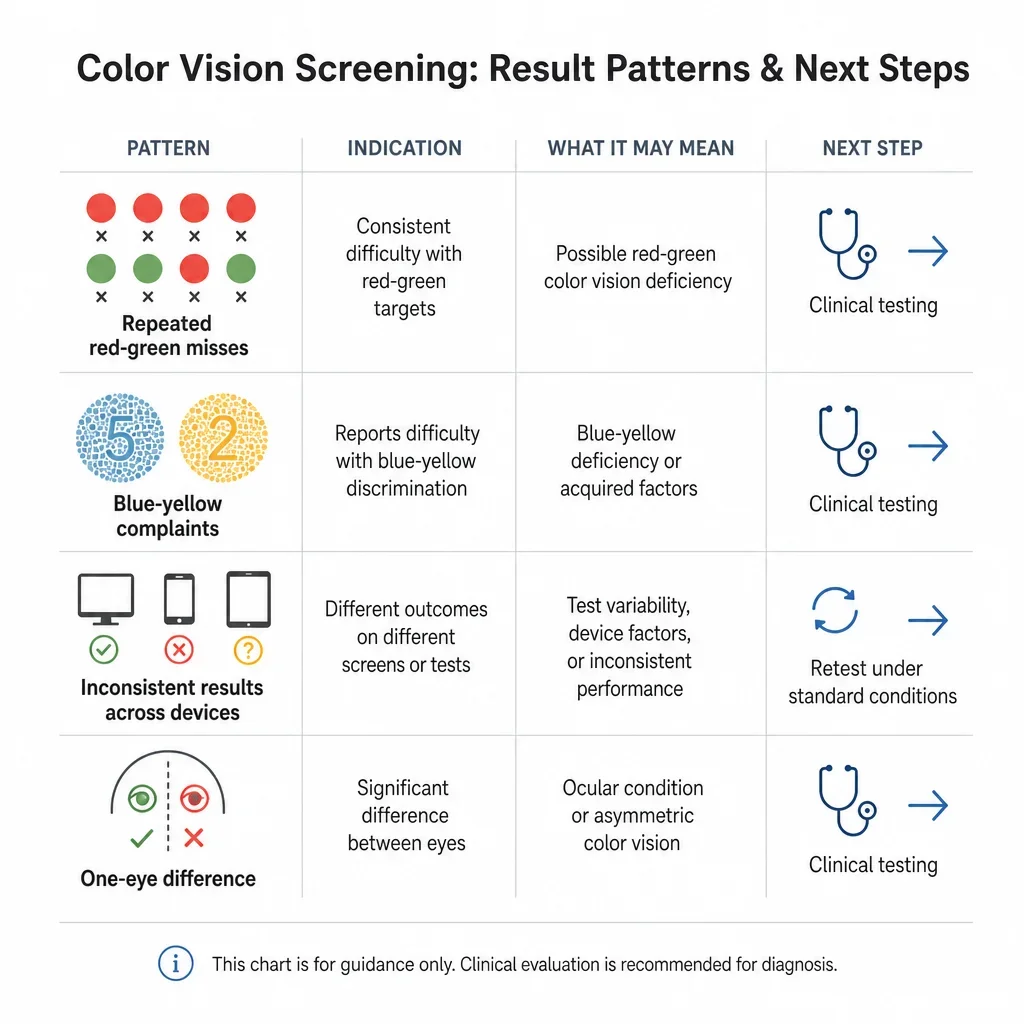
A broad pattern can suggest where the issue sits, but a single online screen should not be used to diagnose subtype. A deutan color blind test pattern and a protan color blind test pattern can look similar to a non-specialist, which is why proper classification matters.
| Result pattern | What it may suggest | What it does not prove | Next step |
|---|---|---|---|
| Repeated misses on red-green Ishihara-style plates | Possible congenital red-green deficiency | It does not reliably separate every protan from every deutan case online | Clinical colour testing if confirmation matters |
| Dimmer or weaker response to some red targets | Broad protan-type possibility | It does not confirm protanopia or severity | In-clinic testing for classification |
| Confusion that leans more toward green differentiation | Broad deutan-type possibility | It does not confirm deuteranopia or severity | In-clinic testing for classification |
| Blue-yellow complaints with normal Ishihara screen | Possible tritan pattern or non-red-green issue | Ishihara may miss blue-yellow defects | Use a different colour vision test in clinic |
| Widespread failure across several test types | More complex colour vision problem | It does not prove total colour blindness from screening alone | Full eye exam and diagnostic testing |
An advanced color blind test or advanced color vision test is useful when classification matters more than quick screening. That is especially true if testing is needed for school forms, workplace documentation, or a recent change in colour perception.
Blue-green, black-green, and blue-yellow color blind tests explained
“Blue-green color blindness” is common search language, but it is not a standard standalone medical classification. People often use a blue green eye test, blue and green color blind test, or black green color blind test phrase to describe colour confusion they notice, even though formal categories are usually red-green or blue-yellow defects.
A person who says blue and green look too similar may still have a red-green deficiency, because everyday colour naming does not map neatly to clinical subtype names. That is why an online blue color vision test can be suggestive but not definitive.
A true blue and yellow color blind test looks for tritan-type defects, which are different from the red-green defects Ishihara plates are built to catch. If your main complaint is confusion between blue and green tones, yellow and light gray, or colours looking unusually muted, a standard Ishihara screen may miss that pattern.
Tritan defects are rarer than red-green defects, and they can be congenital or acquired. Because acquired blue-yellow changes can be linked to eye or health issues, a new change in blue-yellow discrimination deserves a proper eye exam rather than repeated web testing.
What do protan, deutan, tritan, and achromatopsia mean?
Protan defects involve the red-sensitive cone pathway, and deutan defects involve the green-sensitive cone pathway. In plain language, both can cause red-green confusion, but they do not affect colour brightness and discrimination in exactly the same way.
Tritan defects involve the blue-sensitive cone pathway. A tritanomaly color blindness test looks for reduced blue-yellow discrimination, while tritanopia refers to a more complete loss of that pathway.
The difference between anomalous trichromacy and dichromacy is degree. Anomalous trichromacy means all three cone systems are present but one works abnormally, while dichromacy means one cone pathway is effectively absent.
Achromatopsia is total or near-total lack of normal colour perception and is one form of what people mean by being “100% color blind.” It is rare, and it usually involves more than colour loss alone, which is one reason an all color blind test does not exist as one simple online screen.
The rarest type and the most severe type are not always the same thing. Tritan defects and achromatopsia are both much less common than red-green defects, but severity depends on the exact condition, how much colour discrimination is lost, and whether other vision symptoms are present.
When Ishihara is not enough: other color vision tests
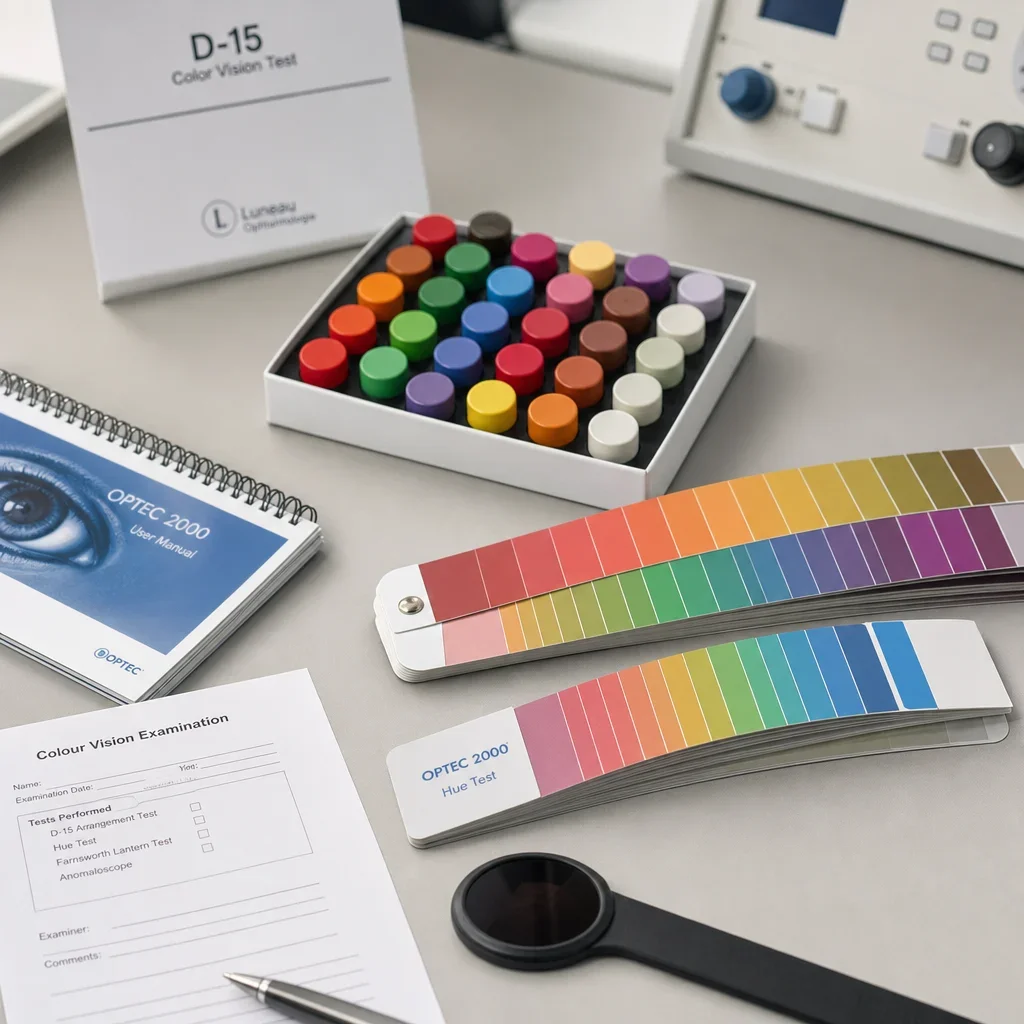
The most accurate color blind test depends on what you are trying to find. Ishihara is strong for red-green screening, but it is not the best answer for every colour complaint or every diagnostic question.
A color perception test measures how well you distinguish colour differences, but different tests measure that in different ways. Some sort broad screening, some classify patterns, and some are used for detailed diagnostic work.
The Farnsworth D15 arranges coloured caps in sequence and helps show confusion patterns. The Farnsworth Munsell 100 Hue test is a more detailed hue-ordering test, and its score is based on total error, where lower scores are better and a perfect score is 0.
An anomaloscope is widely regarded as a reference-standard instrument for precise colour matching in certain red-green assessments, but it is a clinical device, not a home tool. That is why the answer to “what is the most accurate color vision test” depends on the purpose and the defect being assessed.
| Test | Best for | Limits | Online or in clinic |
|---|---|---|---|
| Ishihara plates | Red-green screening | Limited for blue-yellow and full diagnosis | Both, but clinic is more controlled |
| Farnsworth D15 | Confusion pattern screening | Not a full substitute for all diagnostic testing | Usually clinic-based |
| Farnsworth-Munsell 100 Hue | Detailed hue discrimination | Longer and more setup-sensitive | Better in clinic or calibrated conditions |
| Symbol or path-based tests | Children and non-readers | Depends on test design | Both, depending on format |
| Anomaloscope | Precise diagnostic classification in some cases | Specialized equipment | Clinic only |
If you want a true advanced color vision test, you are usually moving beyond simple plate recognition and into controlled clinical testing. That matters when a school, employer, or doctor needs more than a casual online screen.
Why online color blind test results can be wrong or inconsistent
Online results can change because the test conditions changed, not your eyes. Poor screen calibration, colour-shifting display modes, glare, fatigue, rushing, tinted lenses, and low-quality copied plates are all common reasons an online result is unstable.
Yes, you can fail an Ishihara-style screen and not actually have a fixed congenital colour vision deficiency. A warm display tint, heavy blue-light filter, darkened photochromic lenses, or low image contrast can produce misses that disappear under proper conditions.
Harder tests often feel less forgiving because they use more subtle colour differences or reduce the time you have to answer. A so-called hardest color blind test online may simply be less standardized, less accurate, or more affected by your device than a straightforward screening test.
If your answers shift between a phone and a laptop, the device is part of the story. Different screens use different colour profiles, brightness ranges, white points, and viewing angles, so one device may make a plate easier or harder to see than another.
The best troubleshooting sequence is simple. Fix display settings, improve lighting, remove tinted lenses, rest your eyes, switch to a better screen if needed, and then retest once. If the result is still inconsistent, stop testing and get professional interpretation.
Adults, children, driving, jobs, and licensing
Adults often discover a colour vision issue later than expected because childhood screening was missed or because work demands make colour confusion more obvious. An adult color blind test is also reasonable when colour changes are new, because acquired colour vision changes should not be brushed off as “just colorblindness.”
Children can take colour vision tests, but number plates are not ideal for every age. Symbol-based or path-tracing tests are often better for young children or for anyone who cannot easily read numbers.
Many people with color vision deficiency can drive. Driving rules and occupational standards vary by jurisdiction and role, so a web page should not be your only source if you need a licensing answer for aviation, transportation, public safety, electrical work, or another safety-sensitive job.
Job-related testing usually needs documented, standardized assessment rather than a free website result. If work or school requirements are involved, ask exactly which test format is accepted before you rely on any online screen.
When to book a professional color vision exam
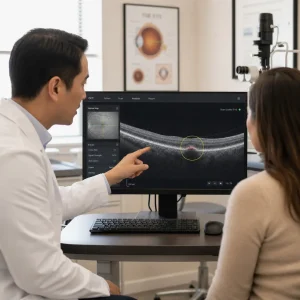
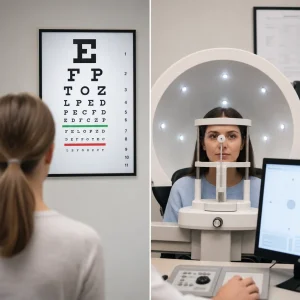
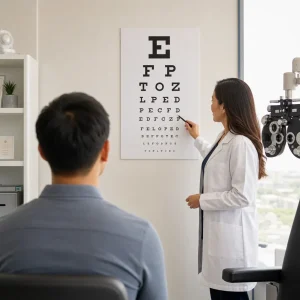
You should book an eye exam after online screening if results are inconsistent, one eye seems different, colour perception has changed, or documentation is needed for work or school. Those situations call for controlled testing and a broader look at eye health.
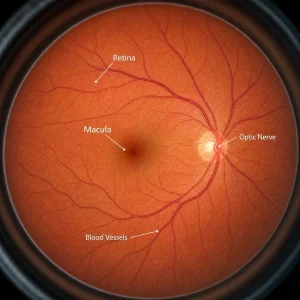
A professional exam matters even more when colour vision changes are new. Acquired changes can be associated with retinal problems, optic nerve disease, medications, cataracts, and other health factors that an online screen cannot sort out.
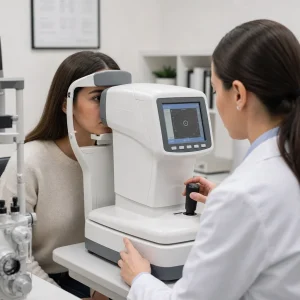
For Waterloo and Kitchener readers, the sensible next step is a comprehensive eye exam with a licensed optometrist if home results are unclear or concerning. At Premier Optical, that means professional testing, explanation in plain language, and all-in-one care under one roof, with direct insurance billing available if your plan allows.
This article is general information, not a diagnosis. If you want confirmation after a home screen, book a comprehensive eye exam instead of trying to force a cleaner result from repeated online tests.
FAQ
How do I check my color vision at home?
Use a reputable online screening test under neutral indoor lighting, turn off colour-altering display settings, wear only clear prescription lenses if needed, sit about 50 to 75 cm from the screen, and follow the timing instructions given by the test.
Is there a free online color blind test?
Yes, free online screening tests exist, including Ishihara-style plate tests and other colour arrangement tools. They are useful for screening, but they are not the same as a diagnostic eye exam.
Do color blind tests actually work?
They work reasonably well as screening tools when the setup is controlled and the test is well designed. They do not replace clinical testing for diagnosis, subtype classification, or investigating a new change in colour vision.
How do I interpret an Ishihara color plate test?
Look for the overall pattern, not one missed plate. Seeing the expected figure repeatedly suggests a normal screen, while repeated missed or substituted figures on red-green plates suggest a possible red-green deficiency that may need confirmation.
What is the difference between a 14-, 24-, and 38-plate Ishihara test?
The 14-plate version is a quicker screen, the 24-plate version gives more screening detail, and the 38-plate version reflects the full printed edition style most closely. More plates can improve screening depth, but an online copy still does not equal a clinical diagnosis.
What is a normal score on the Ishihara test?
There is no single universal normal score for every version online. Normal and fail thresholds depend on the exact edition and scoring protocol, so the safest reading is based on the pattern of correct versus incorrect responses, not a generic website claim.
Can you fail the Ishihara test and not be colorblind?
Yes. Poor screen quality, display tint, glare, fatigue, rushing, or tinted lenses can produce a failed online screen even when colour vision is otherwise normal under proper testing conditions.
Can an Ishihara test detect blue-yellow color blindness?
Not reliably. Ishihara is mainly for red-green screening, so suspected blue-yellow problems usually need different test types.
Can people be 100% color blind?
Yes, total or near-total colour vision loss can occur in rare conditions such as achromatopsia. It is rare and usually needs full clinical assessment because it involves more than a simple online score.
What does tritanopia look like?
Tritanopia is a blue-yellow colour vision defect. People may confuse blue with green more than expected, yellow with light gray, or find colour separation flatter and less distinct.
What is the most accurate color vision test?
There is no single best test for every purpose. Ishihara is strong for red-green screening, while more advanced clinic-based tests such as hue arrangement tests or anomaloscope testing are used when more precise classification is needed.
Can I drive if I’m colorblind?
Many people with color vision deficiency can drive. Specific legal or occupational requirements vary, so check the applicable licensing authority if your question is tied to a commercial or safety-sensitive role.
Can children take a color vision test?
Yes, but children may do better with symbol or tracing-based tests than with number plates. The right format depends on age, reading ability, and attention span.
Can color blind glasses affect online test results?
Yes. Tinted or colour-enhancing lenses can change what you see on the screen and make results less reliable, so remove them before testing.
When should I see an eye doctor after an online color blind test?
Book an exam if results are inconsistent, one eye differs from the other, colours seem to have changed recently, or you need reliable documentation for work or school. If you are in Waterloo or Kitchener, booking a comprehensive eye exam is the cleanest next step.