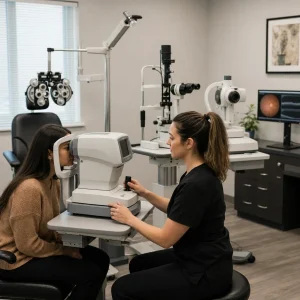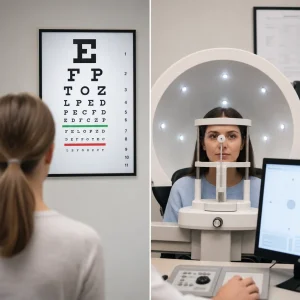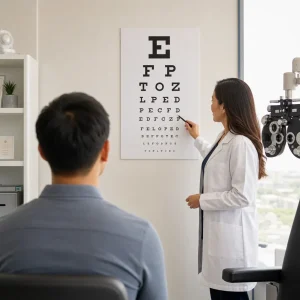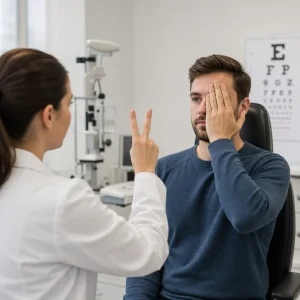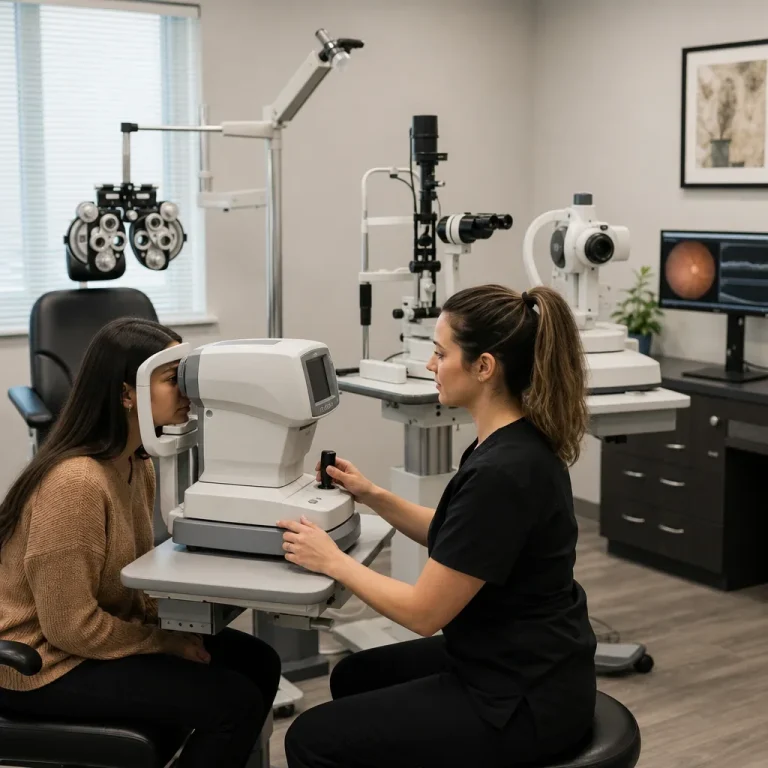
Most people search for an eye exam machine as if there is one main device. There usually isn’t. A comprehensive eye exam uses several machines and hand-held tools, and each one does a different job.
What is the eye exam machine called? A direct answer
There is no single eye exam machine called one standard name. A full exam usually uses multiple devices, including an autorefractor, phoropter, tonometer, slit lamp, retinal camera, and sometimes OCT or a visual field machine .
The machine that checks your eyes can mean different things depending on the test. If someone means the machine you look into first, they often mean the autorefractor or another pre-test device; if they mean the machine used for “1 or 2,” they usually mean the phoropter .
A comprehensive exam combines digital measurements with optometrist judgement. Machines measure, estimate, image, or screen, but the final prescription and eye health assessment still depend on the full in-person exam .
Eye exam machines and instruments: the most common devices and what each one does
The most common equipment used in eye examination falls into a few groups: tools that estimate prescription, tools that refine it, tools that measure eye pressure, and tools that examine or image eye health .
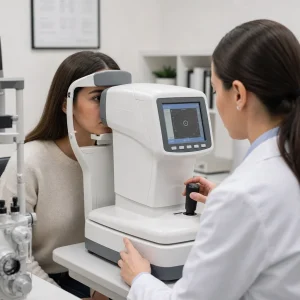
An autorefractor is an automated starting-point machine. You look at a target inside it, often a balloon, house, or road scene, and the machine estimates how light focuses in your eye .
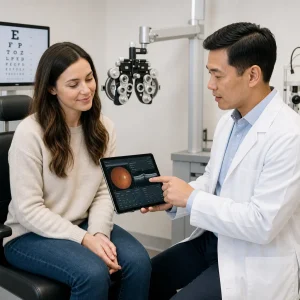
A phoropter is the large device placed in front of your face during refraction. It lets the optometrist compare lenses and fine-tune your prescription with the familiar “which is clearer, 1 or 2?” test .
A visual acuity chart checks how well you see letters or symbols at distance and near. This is one of the basic eye exam instruments and helps measure functional vision, not just lens power .
A retinoscope is a hand-held light used to observe how light reflects off the retina. It is especially useful when a patient cannot give clear subjective answers, including some children or fatigued patients .
A lensometer measures the prescription in your current glasses. It checks the lens power you already wear rather than measuring your eyes directly .
A tonometer measures intraocular pressure, which means the pressure inside the eye. The best-known version is the air-puff machine, but pressure can also be checked with other methods depending on the clinic and the test needed .
A slit lamp, also called a biomicroscope, uses a bright light and magnification to examine the front of the eye. It helps the optometrist assess structures such as the eyelids, cornea, iris, and lens .
An ophthalmoscope is a hand-held instrument used to look inside the eye. It helps assess the retina, optic nerve, and blood vessels as part of an eye health exam .
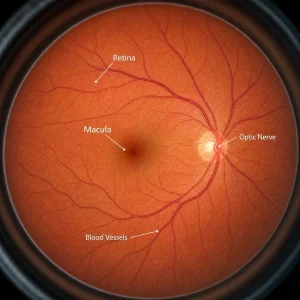
A retinal camera, also called a fundus camera, takes pictures of the back of the eye. That makes it an imaging tool rather than a prescription tool .
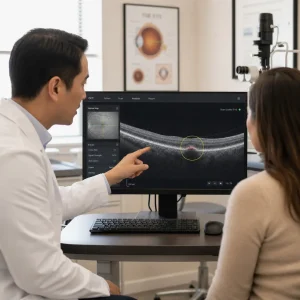
OCT, short for optical coherence tomography, is an imaging test that creates cross-sectional views of retinal layers and optic nerve structures. It helps document anatomy in more detail than a standard surface photo .
A visual field machine checks peripheral vision one eye at a time. This test measures function, not just appearance, and is commonly used when side vision or optic nerve concerns need closer assessment .
A keratometer or corneal topographer measures corneal curvature. That matters for contact lens fittings and for understanding how the front surface of the eye affects vision .
Not every patient needs every piece of eye exam equipment at every visit. The exact mix depends on age, symptoms, prescription changes, medical history, and what the optometrist needs to confirm .
Eye exam machine comparison table
| Machine or instrument | What it does | Touches the eye? | Dilation needed? | What it helps assess |
|---|---|---|---|---|
| Autorefractor | Gives a starting estimate of prescription | No | No | Refractive error |
| Phoropter | Refines the prescription subjectively | No | No | Final glasses prescription |
| Visual acuity chart | Measures how clearly you see letters or symbols | No | No | Distance and near vision |
| Tonometer | Measures eye pressure | Sometimes no, sometimes yes depending on method | No | Intraocular pressure |
| Slit lamp | Magnified exam of the front of the eye | No, but you sit at a chin rest | No | Cornea, lens, lids, iris, tear film |
| Retinal camera | Takes images of the back of the eye | No | Sometimes | Retina and optic nerve documentation |
| OCT | Cross-sectional eye imaging | No | Sometimes | Retinal layers and optic nerve structure |
| Visual field machine | Measures side vision response | No | No | Peripheral vision function |
| Keratometer/topographer | Measures corneal curvature | Usually no in routine modern setups | No | Corneal shape and contact lens fitting |
| Retinoscope | Objective prescription assessment with light reflex | No direct contact | No | Refractive error estimate |
What happens during an eye exam with machines, step by step
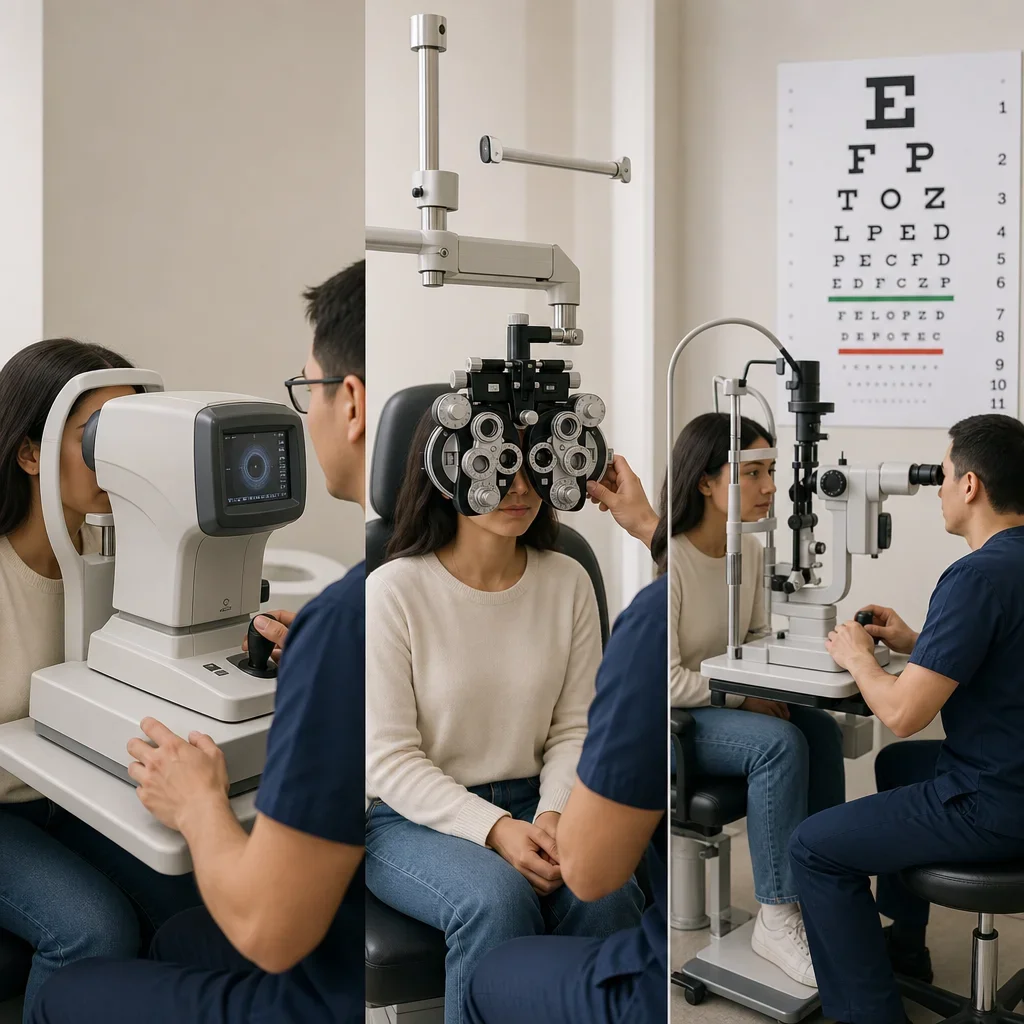
A typical eye exam with machine testing starts with history, symptoms, and a basic vision check before moving into automated pre-testing. That order helps gather baseline measurements before the optometrist refines the findings .
The first machine is often a pre-test device such as an autorefractor or another computerized eye testing machine. This part usually takes only a few minutes per test .
The autorefractor test usually feels simple and non-contact. You rest your chin, look at a target inside the device, keep your eyes steady, and the machine captures measurements automatically .
The eye pressure check may happen early in the visit as well. If an air-puff method is used, you feel a quick burst of air that is more startling than painful for most patients .
The prescription is then refined manually with the phoropter. This is the part where lens choices flip and you compare clarity while the optometrist balances sharpness with comfort .
The slit lamp exam usually comes after the refraction. You place your chin on a rest while a bright beam of light helps the optometrist examine the front of the eye in detail .
Retinal imaging, dilation, or both may follow if the doctor needs a better view of the back of the eye. The exact order varies by symptoms, age, medical history, and the findings from earlier tests .
Additional testing such as digital eye testing machine scans, visual field testing, or contact lens measurements is added only when it answers a specific clinical question. A full appointment length varies by patient and by the tests ordered, while individual automated pre-tests are usually brief .
Autorefractor vs phoropter: what’s the difference?
An autorefractor and a phoropter are not interchangeable. The autorefractor gives an automated estimate, while the phoropter helps finalize the prescription through live lens comparisons .
The autorefractor works by analyzing how light changes as it passes through your eye. That makes it a useful computer eye testing machine, but it does not replace the rest of the exam .
The phoropter is the device used during subjective refraction. It matters because the clearest technical measurement is not always the most comfortable prescription for real-world seeing .
Computerized readings are helpful starting points, not final answers. Prescription accuracy still depends on the complete exam, the patient’s responses, and the optometrist’s interpretation .
The puff-of-air test and other eye pressure machines
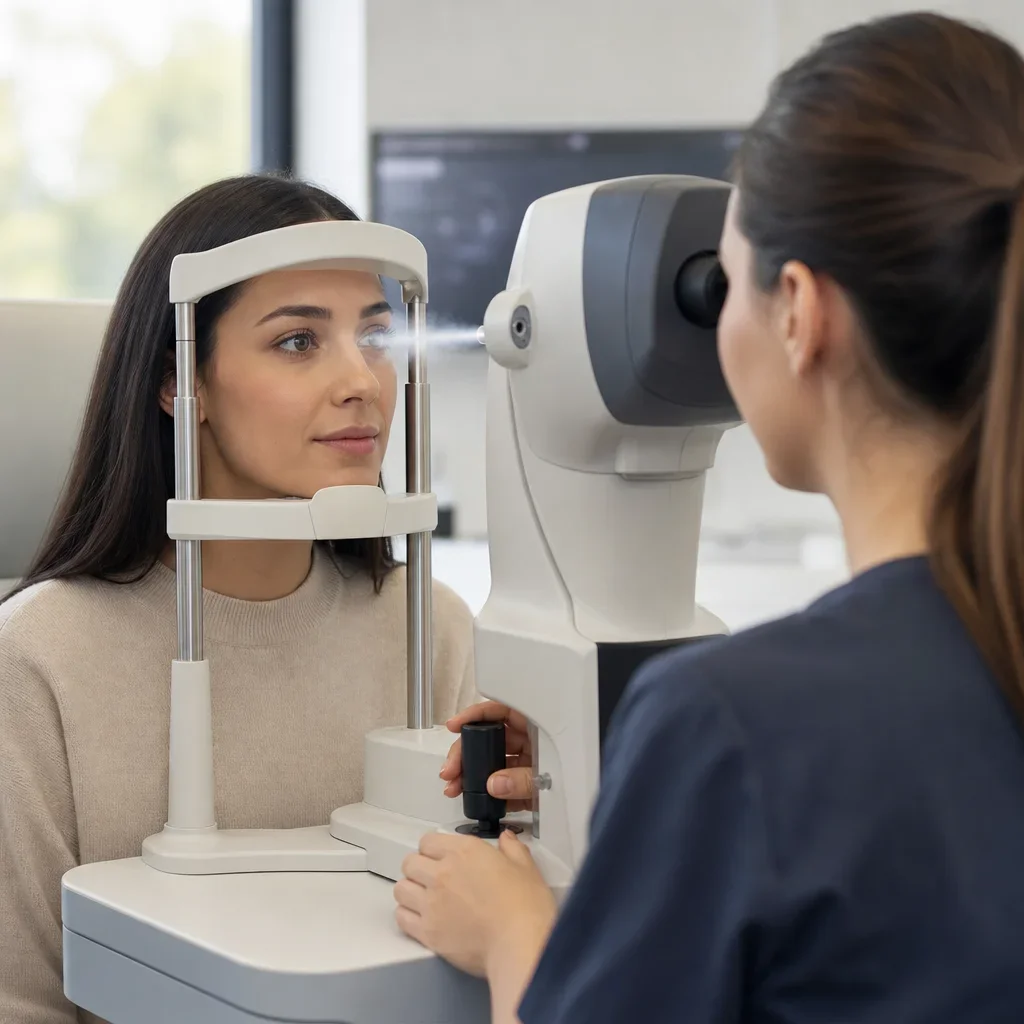
The eye doctor machine that blows air is a type of tonometer. Its job is to measure intraocular pressure, which is one data point used in assessing eye health .
The air-puff test is a non-contact pressure check. Nothing touches the eye in that version of tonometry .
A tonometer is usually quick rather than painful. Many patients dislike the surprise more than the sensation itself .
Eye pressure alone does not diagnose glaucoma. Glaucoma assessment may also involve optic nerve evaluation, imaging, visual field testing, and the doctor’s overall clinical findings .
If a pressure reading is outside the expected range or does not match the rest of the exam, further testing may be needed. That is why a pressure machine is part of the picture, not the whole diagnosis .
Retinal camera, OCT, and visual field testing: which machine checks for glaucoma and retinal disease?
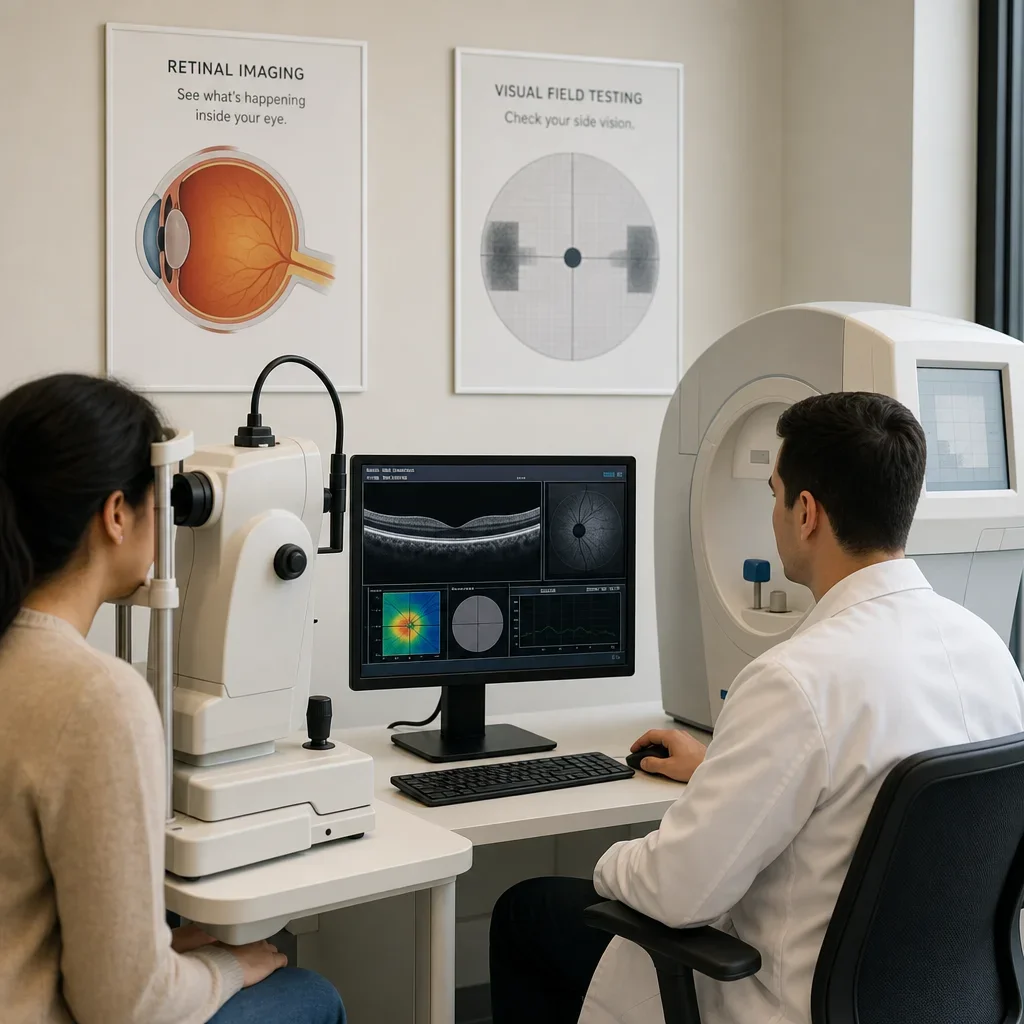
No single machine checks for glaucoma by itself. Glaucoma assessment typically draws on pressure testing, optic nerve assessment, and often structural or functional testing such as OCT and visual field analysis .
A retinal camera is the machine that takes pictures of the retina. It documents the back of the eye and creates a visual record that can be reviewed over time .
OCT is an eye examination device that creates cross-sectional scans rather than regular surface photos. It helps assess retinal layers and optic nerve structure in a way a standard camera cannot .
A visual field machine checks how well you detect lights in different parts of your side vision. The test usually takes several minutes and may take longer depending on the protocol and whether one or both eyes are tested .
Retinal concerns are often assessed with imaging plus clinical examination. Optic nerve concerns may call for pressure measurement, OCT, visual field testing, and direct examination together .
Machines support diagnosis, but they do not diagnose on their own. The images and measurements still need interpretation within a full comprehensive eye exam .
Do eye exam machines touch your eye? What the test feels like
Most routine eye check up machines in a standard exam are non-contact or chin-rest only. You usually look at a target, sit still, or rest your chin while the machine captures a reading .
The tests most patients notice are the air puff, bright lights, camera flashes, and the dim room used for some parts of the exam. Those sensations are brief, and none automatically means something is wrong .
Dilation can blur near vision and increase light sensitivity for several hours. The exact effect and duration vary from person to person and by the drops used .
Blinking, dry eyes, and anxiety can affect image quality, and staff can usually repeat a scan if needed. If you are nervous, light-sensitive, or have trouble keeping your eyes open, tell the clinic before the test starts .
A few specialized procedures in eye care can involve contact with the eye, but not every routine exam includes them. The specific eye check equipment used depends on what the optometrist needs to confirm that day .
Digital eye exam vs traditional eye exam: are they the same?
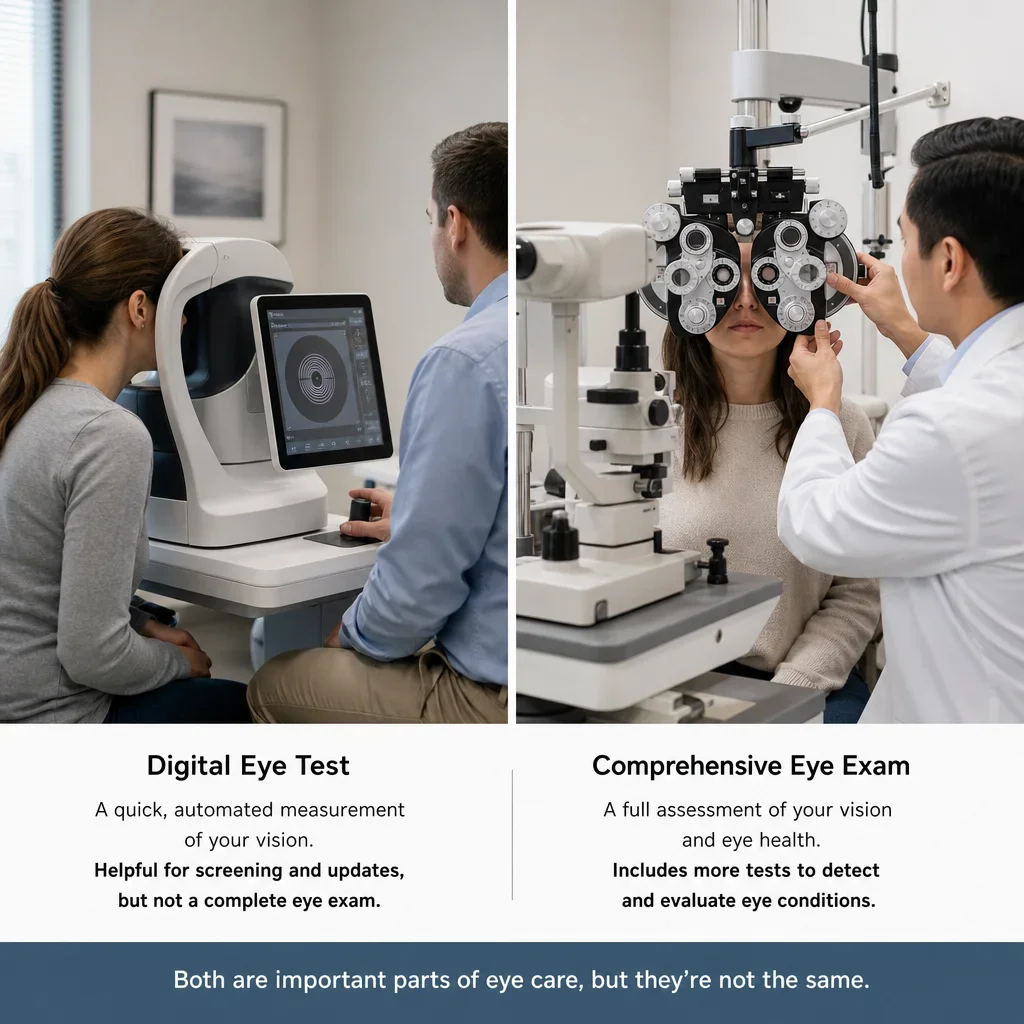
A digital eye exam is not the same as a full comprehensive eye exam. Digital tools capture measurements and images, but they do not replace the clinician’s history-taking, refraction, eye health evaluation, and interpretation .
A digital eye testing machine can improve measurement capture and documentation. It still forms only one part of the overall exam workflow .
Traditional exam steps such as the phoropter refraction, slit lamp exam, and doctor review remain central because they connect the machine results to your symptoms and eye health findings .
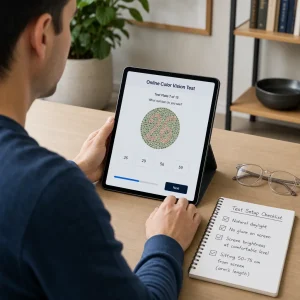
An eye test done only on a computer can screen vision or suggest changes, but it is not the same as an in-person comprehensive exam. That matters because prescription changes and eye health issues are not measured the same way .
The practical difference in digital eye exam vs traditional testing is not machine versus no machine. It is whether the testing is part of a full optometrist-led assessment or just a limited screening step .
Screening machines vs full diagnostic exams
Screening machines flag possible issues; they do not replace a diagnostic exam. That is the biggest source of confusion around automated and kiosk-style eye testing .
An autorefractor or standalone automatic eye exam machine can estimate prescription or identify a reason for follow-up. It cannot by itself deliver the same level of decision-making as a full exam .
A comprehensive diagnostic exam combines several pieces of equipment used in eye examination with direct clinical interpretation. That includes prescription testing, front-of-eye assessment, pressure checks, and review of retinal or optic nerve findings when needed .
The difference matters because a screening result answers only a narrow question. A comprehensive exam answers whether the prescription is right, whether the eyes are healthy, and whether any further follow-up is needed .
Special cases: children, contact lens fittings, and patients who can’t give clear feedback
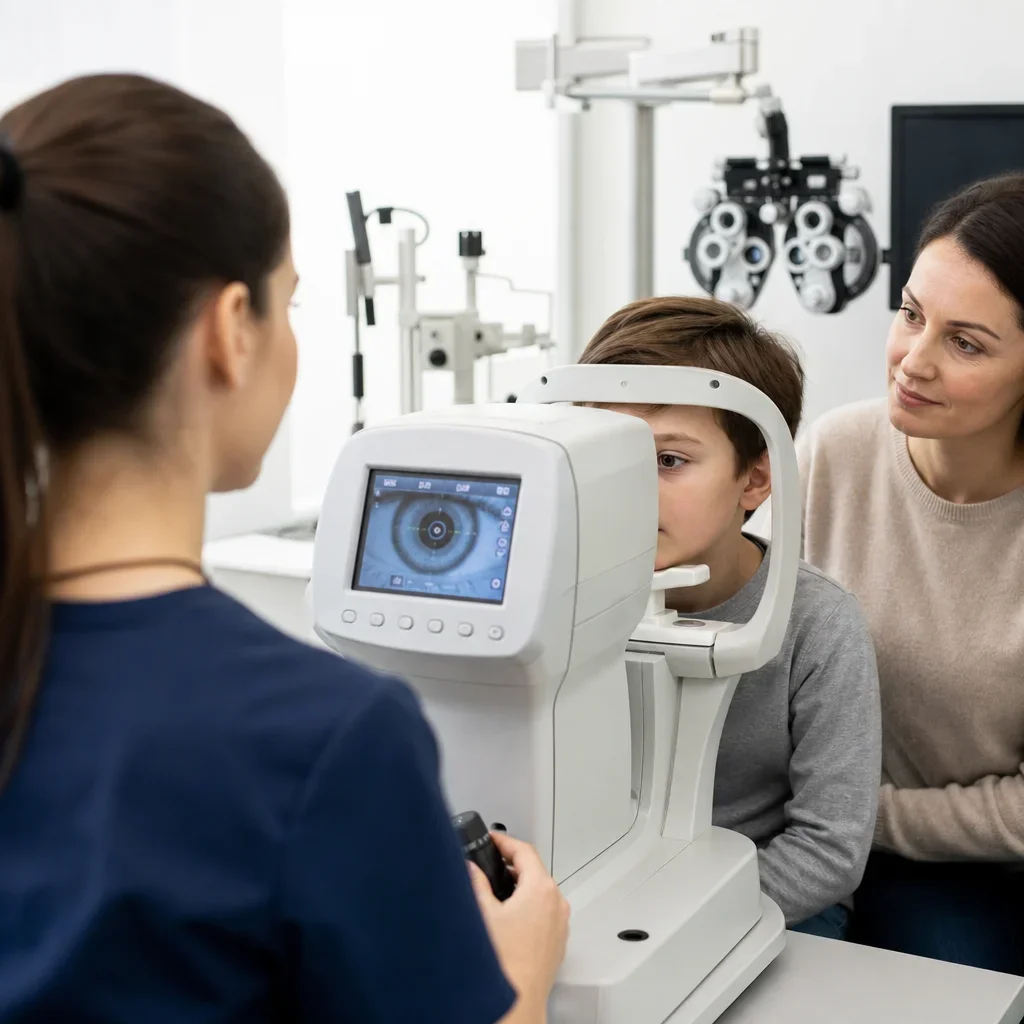
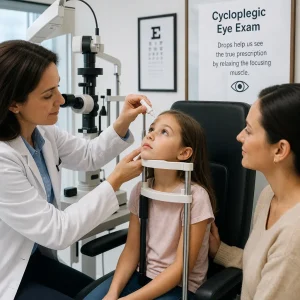
Children often need different eye check up instruments than adults, or the same tools used differently. Age-appropriate charts, objective measurements, and binocular vision testing are common examples .
Patients who are very young, non-verbal, fatigued, or uncertain during “1 or 2” testing can still be assessed objectively. Tools such as retinoscopy and automated measurements help when subjective feedback is limited .
Contact lens fittings use more than a glasses prescription. Corneal curvature measurements, lens fit assessment, and tear film evaluation help determine whether contact lenses sit and perform properly on the eye .
The right eye exam instruments depend on the visit goal. A routine glasses update, a pediatric exam, and a contact lens fitting can overlap, but they are not identical appointments .
Are advanced scans like Optomap worth it?
Advanced retinal imaging can be useful when the optometrist wants detailed documentation or a wider view of the retina. Whether it is worth it depends on symptoms, risk factors, history, and the reason for the visit .
Widefield or other digital retinal imaging can complement the rest of the exam. It should not be treated as an automatic replacement for every other method or for dilation in every case .
The better way to think about advanced imaging is as added information, not a magic shortcut. The optometrist still decides which tests are needed and how to interpret them in context .
If you are comparing scans, ask what the image helps assess and whether it changes management for your exam. That is a more useful question than searching for one “best” machine .
When should you book an eye exam in Waterloo?
Blurred vision, headaches, eyestrain, trouble with night driving, a change in reading comfort, or the need for updated glasses are all practical reasons to book an exam. Eye health monitoring and contact lens follow-up are common reasons too .
The value of modern eye exam devices is not just the technology itself. The real value is having licensed optometrists interpret the results as part of a complete exam .
For Waterloo and Kitchener patients, an all-in-one visit can make the process simpler. At Premier Optical, patients can book a comprehensive eye exam in Waterloo and then handle frame selection, prescription lenses, and direct insurance billing under one roof .
Quick troubleshooting for common concerns
If you blink during a scan, the image can usually be repeated. Most imaging tests take only moments once your eye is aligned properly .
If you feel anxious about the puff-of-air test, tell the staff before it starts. A quick explanation and a practice breath can make the surprise easier to manage .
If bright lights bother you, mention light sensitivity early in the visit. That helps the clinic pace the testing and explain when flashes or magnified lights are coming .
If your eyes are dry, readings can fluctuate more. Artificial tears or a short pause may help the optometrist get a better-quality measurement, depending on the test .
If you cannot decide between lens choices in the phoropter, say so plainly. “About the same” is useful feedback and often more accurate than guessing .
FAQ
What is the eye exam machine called?
There is no single name for one full-exam machine. The term usually refers to one of several devices, most often an autorefractor, phoropter, tonometer, slit lamp, retinal camera, or OCT .
What equipment is used in an eye exam?
Common equipment used in eye examination includes a visual acuity chart, autorefractor, phoropter, slit lamp, tonometer, ophthalmoscope, retinal camera, OCT, visual field machine, and corneal measurement tools .
What does an autorefractor do?
An autorefractor gives an automated estimate of your prescription by measuring how light focuses through the eye. It is a starting point, not the final prescription .
What does a phoropter do?
A phoropter refines your prescription by letting the optometrist compare lenses and ask which option looks clearer. It is used for the subjective part of refraction .
What is the puff-of-air machine used for?
It is used for tonometry, which means measuring eye pressure. The air-puff version is a non-contact test .
Is a tonometer painful?
It is usually not described as painful. The air-puff version is more commonly described as quick and startling .
Do eye exam machines touch the eye?
Most routine tests are non-contact or chin-rest only. Some specialized procedures in eye care may involve contact, but not every routine exam includes them .
What machine takes pictures of the retina?
A retinal or fundus camera takes pictures of the retina. OCT also images the back of the eye, but it creates cross-sectional scans rather than standard photographs .
What is OCT in an eye exam?
OCT stands for optical coherence tomography. It is an imaging scan that shows cross-sectional detail of retinal layers and optic nerve structures .
What machine checks for glaucoma?
No one machine checks for glaucoma on its own. Assessment may include a tonometer, optic nerve examination, OCT, visual field testing, and clinical interpretation together .
Is a digital eye exam the same as a comprehensive eye exam?
No. Digital testing is one part of the process, while a comprehensive eye exam includes history, prescription assessment, eye health evaluation, and recommendations .
Can you do an eye test on a computer?
You can do computer-based vision screening, but that is not the same as a full in-person eye exam. Screening can be helpful, but it does not replace a comprehensive assessment .
How accurate is computerized eye testing?
Computerized testing is useful for baseline measurements and screening. Final accuracy depends on the complete exam and the optometrist’s interpretation, not the machine alone .
Which eye exam tools are used for children?
Children may be tested with age-appropriate charts, retinoscopy, binocular vision tools, and objective prescription devices. The exact setup depends on age and cooperation .
What equipment is used for contact lens fittings?
Contact lens fittings may use corneal curvature measurements, slit lamp assessment, and lens-fit evaluation in addition to a prescription check. That is because fitting lenses involves shape and surface details, not just power .
Is advanced retinal imaging worth it?
It can be, when it adds useful documentation or helps assess a specific concern. Whether it is appropriate depends on your exam findings and the optometrist’s recommendation .
If you are booking an eye exam and want the process explained clearly, start with a comprehensive exam rather than chasing one machine. The tools matter, but the full assessment matters more.