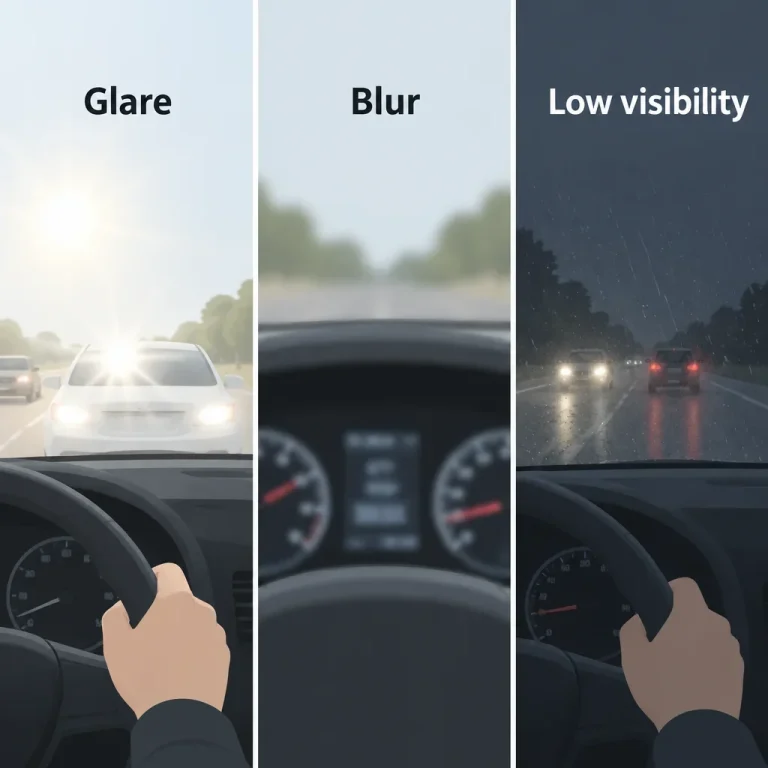
Can you drive after eye dilation? Do not drive while blurred vision, glare, or light sensitivity interferes with seeing, or if your optometrist has advised against it. Arranging another ride home is the safest plan. A set waiting period does not guarantee that your vision has recovered.
Can you drive after eye dilation?
Driving after a dilated eye exam depends on visual function, not simply pupil size. Dilating drops can cause light sensitivity and difficulty focusing. The effects differ between patients, so follow your optometrist’s instructions rather than another person’s experience.
Feeling comfortable does not establish that you can handle driving conditions. You might see across a room yet struggle with reflected sunlight, headlights, or the dashboard. A short, familiar route does not remove those risks.
An eye exam without dilation does not automatically require another driver. The relevant issue is whether drops, testing, or an eye condition affect your vision. Severe eye pain or sudden vision loss requires urgent assessment, not a longer wait for the drops to wear off.
How long after eye dilation can you drive?
Common adult diagnostic dilation effects last approximately 4–6 hours, but that is a recovery estimate, not a driving clearance. Your ability to drive depends on recovered vision, lighting conditions, the drops used, and your optometrist’s instructions.
Pupil enlargement, light sensitivity, and focusing difficulty can settle at different times. A pupil that looks smaller does not prove that focusing has returned to normal. Likewise, visible dilation alone does not measure every aspect of visual function.
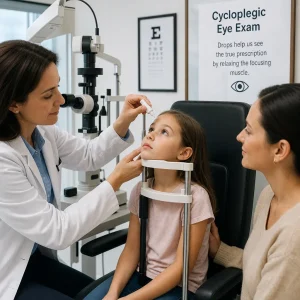
Recovery is affected by the medication, concentration, repeat dosing, age, iris pigmentation, and individual response. Some drops also temporarily relax the eye’s focusing muscle, an effect called cycloplegia. Longer-acting drops used in some children’s examinations can affect vision beyond the usual adult diagnostic recovery period.
Eye colour is not a dependable recovery calculator. Iris pigmentation can affect how drops act, but it cannot tell you when glare or blur will resolve. The specific medication and your response are more useful than a light-versus-dark eye comparison.
Driving two hours after dilation
Two hours alone is not enough evidence that driving is appropriate. If blur, troublesome glare, or light sensitivity remains, continue with alternative transport. Do not use a brief drive around the block to test recovery.
What makes driving risky after dilation?
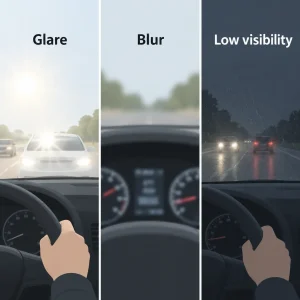
Dilated pupils let more light into the eye, which can increase glare. Some dilating drops also reduce near focusing temporarily. That can make dashboard information harder to read, even when objects farther away seem clearer.
Driving requires more than recognizing a stationary object. You must manage changing light, moving traffic, signs, mirrors, and dashboard information together. Dilation-related symptoms can interfere with those tasks, especially when visibility is already poor.
The situations below describe reasons to delay driving or seek individual guidance. They are not a self-clearance test.
| Situation | Concern | Safer action |
|---|---|---|
| Blurred vision | Road details or dashboard information may be unclear | Do not drive while blur affects seeing |
| Troublesome glare or light sensitivity | Bright light can interfere with useful vision | Use another ride; sunglasses may help comfort |
| Bright sunlight or snow reflection | Reflected light can worsen glare | Plan alternative transport while symptoms remain |
| Night-time headlights | Headlights can produce glare despite darker surroundings | Do not treat nightfall as a workaround |
| Rain, fog, or poor visibility | Reduced visibility adds to the difficulty caused by visual symptoms | Postpone driving and use another transport option |
| Residual symptoms before a short trip | A familiar route still requires normal responses to hazards | Keep the backup ride rather than testing yourself on the road |
| Symptoms appear resolved | Comfort alone does not establish driving fitness | Follow your optometrist’s instructions and account for road conditions; obtain guidance if uncertain |
Night driving after dilation
Darkness does not cancel the effects of dilating drops. Headlights and streetlights can still produce glare, while unlit areas provide less visual information. Waiting until evening is not a reliable substitute for visual recovery.
Plan your ride home before a dilated eye exam

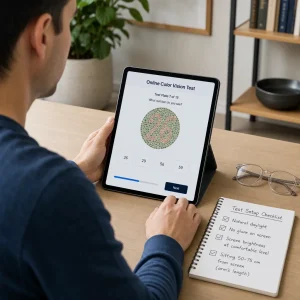
Planning alternative transport avoids having to judge your vision in the car park. For an eye exam in Waterloo, build possible dilation into your travel arrangements rather than assuming you can drive straight back to work.
- Mention driving commitments when booking. Explain whether you have a commute, school pickup, or driving shift afterwards. The examining optometrist determines whether dilation is clinically appropriate.
- Arrange a ride home. A friend, family member, taxi, or rideshare can remove the need to drive yourself. Public transit is another option when you can navigate it comfortably.
- Bring sunglasses and your usual prescription glasses. Sunglasses can reduce bright-light discomfort, while your glasses provide your ordinary vision correction.
- Leave flexibility after the appointment. Avoid scheduling a driving-dependent commitment around a predicted recovery time. Arrange an accompanying person if blurred vision would make travelling alone difficult.
For school pickup, arrange another authorized adult in advance. A fixed collection time can create pressure to drive before symptoms have settled. The backup should cover the pickup itself, not just the trip home from the clinic.
For a return commute, plan how you will retrieve your vehicle later. Leaving the car at home avoids being stranded with it after the examination. If transit requires unfamiliar transfers, consider a direct ride or someone to accompany you.
For driving or machinery work, arrange alternative duties or time away from those tasks. Reading a screen comfortably is not equivalent to being ready for a safety-sensitive shift. Do not skip clinically indicated dilation simply to keep a driving commitment.
Do sunglasses, glasses, or contacts make driving safer?
Sunglasses can reduce bright-light discomfort, but they do not reverse dilation. They also do not reliably correct focusing difficulty caused by the drops. Wearing them does not, by itself, make driving appropriate.
Your usual prescription glasses still provide your normal correction, but they do not cancel the medication’s effects. Reading glasses may help some near tasks, yet they are not a reliable fix for dilation-related blur. Do not substitute a clearer view of your phone for recovered driving vision.
Contact lens reinsertion depends on the drops, their formulation, and the procedures performed during your exam. Follow the instructions given for that visit rather than using a universal waiting interval. Having your glasses available means you do not need to rely on putting contacts back in immediately.
Driving with one dilated eye
Dilation in a single eye can still affect how comfortably your eyes work together. Do not assume the unaffected eye compensates adequately for glare or blur. Covering the dilated eye is not a safe workaround for driving and changes the visual information available to you.
What should you avoid after eye dilation?
Postpone activities where blurred vision or glare could cause injury. The concern is impaired visual performance, not a blanket ban on ordinary activities after an uncomplicated dilated examination.
- Driving: Do not drive while visual symptoms interfere with seeing or against your optometrist’s advice.
- Operating machinery: Delay tasks that require clear vision, accurate positioning, or rapid responses.
- Safety-critical precision work: Avoid tasks where misreading a display or missing a detail could harm someone.
- Hazardous household tasks: Postpone using sharp tools or other equipment if blur makes the task unsafe.
Desk work, reading, phone use, and television are generally acceptable after uncomplicated diagnostic dilation if comfortable. Near-focus blur may make reading harder. Larger text, reduced screen brightness when helpful, comfortable lighting, and breaks can improve comfort without reversing the drops.
Returning to work depends on the work itself. An office task may be manageable with enlarged text, while professional driving or machinery operation demands reliable visual function. There is no single return-to-work time that fits both.
Sleep is generally fine after an uncomplicated dilated exam. Rest may make light sensitivity less bothersome, but it does not reliably make the medication wear off faster. Follow any additional instructions if your visit included another procedure or treatment.
Can you make eye dilation go away faster?
Routine recovery means allowing the dilating medication to wear off. Sunglasses and comfortable lighting manage symptoms; they do not shorten the drug’s action. Eye exercises, caffeine, supplements, and extra hydration are not established ways to reverse diagnostic dilation.
Do not use borrowed medication or extra eye drops to shrink your pupils. Different drops have different effects and risks, and pupil size alone does not describe visual recovery. Continue prescribed medicines according to your existing instructions unless your clinician advises otherwise.
When should you get help after eye dilation?
Mild light sensitivity and temporary focusing difficulty can occur during recovery. Symptoms that worsen, persist beyond the expected period for your drops, or include pain need a different response from ordinary temporary blur.
- Expected temporary effects: Mild light sensitivity, enlarged pupils, and difficulty with close work can occur as the drops wear off. Symptoms should follow the recovery pattern explained at your visit.
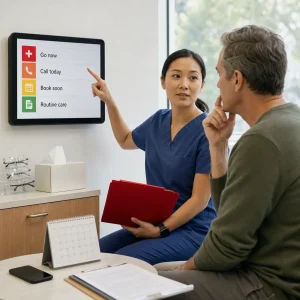
- Persistent or worsening symptoms: Contact Premier Optical if blur or dilation lasts beyond the expected period you were given, particularly if it is not improving. The team can explain the next step for your symptoms and the drops used.
- Urgent warning signs: Severe eye pain, significant redness, sudden loss or reduction of vision, or halos with headache, nausea, or vomiting require urgent assessment. These are not symptoms to simply sleep off.
- Other urgent eye symptoms: New flashes, a sudden increase in floaters, or a curtain-like shadow across vision need urgent assessment. These can indicate a retinal problem and should not be dismissed as routine dilation effects.
Serious reactions to diagnostic dilation are uncommon, but urgent symptoms should not wait for a routine callback. Seek emergency eye care or go to an emergency department promptly. Do not drive yourself when vision is impaired or urgent symptoms are present.
Dilation extending into the next day can occur with longer-acting drops, but it should not automatically be treated as normal for every examination. The medication used and the expected recovery explained at your visit matter. Persistent blur deserves attention even if there is no pain.
Why do optometrists dilate your eyes?
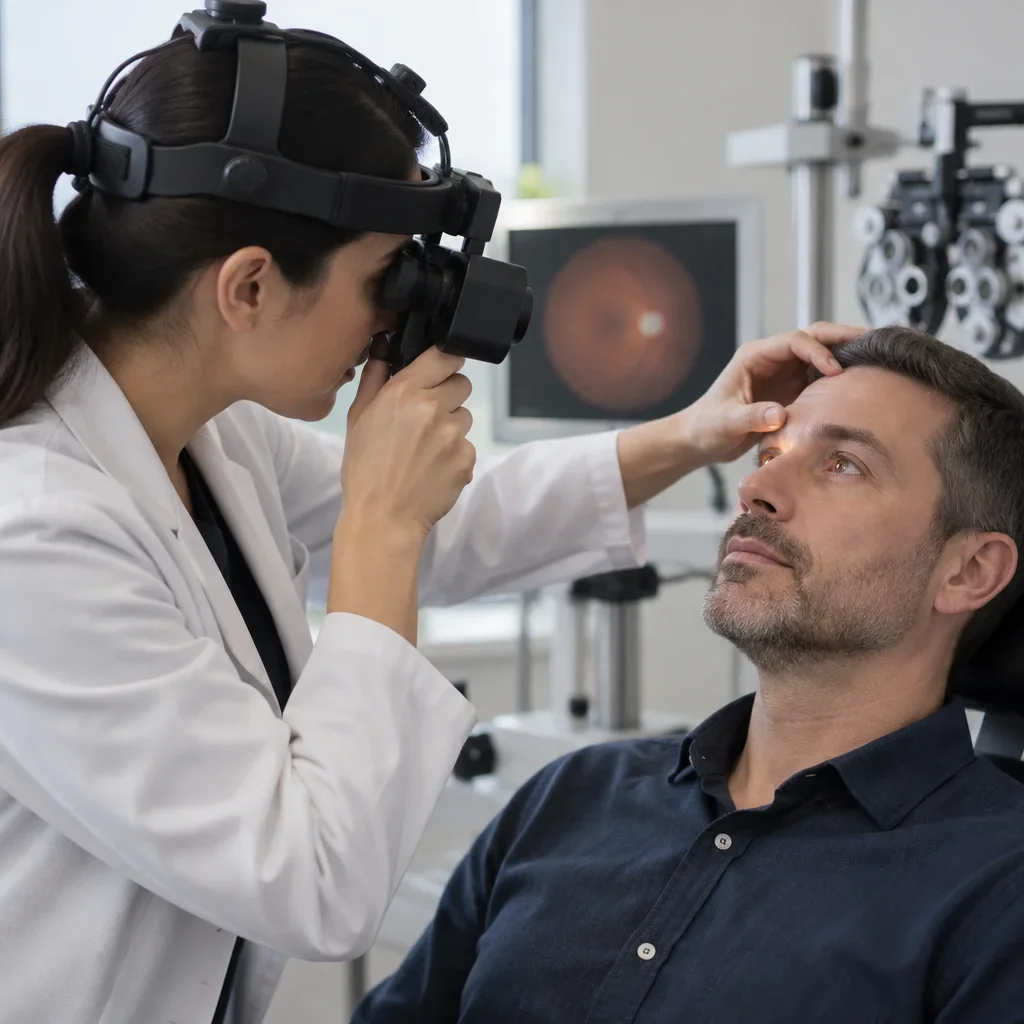
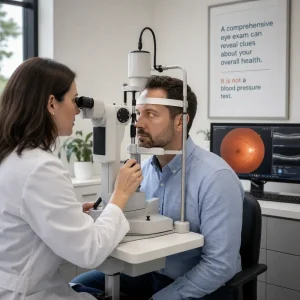
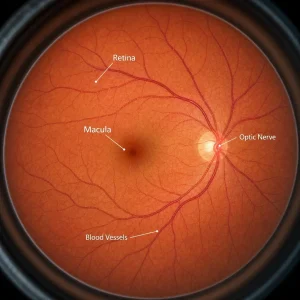
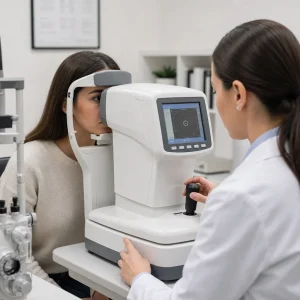
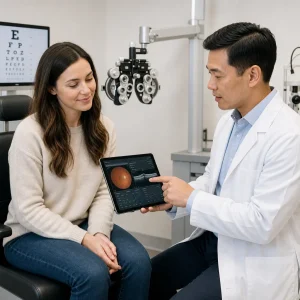
Dilation widens the pupil so the optometrist can examine the back of the eye. This includes the retina, the macula responsible for detailed central vision, and the optic nerve. The wider view can help reveal findings that need further assessment or treatment.
A dilated examination can help assess diabetic retinal changes, macular disease, and retinal tears. It is one part of eye care, not a test that independently rules out every eye condition. Other examination findings and tests remain important.
The need for dilation depends on symptoms, clinical findings, and individual circumstances. Not every eye exam uses identical tests, and retinal imaging does not universally replace dilation. At Premier Optical, eye examinations and eyewear services are available under the same roof, but clinical needs determine the examination plan.
Frequently asked questions about driving after dilation
Can I drive two hours after eye dilation?
A two-hour wait is not a guarantee of recovery. Do not drive with interfering blur, glare, or light sensitivity, and follow your optometrist’s instructions. Keep your alternative ride if symptoms remain.
How long should I wait to drive after my eyes are dilated?
There is no universal waiting period that clears everyone to drive. The effects of common adult diagnostic drops last approximately 4–6 hours, but visual recovery and individual instructions determine what happens next.
Can you drive after eye dilation with sunglasses?
Sunglasses reduce bright-light discomfort but do not reverse the drops or reliably restore focusing. They are a comfort measure, not proof that you can drive.
Can you drive if one eye is dilated?
An unaffected eye does not automatically compensate for symptoms in the dilated eye. Follow the same advice about interfering blur and glare, and do not cover the affected eye as a driving workaround.
Is it safe to drive at night after dilation?
Night driving can still be difficult because headlights create glare and surrounding visibility is reduced. Darkness does not establish that the medication’s effects have resolved.
What colour eyes stay dilated longest?
Eye colour does not provide a dependable ranking for recovery time. Iris pigmentation can influence the response to drops, but medication type, dosing, and individual response also matter. Do not schedule driving based on eye colour.
Can I wear contacts after eye dilation?
Follow the contact lens instructions given during your examination. Reinsertion timing depends on the drops and procedures used, so there is no universal interval suitable for every visit.
Can I work or watch TV after eye dilation?
Television and desk work are generally acceptable if comfortable after uncomplicated diagnostic dilation. Blur may make reading difficult. Driving, machinery work, and other safety-sensitive duties require a more cautious approach because visual errors can cause injury.
Can you sleep after eye dilation?
Yes, sleep is generally fine after an uncomplicated dilated examination. It does not reliably accelerate recovery. Severe pain or sudden visual changes require urgent assessment rather than going to bed and waiting.
Is it normal for my eyes to stay dilated into the next day?
Some longer-acting drops can have effects into the next day. Whether that matches your expected recovery depends on the medication and examination. Symptoms that last beyond the instructions you received, or that worsen, warrant follow-up.
How long after an eye test can I drive?
An eye test without dilation does not automatically impose a waiting period. Driving still depends on whether your vision is affected by the examination, other drops, a procedure, or an eye condition. Follow any instructions given before leaving.
For your next eye exam at Premier Optical in Waterloo, discuss possible dilation when booking and plan your transport beforehand. Bring your usual glasses and sunglasses, and leave room for recovery rather than a deadline to drive.