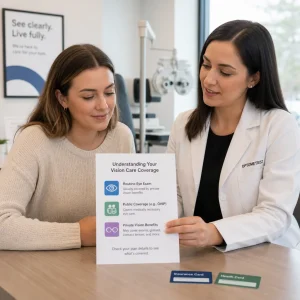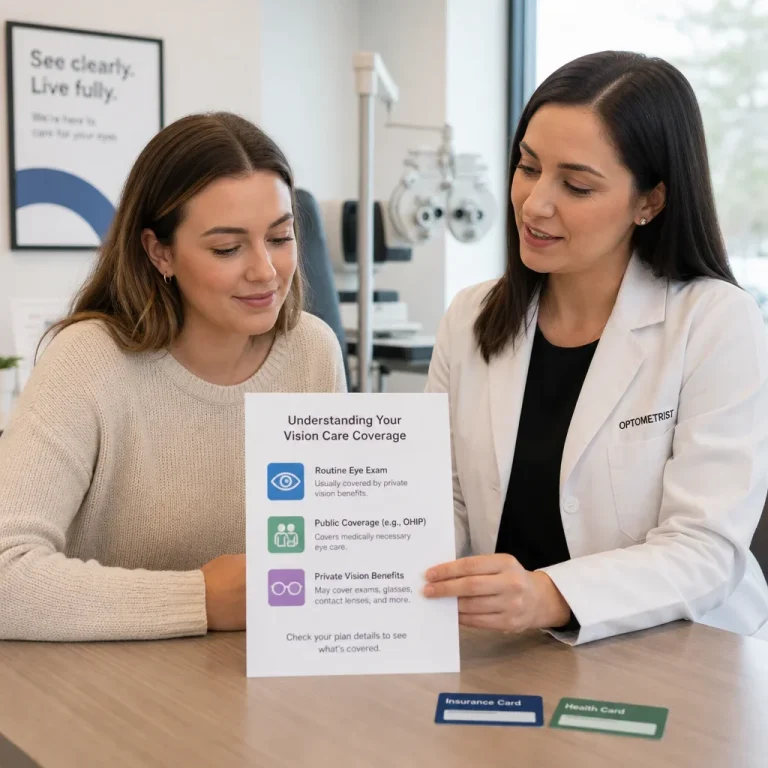
Are eye exams covered by insurance in Ontario? Sometimes. Coverage usually depends on why you are being seen, whether OHIP applies, and whether you also have private vision benefits through work, school, or an individual plan.
Quick answer: when insurance covers eye exams in Ontario
Routine eye exams for many Ontario adults are often not publicly covered, while medically necessary eye care may be covered under OHIP depending on eligibility and the reason for the visit. Glasses and contact lenses are generally separate from exam coverage and are more often paid through private vision insurance or out of pocket. Coverage rules can change, so confirm your eligibility and your plan details before booking.
Public coverage, private benefits, and self-pay are the three buckets that matter most. OHIP may cover some insured optometric services for eligible patients and certain medically necessary visits, while employer, student, or personal plans may help with routine eye exams, prescription glasses insurance coverage, or contacts. If neither applies, you would usually pay the clinic directly and submit only if your plan allows reimbursement.
Use this decision tree: OHIP, private vision insurance, or self-pay?
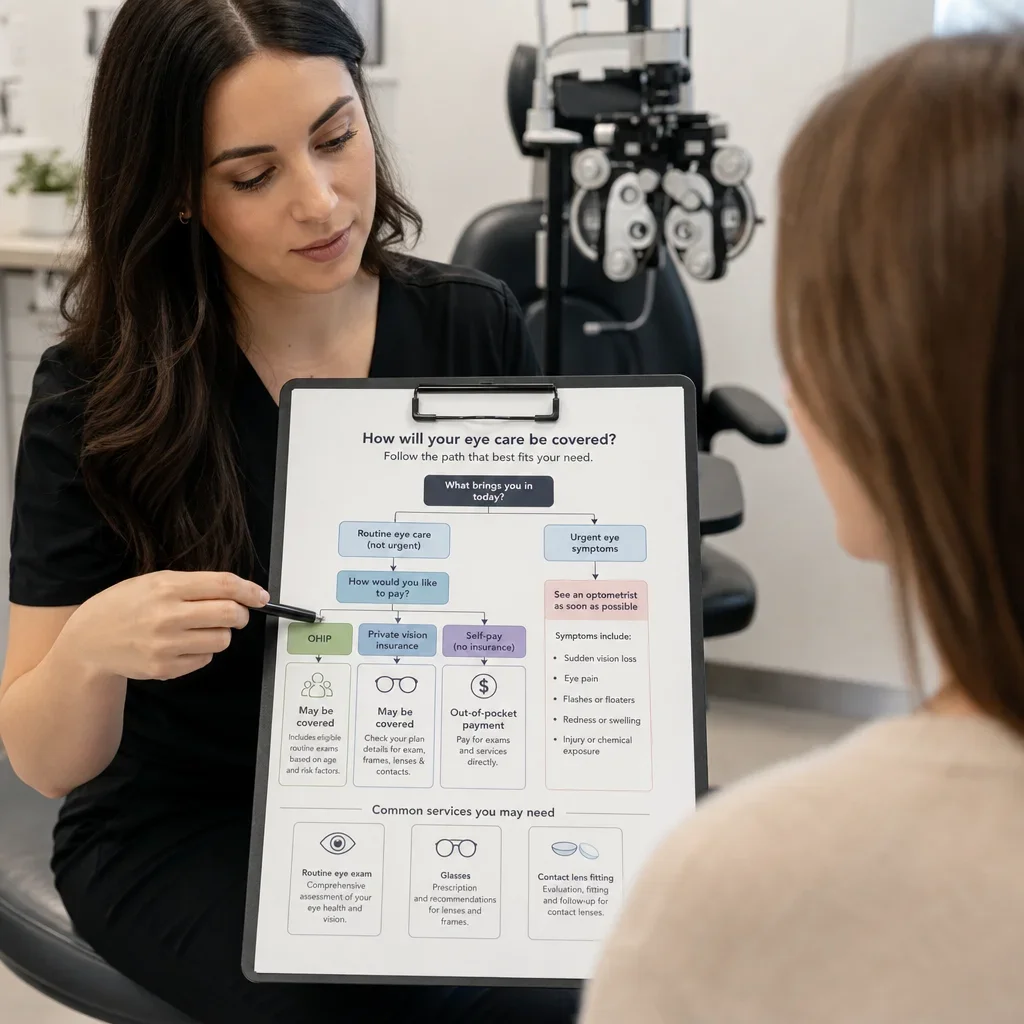
If you are booking because of blur, pain, flashes, redness with vision changes, injury, or disease monitoring, the visit may fall into medical eye care rather than a routine prescription check. That distinction matters because does health insurance cover eye problems is a different question from does insurance cover eye exams for a standard update.
- Booking for a routine vision check or updated glasses prescription: usually private benefits or self-pay
- Booking for sudden symptoms, eye disease follow-up, or a medically necessary assessment: may involve OHIP eligibility or other insured medical pathways
- Booking for glasses or contacts: usually private vision benefits or self-pay
- Booking for a contact lens fitting or refit: often billed separately from a routine eye exam
Severe pain, sudden vision loss, new flashes or floaters, trauma, or a red eye with reduced vision needs prompt assessment. Those symptoms are not the time to wait for a regular retail eyewear visit. They need urgent direction from an optometrist, physician, or emergency service depending on severity.
Ontario coverage at a glance: who may be covered for eye exams
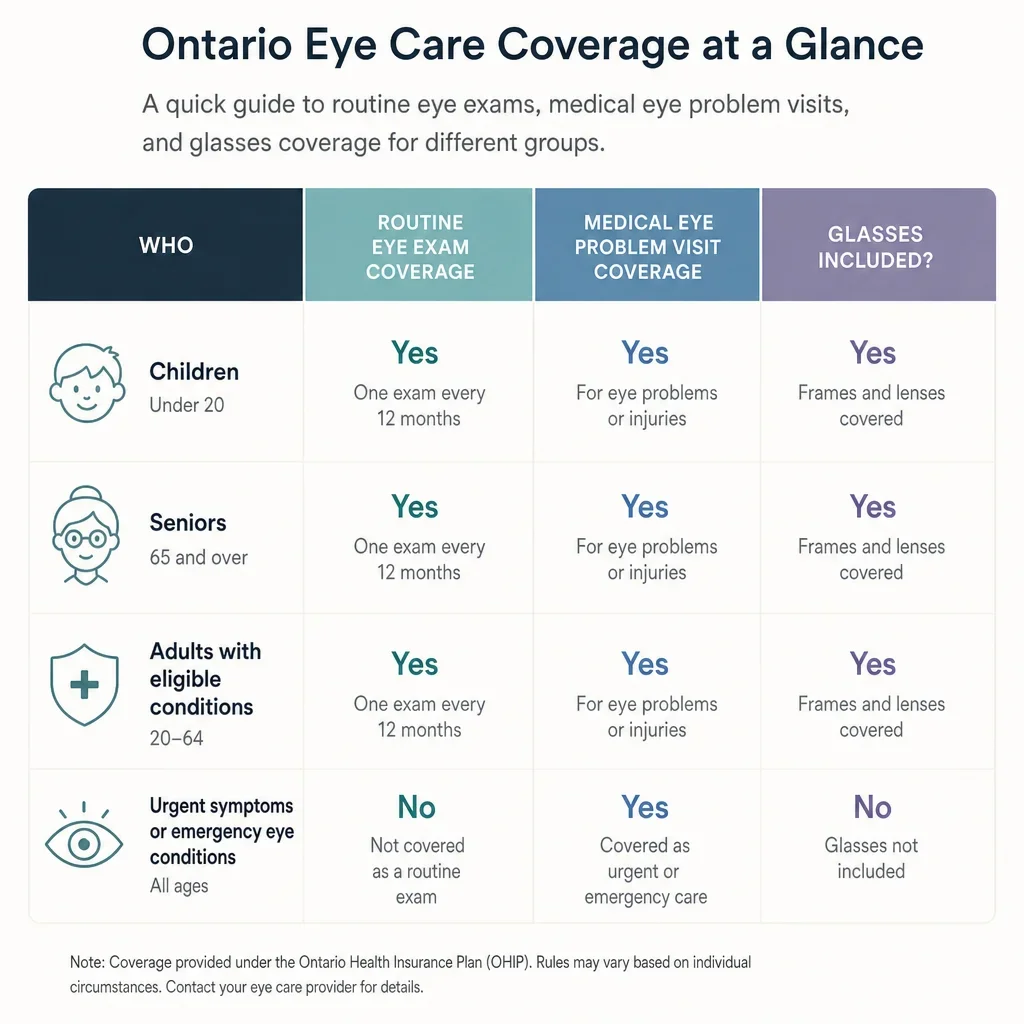
Ontario coverage is easiest to understand by separating routine exams from medically necessary care. The table below stays general on purpose because current OHIP wording and visit frequency rules can change.
| Ontario group | Routine eye exam coverage | Medical eye problem visit | Are glasses included? |
|---|---|---|---|
| Children and youth | May be covered under OHIP, subject to current eligibility and frequency rules | May be covered when medically necessary | No |
| Adults without qualifying eligibility | Often not publicly covered for routine exams | Medical visits may be covered depending on reason and pathway | No |
| Seniors 65+ | May be covered under OHIP, subject to current rules and frequency limits | May be covered when medically necessary | No |
| Adults with certain eligible medical conditions | Some insured optometric services may be covered | Yes, where medically necessary and eligible | No |
| Patients with urgent symptoms | Not treated as a routine exam issue | Coverage depends on the medical service and setting | No |
OHIP coverage for eye exams is not the same thing as eyewear coverage. Even when an optometrist covered by OHIP can bill for an insured exam, standard prescription glasses and standard contact lenses are usually not included.
What eye problems may be covered vs what usually is not
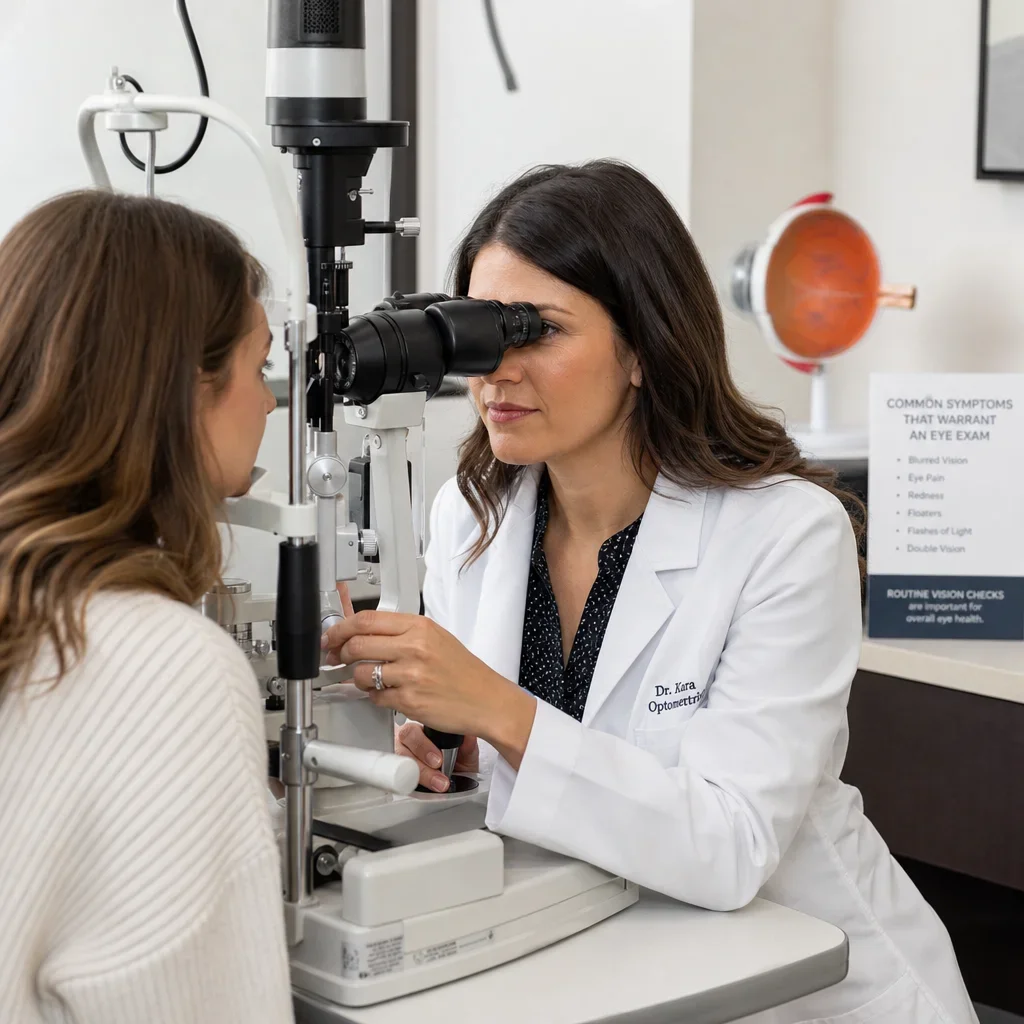
Medical necessity is the key rule. A visit for sudden symptoms, injury, infection, inflammation, glaucoma concerns, retinal issues, diabetes-related eye monitoring, cataract concerns, or other disease-related problems is different from a routine check done mainly to update a prescription.
Routine preventive vision checks without symptoms usually sit in a different category. That is why are eye exams covered by medical insurance and are annual eye exams covered by insurance can have different answers for the same patient.
Common examples that may need prompt eye assessment include sudden double vision, sudden drop in vision, new flashes or floaters, eye trauma, significant pain, or a red eye with light sensitivity or blurred vision. An optometrist can assess many of these issues and refer onward when needed, but the exact insured pathway depends on the clinical situation and Ontario rules.
Are annual eye exams covered if you have no symptoms?
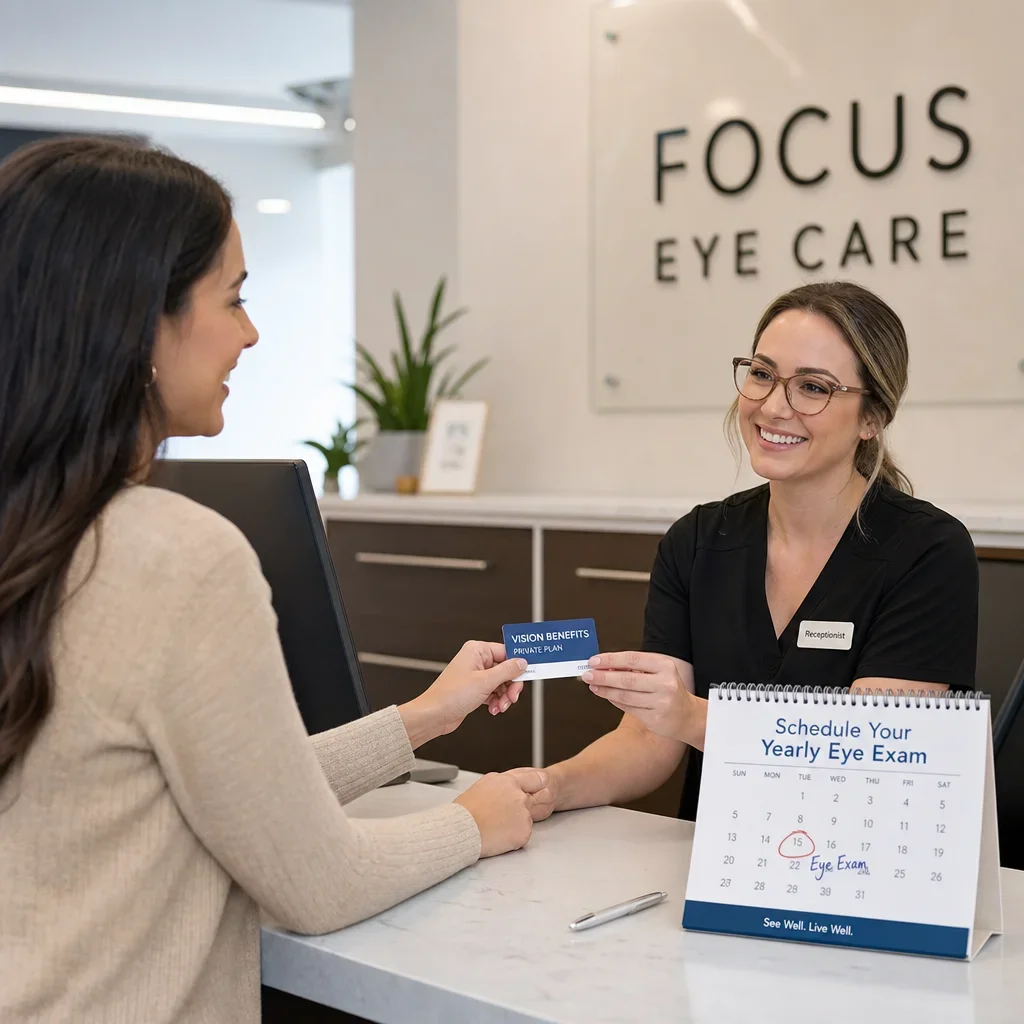
Annual routine eye exams without symptoms may not be publicly covered for many adults in Ontario. Private plans often help, but the schedule is set by the benefit plan, not by a universal Ontario rule.
Many vision insurance Ontario and vision insurance Canada plans cover routine eye exams on a set cycle such as once every 12 to 24 months . Some plans treat dependent children differently from adults, and some require you to use a participating provider or pay first and submit later. That is why does health insurance cover eye exams usually means checking your frequency limit, annual maximum, and whether direct billing is available.
Preventive exams can still be worthwhile even when not insured. An eye exam is more than a quick chart test. It reviews prescription changes, eye health, and risk factors, which is different from a simple eye test done only to measure sight.
Does insurance cover glasses, prescription sunglasses, and lens upgrades?
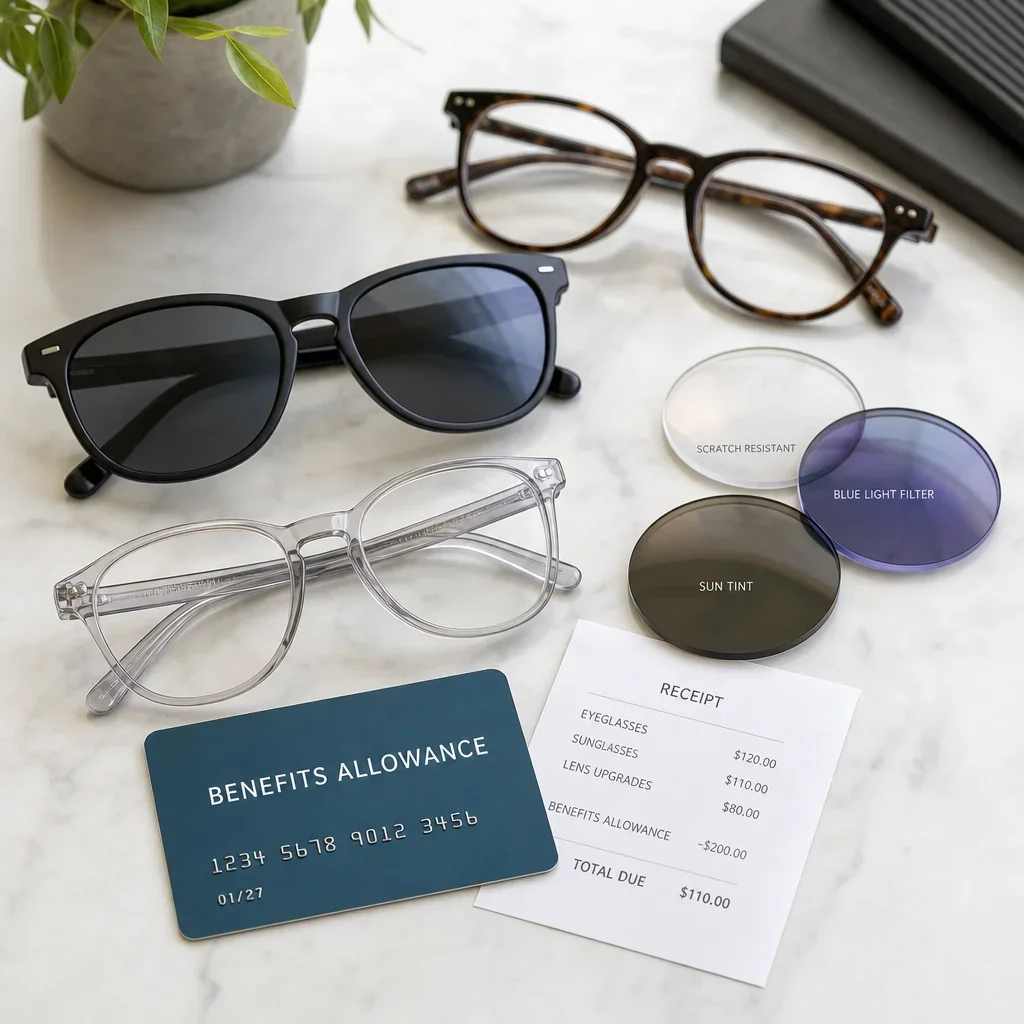
Private plans often cover part of the cost of glasses, while public coverage usually does not cover standard eyewear for most adults. Coverage is usually built as a frame-and-lenses allowance that is separate from the exam benefit.
Many private plans use an eyewear allowance every 12 to 24 months and often fall in the broad range of about $100 to $250+ per period, though richer plans can be higher . That allowance may apply to does insurance cover eye glasses, does health insurance cover prescription glasses, or does insurance cover contacts and glasses, but only up to the plan maximum.
Standard single-vision lenses and basic frames are more likely to fit inside a plan allowance than premium upgrades. Prescription sunglasses may be covered if they are prescription eyewear, while blue-light lenses without prescription, fashion tints, premium anti-reflective packages, thinner lenses, transitions, and designer upgrades may leave an out-of-pocket balance.
| Item | Usually covered by private vision plan? | Usually covered by OHIP? |
|---|---|---|
| Standard prescription glasses | Often partly covered | No |
| Prescription sunglasses | Sometimes, if prescription and plan permits | No |
| Blue-light or computer glasses | Sometimes, if prescription and plan permits | No |
| Lens coatings and premium upgrades | Sometimes partly, often not in full | No |
| Non-prescription eyewear | Usually not | No |
Are contact lenses and contact lens exams covered by insurance?
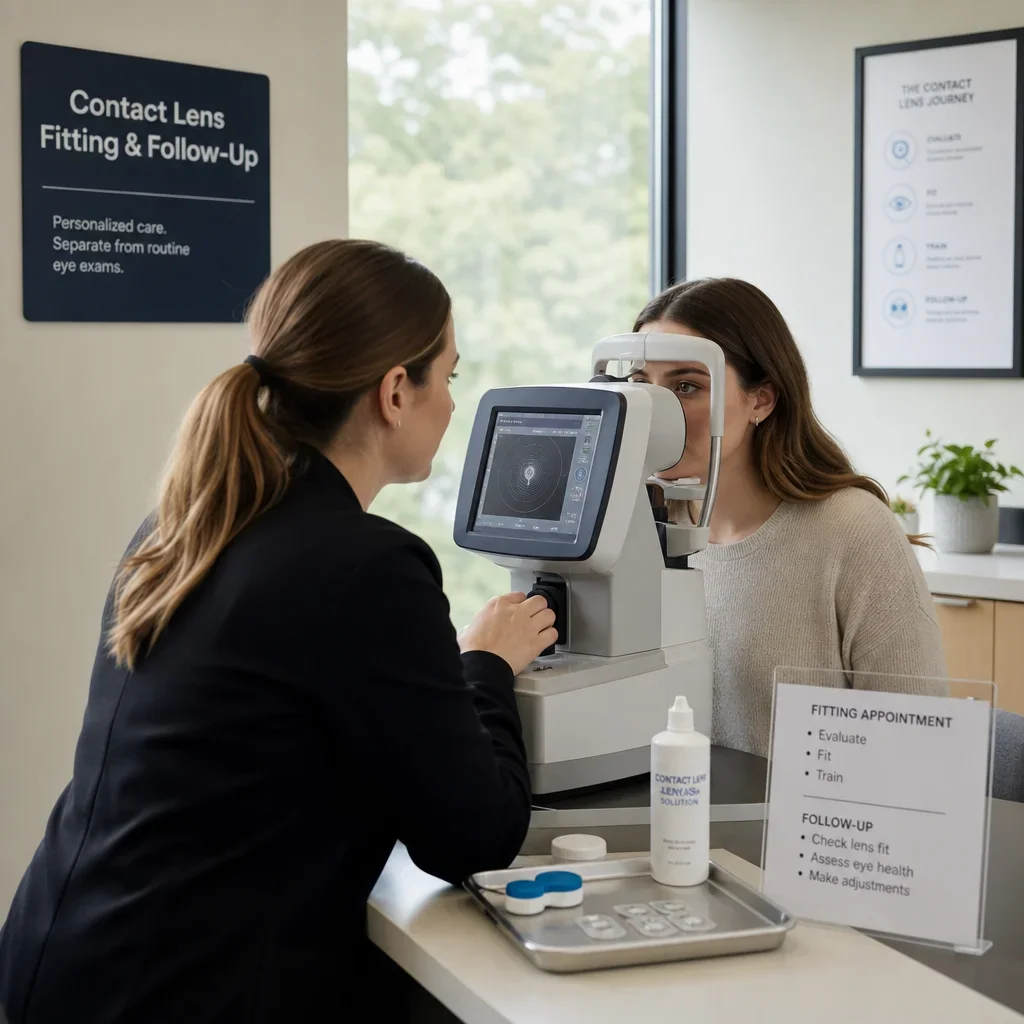
Contact lenses may be covered through the same general eyewear allowance that covers glasses, but contact lens exams and fittings are often separate charges. A routine eye exam checks vision and eye health. A contact lens fitting adds measurements, lens selection, trial evaluation, and follow-up care.
That is why are contact lens exams covered by insurance and does insurance cover contact lens exam in Ontario do not always match routine exam coverage. Many plans may reimburse the lenses themselves through a vision allowance, while the fitting, refit, or follow-up may be excluded or capped separately.
A contact lens fitting or refit commonly runs about $40 to $150+ in Ontario, depending on complexity . Specialty cases such as astigmatism, multifocal contacts, keratoconus, or medically necessary lenses can involve different rules and additional visits. You need the clinic fee schedule and your plan wording to know the actual out-of-pocket cost.
Are optometrists, ophthalmologists, and opticians covered the same way?
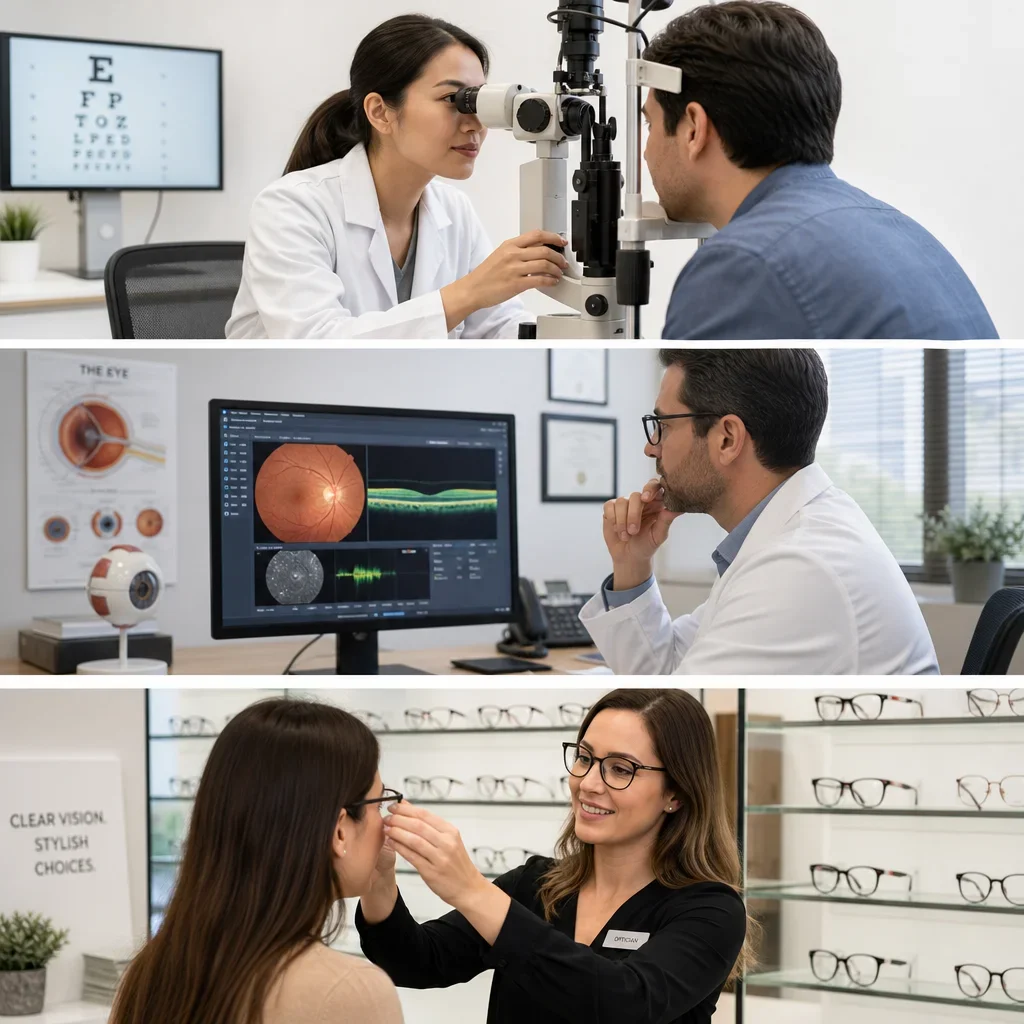
No. Coverage usually depends on the service provided, not just the title on the door.
An optometrist performs eye exams, checks prescriptions, assesses eye health, and can manage many eye conditions within scope. An ophthalmologist is a medical doctor and eye surgeon. An optician fits and dispenses glasses and contact lenses based on a valid prescription. Those roles are distinct regulated functions in Ontario, so does health insurance cover optometrist is not the same question as whether eyewear dispensing is covered.
If you need a routine eye exam in Waterloo, you usually book first with an optometrist. If you need glasses after that, an optician helps with frame fit, lens choice, and adjustments. If surgery or advanced medical treatment is needed, referral to ophthalmology may follow.
What is usually covered by public plans vs employer benefits vs student plans vs private individual insurance?
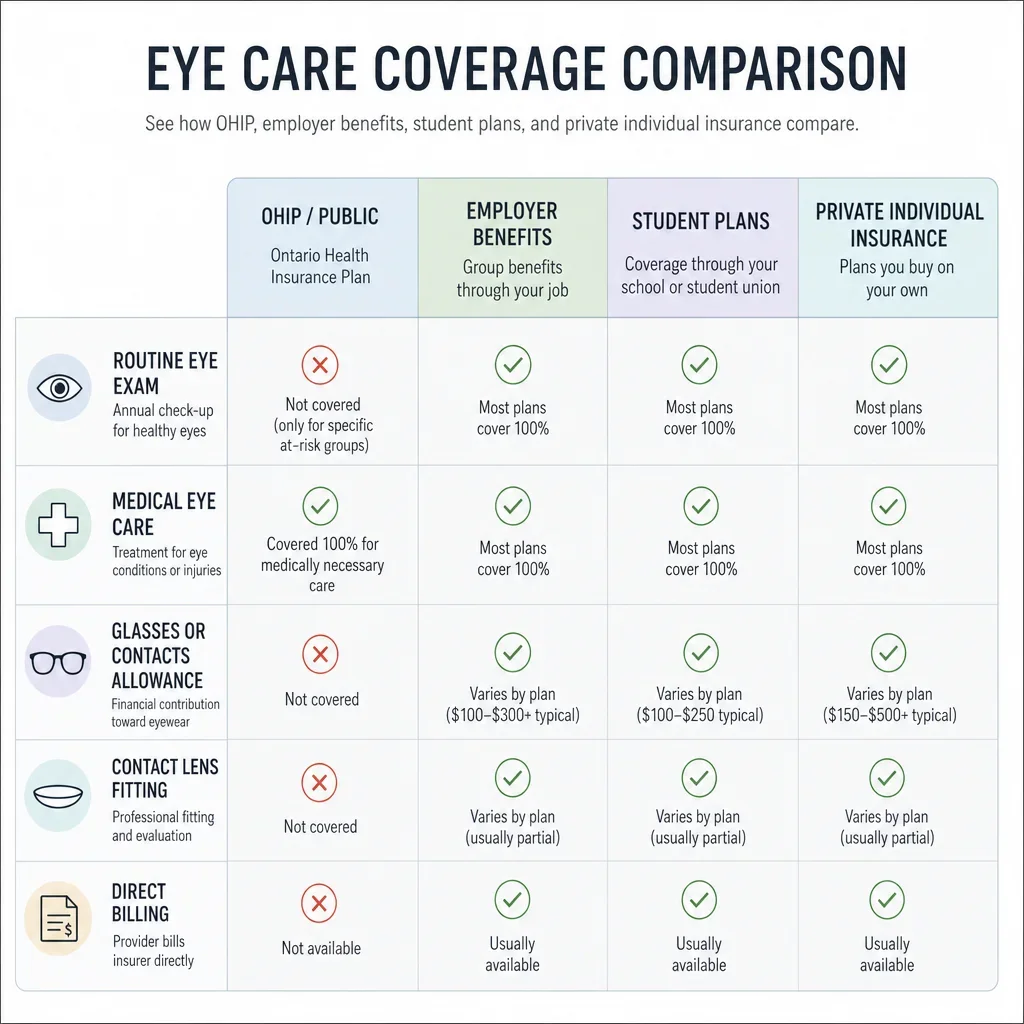
Public and private coverage work differently. OHIP is not a broad vision shopping plan. It is public medical coverage with specific insured services and eligibility rules. Private plans are more likely to cover routine exams, glasses, contacts, or part of a contact lens purchase.
| Coverage type | Routine eye exam | Medical eye care | Glasses/contacts allowance | Contact lens fitting | Direct billing |
|---|---|---|---|---|---|
| OHIP/public | Limited to eligible insured services | May be covered when medically necessary | No | Usually no | Depends on provider and insured service |
| Employer benefits | Often covered by plan schedule | Sometimes through extended benefits structure | Often yes | Sometimes | Often available, not universal |
| Student plans | Often included with set limits | Varies by plan | Often yes | Sometimes | Sometimes |
| Individual private insurance | Depends on purchased plan | Depends on plan | May be included | Sometimes | Varies |
Does medical card cover eye exams or does a Canadian health card cover eye exams has no single Canada-wide answer. Health coverage is provincial, and Ontario rules are not the same as other provinces. For Ontario patients, start with OHIP eligibility first, then check your employer, student, or personal benefits.
How much does an eye exam cost without insurance in Ontario?
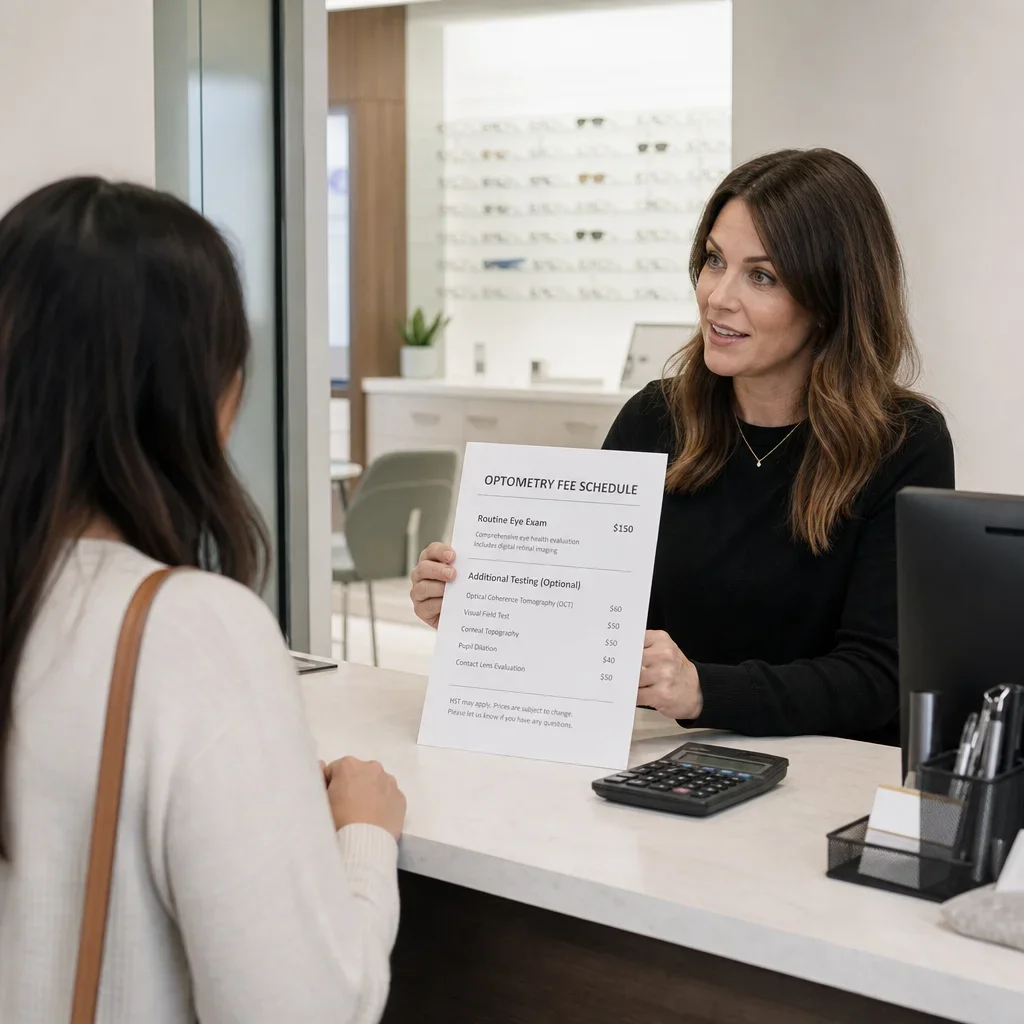
A routine comprehensive eye exam in Ontario often falls in the broad range of about $100 to $220 . The fee depends on the clinic, the type of exam, whether extra imaging is included, and whether the visit is routine, medical, or contact lens related.
A contact lens fitting or refit is usually separate from that exam fee and often runs about $40 to $150+ . If retinal imaging, specialty testing, or additional follow-up is recommended, that can change the total. The safe way to compare clinics is to ask what is included before you book.
Ontario eye exam cost is only one part of the decision. A lower posted fee does not tell you whether imaging is included, whether the clinic can direct bill eye exam claims where available, or whether glasses, fitting, and lens ordering can be handled in one visit.
How much do glasses cost after insurance?
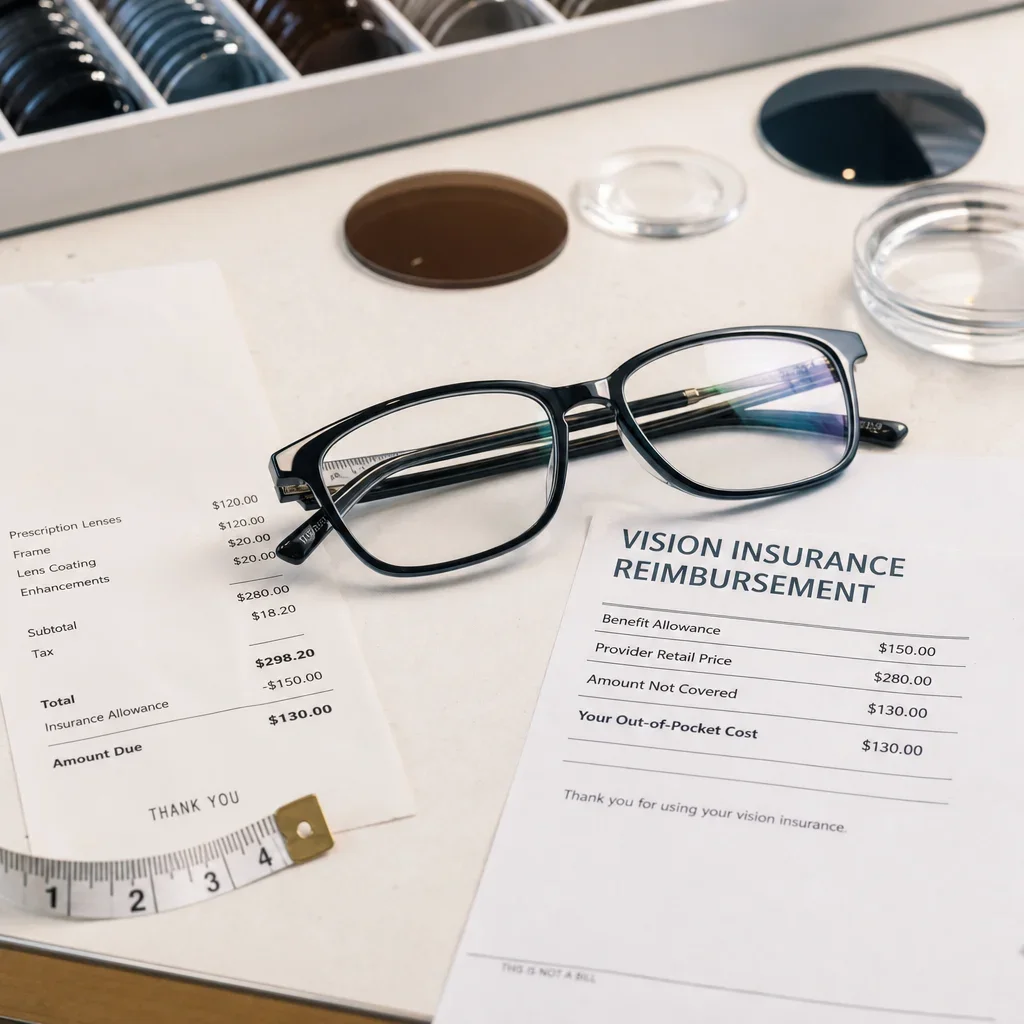
Your out-of-pocket cost depends on the frame, lens design, prescription strength, coatings, and your plan allowance. That is why how much are glasses usually after insurance has a wide answer.
If your plan gives a fixed eyewear allowance, you pay the difference above that amount. A basic pair may land close to the benefit cap, while designer frames, progressive lenses, thinner materials, or premium coatings can push the balance higher. That is also why is $300 expensive for glasses and is $600 a lot for prescription glasses cannot be answered without knowing what lenses are included.
The real comparison is not just sticker price. Fit, lens quality, measurements, adjustments, repairs, and whether the lenses are finished on-site can all affect value after insurance is used.
What is not usually covered?
Routine exams for many adults, standard glasses, standard contacts, lens upgrades, second pairs, and replacement for lost or broken eyewear are commonly not covered by public insurance. Private plans may help with some of these items, but exclusions are normal.
Does OHIP cover eye glasses is usually answered no for standard adult eyewear. Does insurance cover eye glasses under a private plan is often yes in part, but only within the plan allowance and renewal cycle. Non-prescription sunglasses, fashion blue-light glasses, and cosmetic upgrades are often excluded.
Repairs and replacements depend heavily on the plan wording. Some benefits cover only one pair per benefit period. If glasses are lost, broken, or changed early, reimbursement may not be available unless the plan specifically allows it.
What to bring before booking an insured eye exam
Bring the documents that let the clinic check eligibility properly. For OHIP-related visits, that usually means your valid health card. For private claims, bring your insurance card, member ID, employer or student plan details, and photo ID if the clinic asks for it.
Bring your current glasses, contact lens information, medication list, and any referral or recent eye records if they apply. That helps the optometrist compare prescription changes, review symptoms, and avoid repeating details you already have.
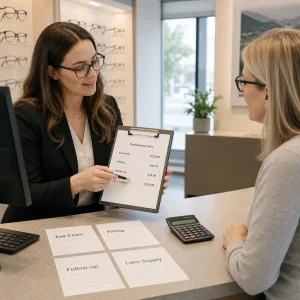
Direct billing is not automatic for every plan or every service. Some clinics can bill participating insurers directly, while others may need you to pay first and submit. If you want a direct billing eye exam, ask whether the clinic can attempt direct billing and whether your exam type, eyewear purchase, or contact lens service qualifies.
Does Premier Optical direct bill insurance in Waterloo?
Premier Optical can help patients understand likely coverage and direct billing options where available, but the insurer and the service both matter. That keeps expectations realistic and avoids surprises at checkout.
For local patients comparing an optometrist in Waterloo, the practical advantage is convenience. You can book an eye exam, review eyewear options, work with an optician, and have lenses finished in-house at one location. Eligible jobs may qualify for 1-hour lenses, and the clinic also offers free repairs and adjustments. Direct billing availability and service eligibility should be confirmed when booking.
If you are booking a Waterloo eye exam, bring your health card and insurance details so the team can check what may be billable and what may be self-pay before the visit.
FAQ: common insurance and eye care questions
Are eye exams covered by insurance in Ontario? Sometimes. OHIP may cover certain insured eye care services for eligible patients, and private plans may cover routine exams even when OHIP does not.
Can I get a free eye exam in Ontario? Possibly, but not universally. A free eye exam Ontario search usually means OHIP eligibility or a promotion, not a blanket rule for all adults.
Does OHIP cover eye exams for adults? For many adults, routine exams are often not publicly covered. Medical eye care and certain eligible categories may be different.
Does OHIP cover eye exams over 65? Seniors may qualify for insured routine eye exams under current OHIP rules, subject to eligibility and frequency limits.
Does OHIP cover eye exams for diabetes? Some diabetes-related eye care may fall under insured medical eye care pathways, but the exact rule depends on current Ontario coverage and the clinical reason for the visit.
Are annual eye exams covered by insurance? Private plans sometimes cover them, often on a 12- to 24-month cycle . OHIP coverage for symptom-free annual routine exams is more limited.
Does insurance cover prescription glasses? Private plans often cover part of the cost through an eyewear allowance. Public coverage usually does not cover standard adult glasses.
Does insurance cover contact lens exams? Often not in full. The routine exam, fitting, refit, trial lenses, and contact lens purchase can all be billed separately.
Are optometrist visits covered by insurance? Some are. Coverage depends on whether the visit is routine or medical, whether OHIP applies, and whether your private plan includes optometric services.
What is the difference between an eye test and an eye exam? An eye test usually refers to checking vision or prescription. A full eye exam also assesses eye health and can lead to referral when something needs medical follow-up.
How much is a full eye exam in Ontario without insurance? A routine comprehensive exam often runs about $100 to $220 in Ontario , but exact fees depend on the clinic and what is included.
Can Premier Optical direct bill my insurance? In many cases the clinic can review direct billing options where available, but plan participation and service type need to be verified.
The simplest next step is to book the exam before you shop for frames, then bring your health card and benefits information so coverage can be checked properly.