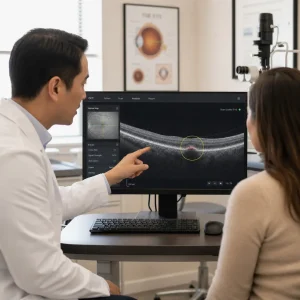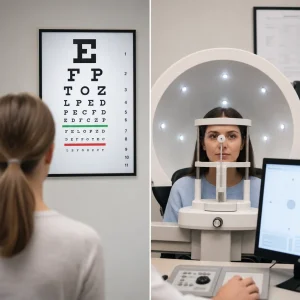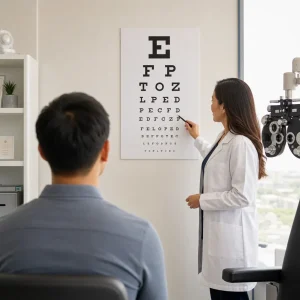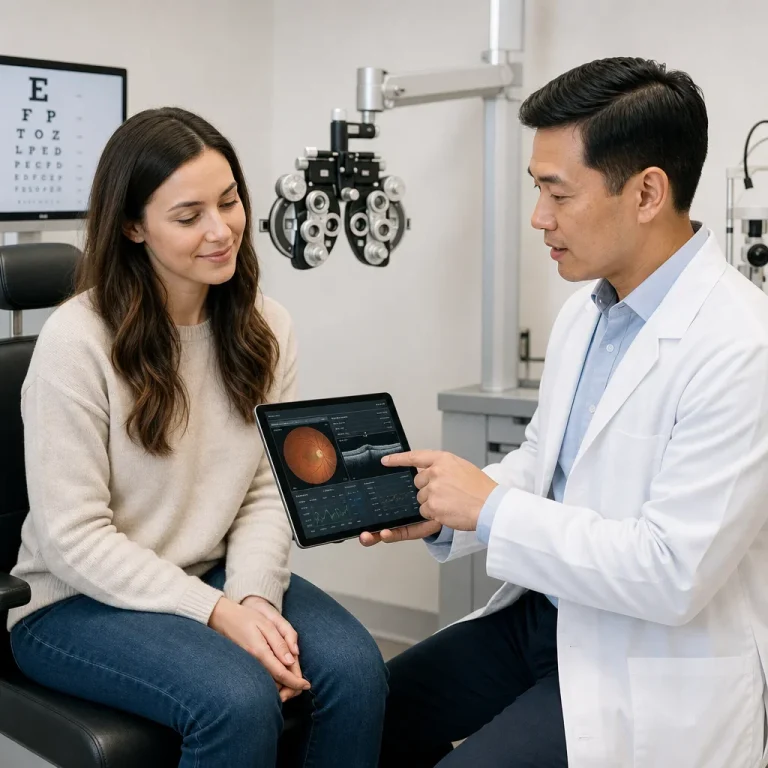
The benefits of regular eye exams start before your vision feels off. A proper eye exam in Waterloo can update your prescription, catch silent eye problems early, and show whether screen strain, headaches, or contact lens discomfort have a deeper cause.
Quick Answer: The Main Benefits of Regular Eye Exams
Regular eye exams help in six practical ways. They keep your glasses or contacts accurate, catch eye disease before symptoms start, sometimes reveal health issues that affect the eyes, improve comfort for reading and screen work, support safer driving and daily tasks, and give your optometrist a baseline to compare over time. A comprehensive eye exam checks both vision and eye health, while a quick screening only checks limited parts of sight.
Why Regular Eye Exams Matter Even If Your Vision Seems Fine
Seeing clearly at distance does not confirm that your eyes are healthy. A comprehensive eye exam can still pick up gradual prescription changes, eye pressure concerns, retinal changes, focusing problems, and binocular vision issues that may not blur vision right away.
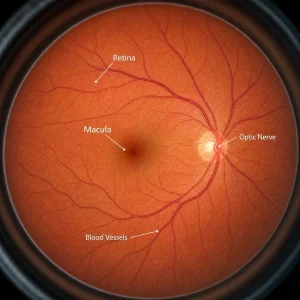
Clear vision and healthy eyes are not the same thing. Some conditions affect the optic nerve, retina, or eye surface before they change what you notice day to day, which is why regular eye tests matter even without pain or blur.
Comparing today’s findings to past records helps small changes stand out sooner. That baseline matters for children whose vision is developing, adults with heavy screen use, and older patients being monitored for age-related change.
Benefits of Regular Eye Exams, Broken Down by Type of Benefit
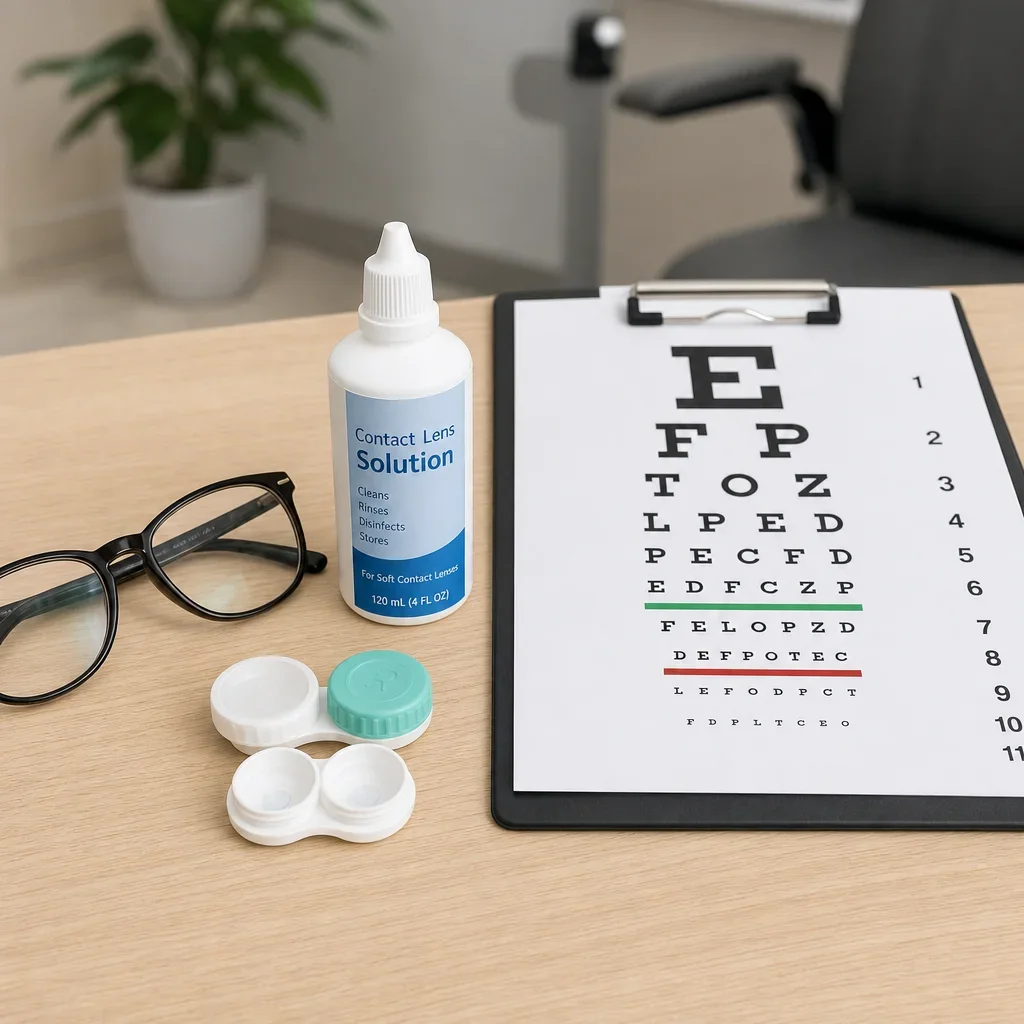
The clearest way to understand what are the benefits of regular eye exams is to split them into preventive, diagnostic, and treatment-supportive benefits. Each type helps in a different way.
| Benefit type | What it means | Examples |
|---|---|---|
| Preventive | Finds risk factors or silent changes before you notice symptoms | Monitoring eye pressure, checking the retina and optic nerve, spotting early surface irritation from contact lens wear |
| Diagnostic | Identifies a current vision or eye-health problem | Measuring myopia, hyperopia, astigmatism, presbyopia, dry eye signs, cataract changes, or diabetic eye changes |
| Treatment-supportive | Helps existing treatment work better in real life | Updating glasses, checking contact lens fit, monitoring ongoing conditions, improving comfort for reading, driving, screens, sports, and school |
That breakdown matters because eye care is not only about reading letters on a chart. An exam can support performance, comfort, and monitoring all at once, which is why is it important to have regular eye exams has a broader answer than just “to see better.”
What a Comprehensive Eye Exam Can Detect
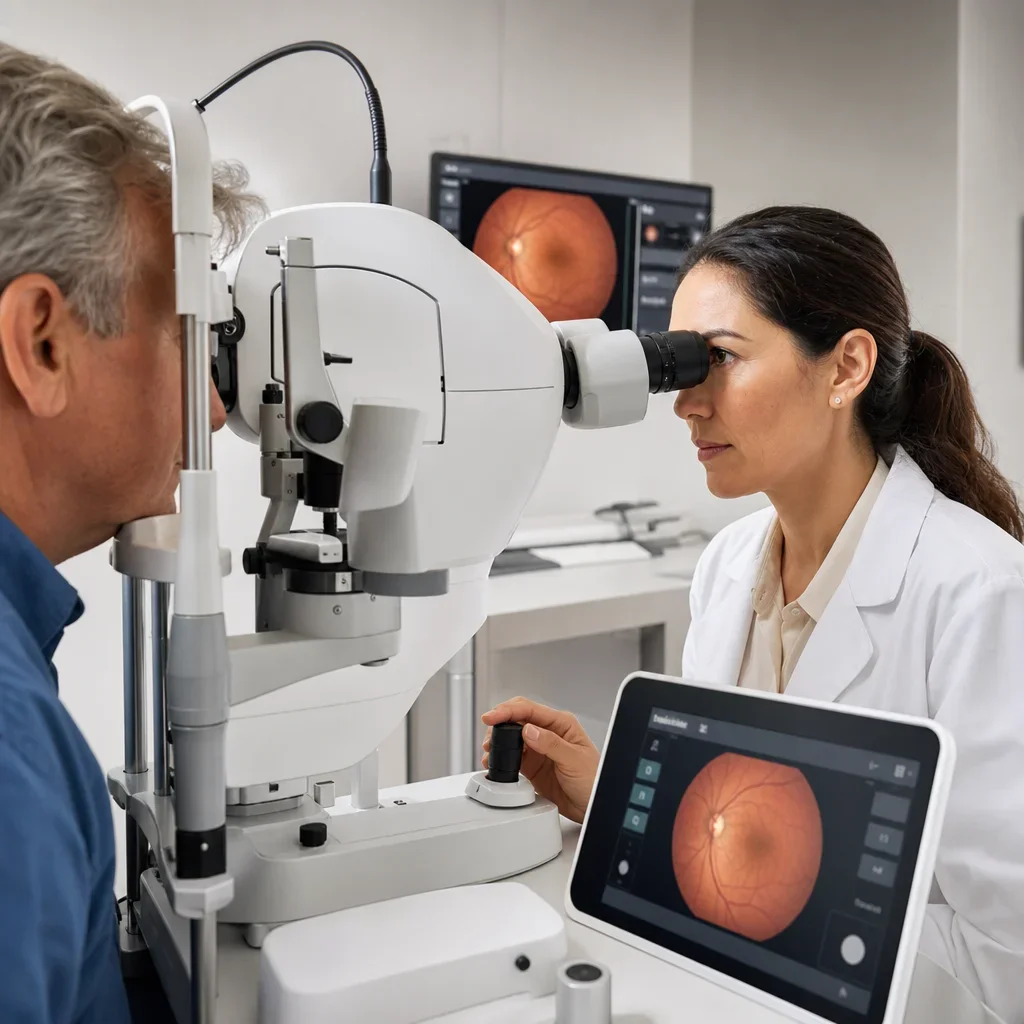
A comprehensive eye exam can detect or monitor common vision problems and eye disease. That includes myopia, hyperopia, astigmatism, presbyopia, dry eye signs, cataracts, glaucoma risk indicators, diabetic eye changes, age-related macular degeneration, amblyopia, and strabismus.
The retina and optic nerve can also show changes linked to general health. Eye exams can sometimes reveal signs associated with diabetes, high blood pressure, and high cholesterol, which may lead to follow-up with your family doctor rather than serving as a stand-alone diagnosis.
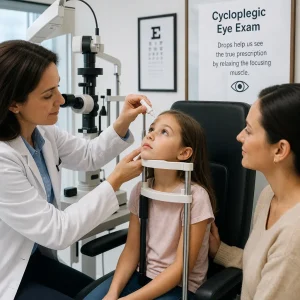
A dilated eye exam can be useful when the optometrist needs a wider view inside the eye. Dilation helps assess the retina more fully, and that matters when symptoms, risk factors, age, or medical history suggest a closer look is warranted.
Can Eye Exams Catch Problems Before Symptoms Start?
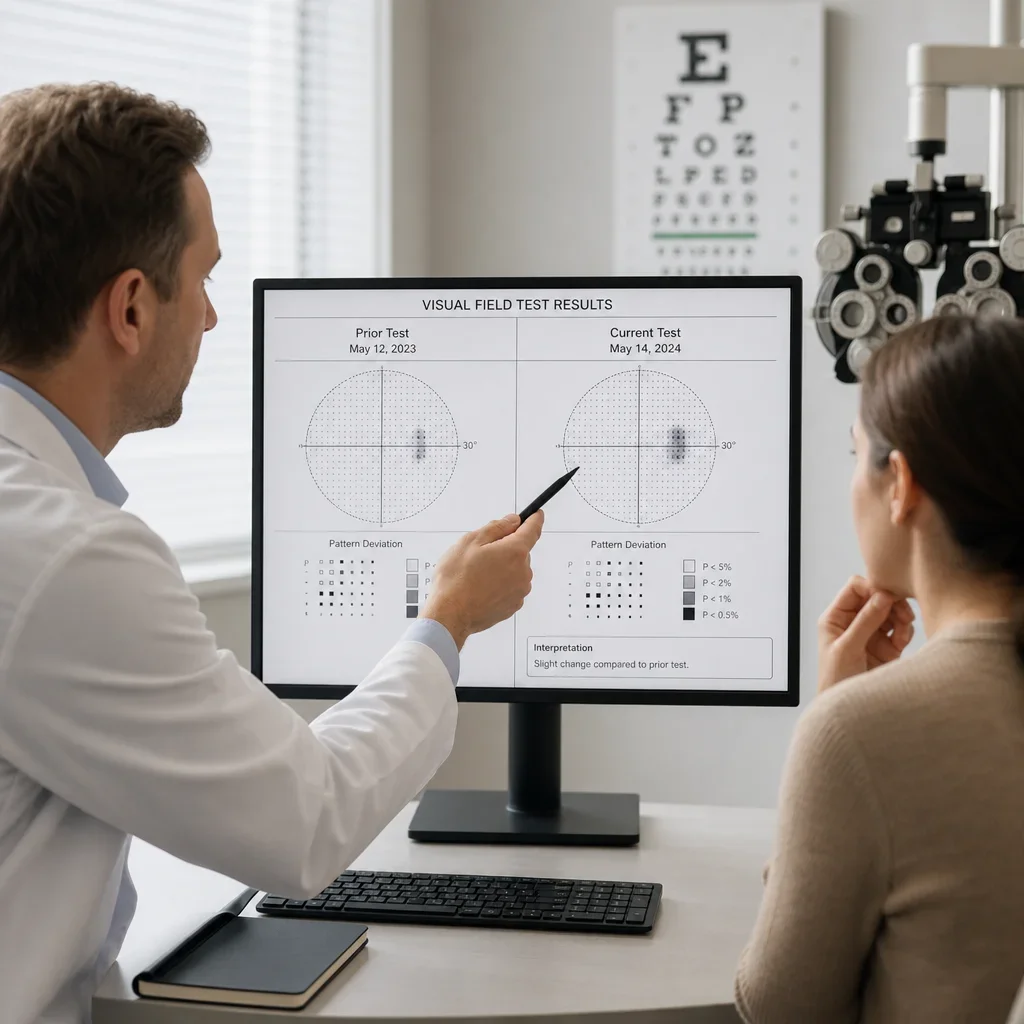
Yes, some problems can be found before you feel them. Pressure-related concerns, retinal changes, and subtle prescription shifts can develop gradually, which is one of the biggest benefits of regular eye exams.
Earlier detection does not guarantee a specific outcome, but it can change what happens next. It may allow earlier monitoring, a referral, a treatment discussion, or a more useful comparison at the next visit.
Comprehensive Eye Exam vs Vision Screening vs Online Vision Test
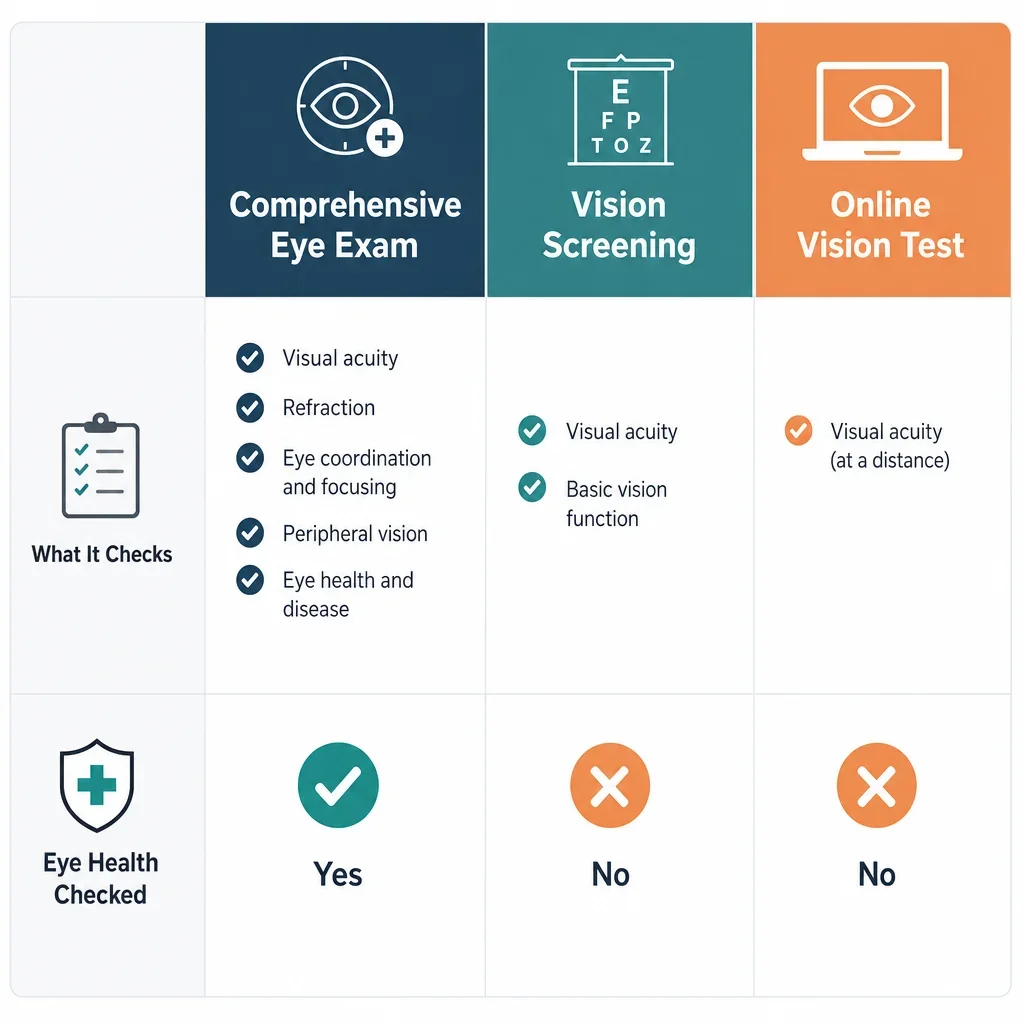
A comprehensive eye exam is the most complete option because it checks vision, eye coordination when relevant, and eye health. A vision screening is narrower, and online tools do not replace an in-person assessment of eye health.
| Option | Main purpose | Who performs it | What it checks | Checks eye health? | Best use |
|---|---|---|---|---|---|
| Comprehensive eye exam | Full assessment of vision and eye health | Optometrist | Prescription, symptoms, health history, internal and external eye assessment, added testing if needed | Yes | Routine care, symptoms, monitoring, glasses or contact lens updates |
| Vision screening | Quick pass/fail check | School, workplace, community program, or trained screener | Limited visual performance measures | No | Identifying people who need a full exam |
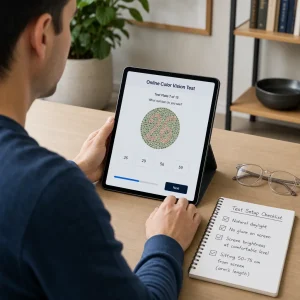
| Online vision test or app | Self-check of limited visual tasks | User at home | Selected visual performance only | No | General awareness, not diagnosis or full care |
| Dilated eye exam | Added internal-eye assessment when indicated | Optometrist | Wider view of retina and internal structures | Yes | Part of a full exam when clinically useful |
A screening can miss issues outside the narrow test it uses. That is the key difference in the vision screening vs eye exam debate. A screening may suggest whether more testing is needed, but it does not replace a comprehensive eye exam.
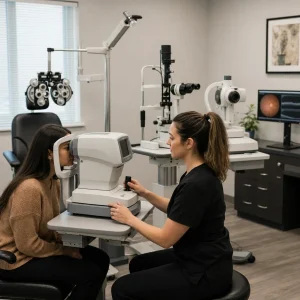
What Happens During an Eye Exam: Step by Step
Most eye exams start with history and goals. You will usually discuss symptoms, current glasses or contacts, medications, health conditions, family eye history, and daily visual tasks such as driving, screens, reading, or school work.
The appointment commonly takes about 20 to 60 minutes, depending on history, symptoms, testing, and whether dilation or extra imaging is needed.
Visual acuity testing checks how clearly you see at distance and near. Refraction then measures the lens power needed for the clearest prescription if glasses or contact lens updates are part of the visit.
Eye movement, focusing, and teaming may also be assessed when symptoms point that way. That matters for children with reading complaints, adults with headaches at the computer, or anyone with double vision or fatigue.
The optometrist may use a flashlight to check pupils and how the eyes respond to light. That simple step helps assess pupil reactions and gives clues about eye and nerve function.
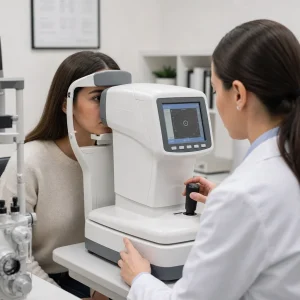
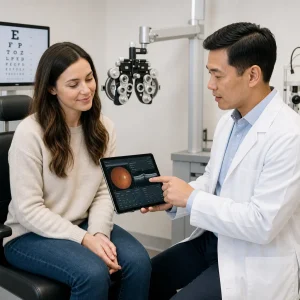
Eye health testing looks at the front and back of the eye. Depending on age, symptoms, and risk, that may include pressure checks, retinal assessment, a dilated eye exam, or imaging the optometrist believes is clinically useful.
Most tests are straightforward, though some involve bright lights. If your eyes are dilated, near vision and light sensitivity can be temporarily affected for several hours.
How Often Should You Get an Eye Exam?
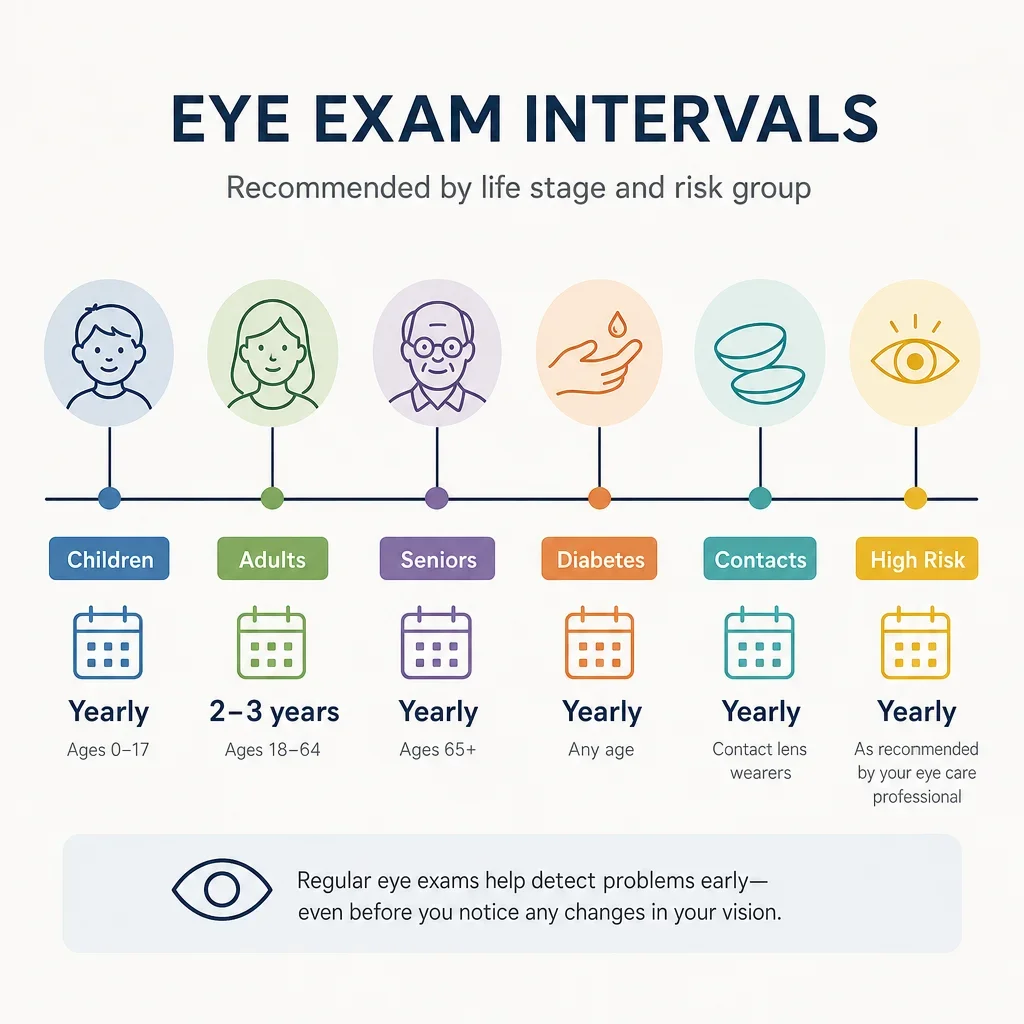
Eye exam frequency depends on age, risk, symptoms, and whether you wear glasses or contacts. General guidance is a starting point, but your optometrist may set a shorter interval based on what they find.
| Group | General scheduling guidance |
|---|---|
| Infants | First eye exam between 6 and 9 months |
| Preschool children | At least one exam between ages 2 and 5 |
| School-age children | Yearly exams are commonly recommended |
| Adults 20 to 39 | Every 2 to 3 years if low risk |
| Adults 40 to 64 | Every 2 years if low risk |
| Adults 65 and over | Yearly exams are commonly recommended |
| People with diabetes | At least annual exams or as advised |
| Contact lens wearers | Regular follow-up, commonly yearly, because fit and eye surface health matter as well as prescription |
| Existing eye conditions or strong family history | More often if advised based on risk or monitoring needs |
If you wear glasses, your eyes should also be checked sooner when vision changes, headaches start, or work demands shift. That is the practical answer to how often should you get your eyes checked if you wear glasses.
If you wear contact lenses, regular follow-up matters even when the prescription feels stable. Contact lens reviews look at lens fit, corneal health, and surface irritation, which answers how often should you get an eye exam if you wear contacts more fully than prescription alone.
If you have astigmatism, timing depends on stability and symptoms. If your glasses no longer feel sharp, night driving gets harder, or your lenses are uncomfortable, it is reasonable to book earlier rather than waiting for a routine interval.
Benefits by Life Stage: Children, Adults, Seniors
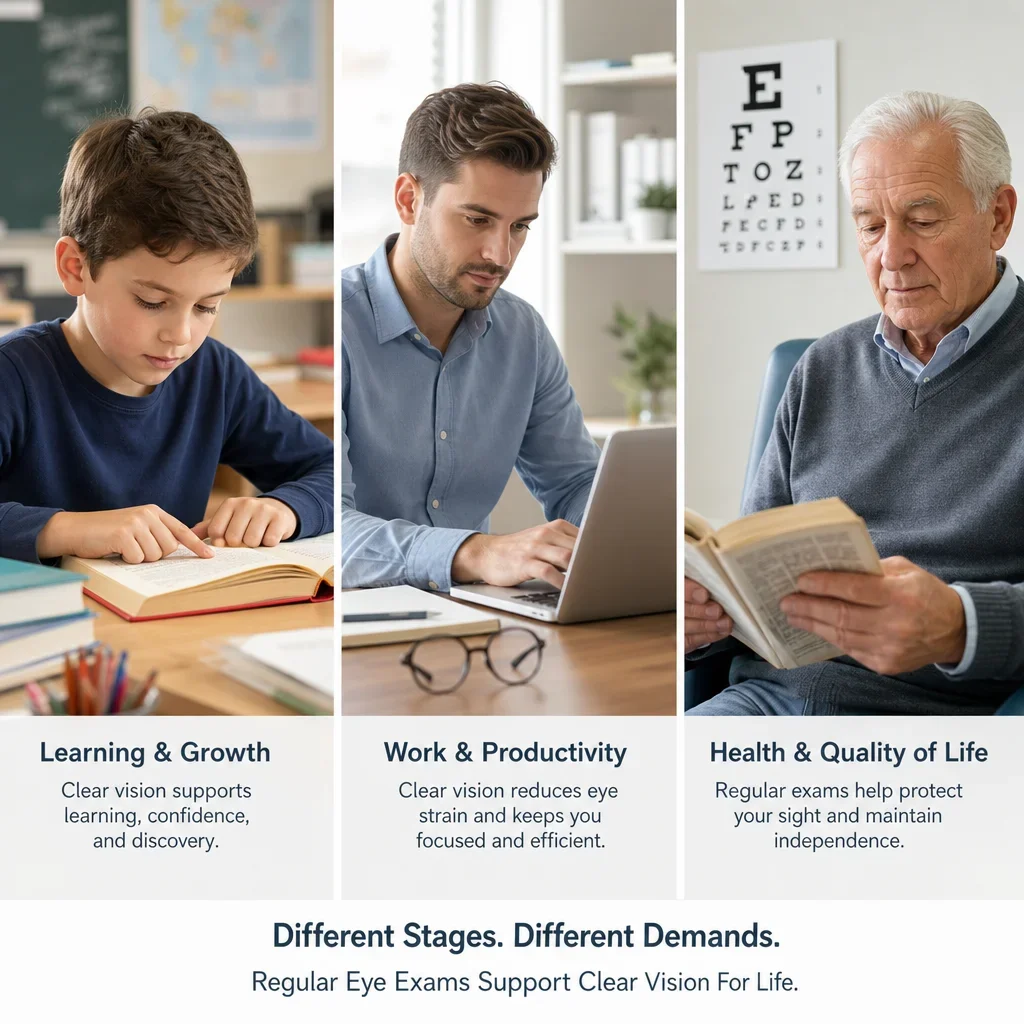
The benefits change with age because visual demands and risks change with age. Children need support for development, adults need support for work and daily performance, and seniors need closer monitoring for age-related change.
| Life stage | Top benefits | Common reasons to book sooner |
|---|---|---|
| Children | Tracks visual development, checks eye teaming and focusing, supports classroom comfort, reading, and early detection of problems they may not describe | Squinting, sitting very close to screens, eye rubbing, headaches, avoiding reading, drifting eye, school complaints |
| Adults | Updates prescriptions, checks screen-related comfort, supports driving and work, monitors family-history risks and health-related eye changes | Blurry vision, headaches, digital eye strain, trouble with night driving, contact lens discomfort |
| Seniors | Monitors cataracts, retinal health, glaucoma risk, and vision changes that affect reading, balance, driving, and independence | More glare, poorer night vision, sudden changes, trouble reading, falls or balance concerns |
Children do not always know that what they see is unusual. That is one reason eye exams are important for children’s learning and development, especially when symptoms show up as avoidance, fatigue, or behavioural frustration rather than a direct complaint about vision.
Older adults need eye exams more often because age-related conditions become more common with time. Cataracts, glaucoma, and macular degeneration are not diagnosed by symptoms alone in their early stages.
Warning Signs: Book Soon vs Seek Urgent Eye Care
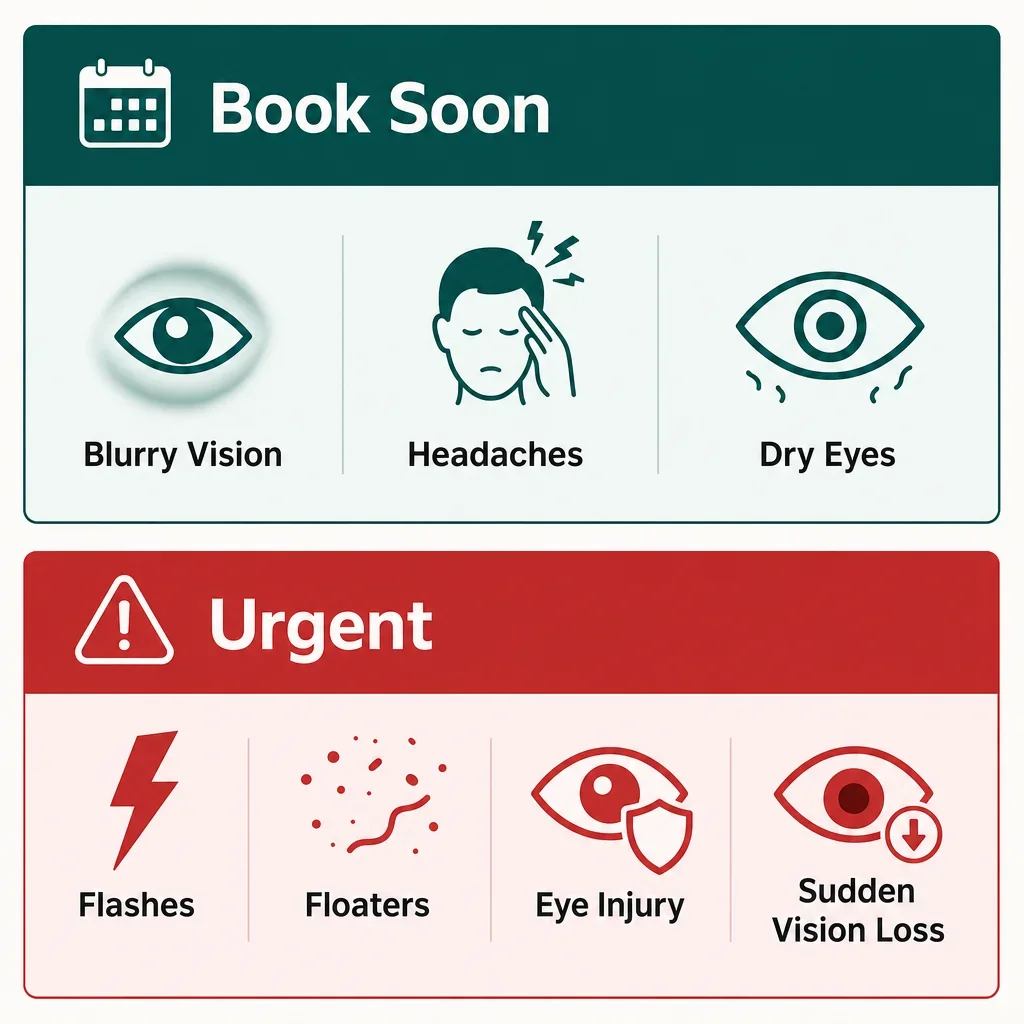
Some symptoms call for a routine appointment soon, while others should not wait. Knowing the difference helps protect both comfort and safety.
Book a routine exam soon for these signs:
- Blurry vision at distance or near
- More headaches with reading or screen use
- Eye strain or fatigue by the end of the day
- Squinting more than usual
- Trouble with night driving or glare
- Dry, irritated, or uncomfortable eyes
- Frequent disappointment with current glasses
- A child holding books or screens unusually close
Seek urgent eye care or immediate medical attention for these red flags:
- Sudden vision loss
- New flashes with a sudden increase in floaters
- A curtain-like shadow in vision
- Eye injury
- Chemical exposure
- Severe eye pain
- Significant redness with pain or light sensitivity
- Sudden double vision
For urgent symptoms, do not wait for a routine eye exam. Call an eye care provider right away or seek urgent medical care.
Screen Time, Eye Strain, and Everyday Visual Comfort

Screen time commonly affects comfort more than long-term eye structure. Digital eye strain can cause tired eyes, blur after long sessions, headaches, dryness, and trouble refocusing, especially when the prescription is slightly off or blinking drops during screen use.
The 20-minute eye rule usually refers to the 20-20-20 habit. Every 20 minutes, look about 20 feet away for 20 seconds. That is a comfort strategy, not a substitute for an exam.
The 30-30-30 rule for eyes is another commonly shared reminder to take regular visual breaks. Different versions circulate, so the main point is not the exact formula but the habit of pausing, looking away, blinking, and resetting focus during prolonged near work.
A comprehensive eye exam helps when screen symptoms persist. It can rule out prescription issues, focusing strain, binocular vision problems, and dry eye contributors that a generic break reminder will not identify on its own.
What to Bring and How to Prepare for Your Appointment
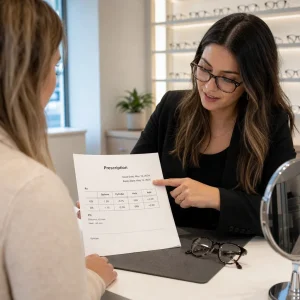
A little preparation makes the visit more useful. Bring your current glasses, contact lens boxes or prescription details, a medication list, insurance information if you plan to use benefits, and notes about symptoms or tasks that feel harder than they used to.
Use this checklist before your visit:
- Current glasses and sunglasses
- Contact lens brand, power, and wearing schedule
- Medication and supplement list
- Health card or insurance details if applicable
- Notes on headaches, dryness, blur, glare, or double vision
- Examples of difficult tasks like night driving, reading, screens, or sports
- Family history of glaucoma, macular degeneration, or diabetes-related eye issues
It also helps to mention medication changes and general health changes. Some medications can affect dryness, eye pressure, focusing, or retinal risk, which is why eye exams become more important when your medical picture changes.
If dilation may be part of the visit, ask about temporary blur and driving afterward. That is not needed for every patient, but it is useful to plan ahead.
Cost, Insurance, and Referral Questions in Ontario
Many routine eye exams can be booked directly without a referral. Some medically complex cases may still involve coordination with your physician, but a standard comprehensive eye exam usually starts with the optometry clinic itself.
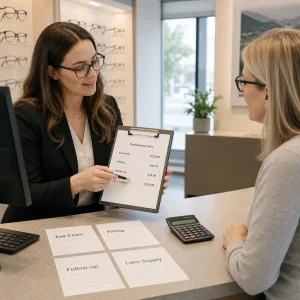
The annual eye exam cost varies by exam type, age, symptoms, and whether added testing is clinically needed. Because clinic fees and Ontario coverage rules can change, it is best to confirm current pricing and eligibility directly with the clinic before booking.
Insurance can lower out-of-pocket cost, but coverage depends on your plan and your eligibility. In Ontario, some patients may have provincial coverage for certain eye care, while others use private vision benefits, so checking both your plan details and the clinic’s billing process saves surprises.
Direct billing can make payment easier when the clinic offers it and your plan participates. If you are booking an eye exam in Waterloo, ask in advance what information to bring and whether your specific benefit plan can be submitted on site.
Why Booking Locally Can Make Follow-Up Easier
Local follow-up is simpler when the exam, eyewear discussion, and lens planning can happen in one place. If your prescription changes or your glasses are causing discomfort, coordinated care saves time and reduces back-and-forth.
For patients who want both clinical care and eyewear support, Premier Optical combines eye exams, opticians, and an in-house lens lab under one roof, with direct billing available where eligible. That can make a Waterloo optometrist visit more practical when you need answers and updated glasses in the same care path.
FAQ: Common Questions About Regular Eye Exams
Why are regular eye exams important if I can already see well?
Good day-to-day vision does not rule out early eye disease, retinal change, or gradual focusing problems. Eye health and visual sharpness are related, but they are not the same thing.
What are the biggest benefits of regular eye exams?
The main benefits are updated prescriptions, early detection of silent problems, better comfort with glasses or contacts, support for reading and driving, and records that show change over time.
How often should I get my eyes checked if I wear glasses?
A general routine depends on age and risk, but book sooner if blur, headaches, eye strain, or changing work demands show up. Prescription stability is only part of the picture.
How often should I get an eye exam if I wear contact lenses?
Contact lens wearers usually need regular follow-up, commonly yearly, because lens fit and eye surface health need review along with prescription.
Can an eye exam detect health problems besides vision changes?
Sometimes, yes. Eye exams can reveal signs associated with broader issues such as diabetes, high blood pressure, or high cholesterol, which may lead to medical follow-up.
What is the difference between a vision screening and a comprehensive eye exam?
A screening is a limited check. A comprehensive exam evaluates vision, symptoms, eye health, and any added testing your optometrist believes is needed.
What tests are done during an eye exam?
Common parts include history, visual acuity, refraction, pupil checks, eye health assessment, and sometimes pressure testing, dilation, or imaging depending on risk and symptoms.
Do I need a referral to book an eye exam in Waterloo?
Usually no for routine care. You can normally contact the clinic directly to book.
How much does an eye exam cost in Ontario?
Fees vary by clinic and exam type, and coverage depends on provincial eligibility and private insurance. Confirm current pricing with the clinic before your appointment.
Does insurance cover eye exams or eyewear?
Some plans do, some do not, and limits vary. Ask about direct billing and check your benefit details before you go.
When should my child have their first eye exam?
General Canadian guidance places the first exam between 6 and 9 months. After that, follow milestone and school-age recommendations or the schedule your optometrist suggests.
What symptoms mean I should book an eye exam sooner?
Blur, headaches, night-driving trouble, contact lens discomfort, dry eyes, squinting, or a child moving very close to screens are all good reasons to book sooner.
Can online vision tests replace an in-person eye exam?
No. They may check limited visual performance, but they do not assess overall eye health.
What is a dilated eye exam, and do I always need one?
It uses drops to widen the pupil so the optometrist can see more of the retina. You do not always need it, but it can be very useful depending on age, symptoms, and risk.
What should I bring to my appointment?
Bring your glasses, contact lens details, medication list, insurance information, and notes on symptoms or tasks that have become harder.
If it has been a while since your last exam, your glasses feel off, you wear contact lenses, or you have new symptoms, booking a comprehensive eye exam is the practical next step. If you are looking for an optometrist in Waterloo, choose a clinic that can explain the findings clearly and make follow-up easy.