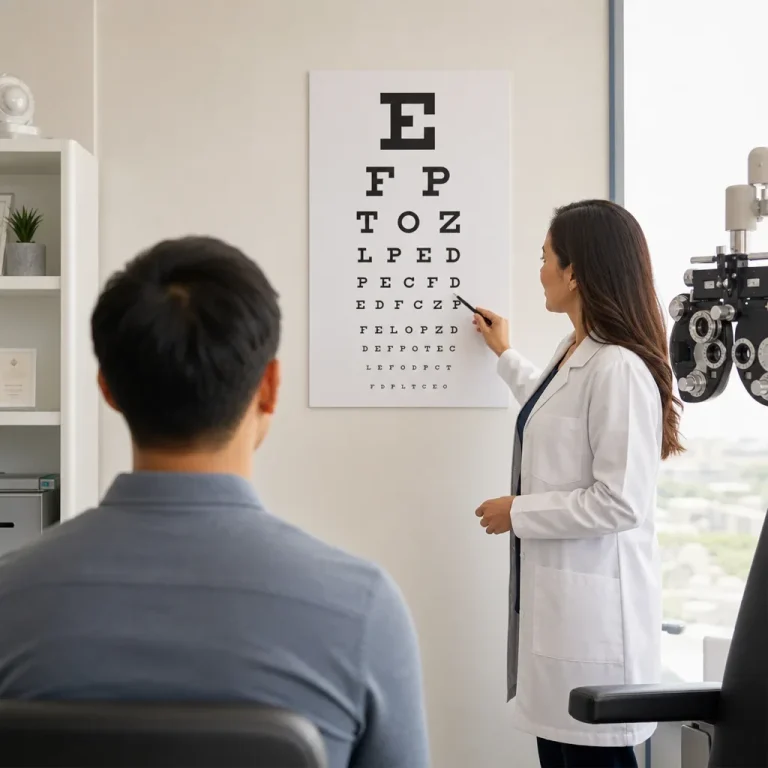
A 20 50 vision test result is not a diagnosis. It is a visual acuity measurement that tells you how clearly you see at distance, and 20/50 vision means you see at 20 feet what a person with standard 20/20 vision can see at 50 feet. If you got that result from a school screen, an online test, or a recent eye exam Waterloo patients often ask the same thing next: is this minor, serious, or something that needs attention soon?
Quick answer: what a 20/50 result means
20/50 usually means distance details are blurrier than normal, but the number alone does not tell you why. The cause could be a simple refractive error, dry eye, old glasses, cataracts, or another eye-health issue, so the next step is a proper exam rather than guessing from the score alone.
20/50 can be measured with or without glasses or contacts, and that difference matters. Uncorrected vision means how you see without help, while corrected vs uncorrected vision can point in very different directions clinically.
20/50 is usually not the same as legal blindness. Legal definitions are based on much poorer best-corrected vision and sometimes visual field loss, and readers should rely on the current legal standard and an optometrist’s assessment rather than a blog post for licensing or disability decisions.
A routine eye exam is the right next step for gradual blur, failed screenings, squinting, or trouble seeing signs, boards, or subtitles. Same-day care is the safer move for sudden blur, eye pain, flashing lights, many new floaters, a curtain or shadow, trauma, or sudden one-eye vision loss.
What a 20/50 vision test result means
20/50 vision means your distance vision is weaker than 20/20, because at 20 feet you need letters or details large enough that a person with normal acuity could identify them at 50 feet. That is why road signs, classroom boards, faces across a room, and TV text may look less crisp.
Visual acuity is the clarity of vision at a set testing distance, not a diagnosis of the cause. A 20 50 vision test can show that vision is reduced, but it cannot by itself tell whether the reason is myopia, astigmatism, dry eye, cataracts, or something affecting the retina or optic nerve.
The seriousness depends less on the number alone and more on whether the blur is new, one-sided, worsening, or improved by refraction. I would not minimize a fresh 20/50 result in one eye, and I would not overreact to a stable result that clears with updated lenses. This is general information, not a medical recommendation for your situation.
How 20/50 compares with 20/20, 20/40, 20/60, 20/70, and 20/100
20/50 sits in the middle of a range where everyday function can still be decent, but distance detail is clearly reduced. It is worse than 20/40 vision, but better than 20/70 or 20/100.
| Visual acuity | Plain meaning | Real-life example |
|---|---|---|
| 20/20 | Standard reference clarity | Distant signs and board text are usually sharp in good lighting. |
| 20/40 | Mild reduction in distance clarity | Smaller street signs or presentation text may be harder to catch early. |
| 20/50 | Moderate blur at distance | Faces across a room, subtitles, and road signs may be clear only when closer. |
| 20/60 | More noticeable distance blur | Classroom boards, scoreboards, and lane signs may be harder to read comfortably. |
| 20/70 | Reduced detail that affects more tasks | Sports tracking, lecture screens, and distant facial details become harder. |
| 20/100 | Marked distance blur | Large distant text and signs may still be unclear without correction. |
What does 20/50 vision look like in real life? It often means letters across the room lose edge sharpness, contrast matters more, and low light makes the blur feel worse. Two people with the same chart result can still function differently because lighting, glare, dry eye, and the cause of the blur all change the experience.
Is 20/50 vision bad, and is it legally blind?
20/50 is generally not considered legally blind. A commonly cited legal blindness standard is 20/200 or worse in the better-seeing eye with best correction, and some definitions also include restricted visual field, but the exact legal wording should be confirmed through the current governing source for your purpose.
That means a 20/50 result can still matter without being anywhere near legal blindness. You may notice real limits with driving, school, work, or sports, but the result does not by itself decide disability status, benefits, or licensing outcomes.
The practical takeaway is simple: treat 20/50 as a sign to get the cause checked, not as a label. If your concern is legal, insurance, or licensing related, verify the standard in force and ask your eye doctor to document your corrected and uncorrected vision properly.
Can you drive with 20/50 vision in Ontario?

Driving eligibility in Ontario depends on the current licensing standard, whether your vision is corrected or uncorrected, the better-seeing eye, and visual field, not just one blog number. Because standards can change and licensing decisions are legal determinations, it is safer to confirm the current Ontario requirements directly and ask your optometrist how your measured vision fits them.
A 20/50 result may or may not be acceptable depending on whether glasses or contacts improve it and how each eye performs. If road signs, lane markings, cyclists, or pedestrians are not clear, do not rely on guesswork or assume you are safe to drive because one online chart seemed passable.
An eye exam Waterloo drivers book for blurred distance vision usually includes acuity testing, refraction, and eye-health checks that can separate a simple prescription issue from a problem that needs more attention. That is the right place to get guidance on vision for driving rather than trying to interpret a home chart alone.
How the 20 50 vision test is measured
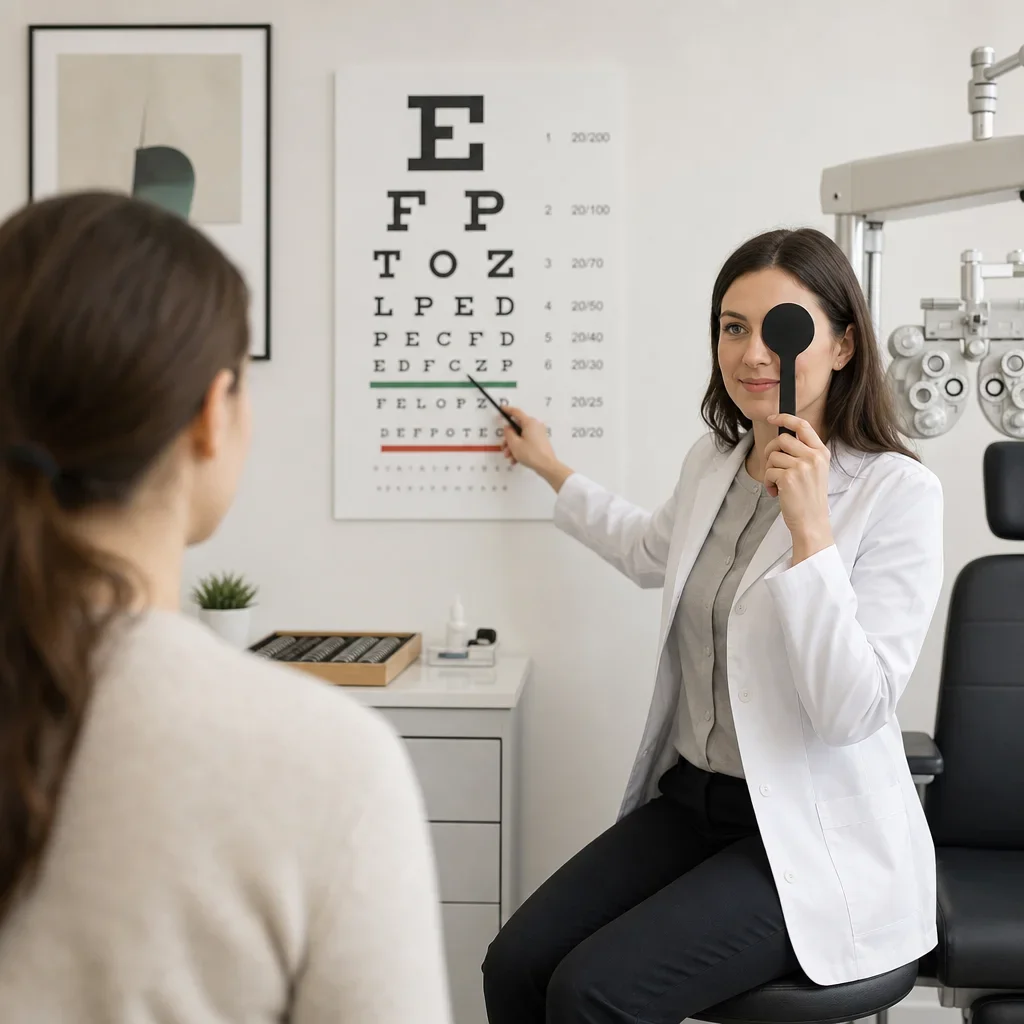
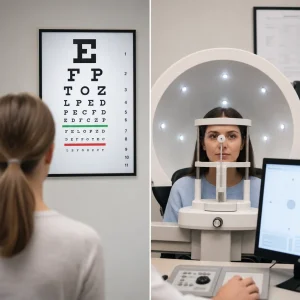
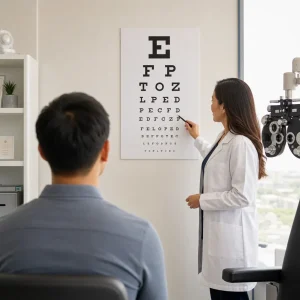
A Snellen chart measures how small a letter size you can read at a standardized testing distance. In many exam rooms that distance is 20 feet, though some clinics use mirrored or digital setups that simulate the same standard in a shorter room.
The test is usually done one eye at a time, then with both eyes together, and often with your current glasses if you wear distance correction. If the letters are blurrier than expected, the doctor may use a pinhole test or a refraction to see whether the vision improves with lenses.
A screening and a full exam are not the same thing. A screening can flag reduced acuity, while a comprehensive exam adds refraction and eye-health assessment to explain why the number is reduced and whether the problem is optical, medical, or both.
Results can shift with lighting, contrast, dry eye, fatigue, and testing setup. That is why a 20/40 eye test chart at school, a 20/40 vision test online, and a clinic result may not match exactly.
Corrected vs uncorrected 20/50 vision
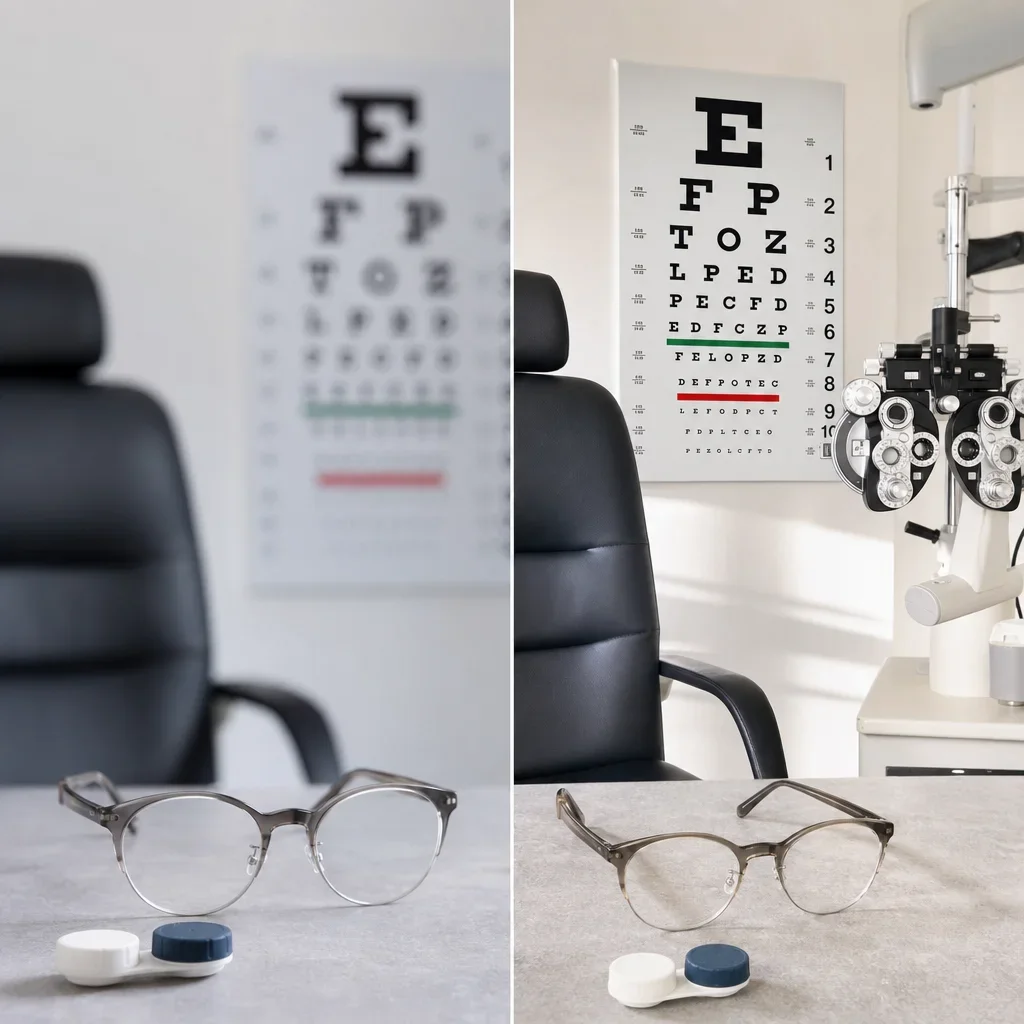
Corrected vs uncorrected vision changes the meaning of the same number. Uncorrected 20/50 may simply mean you need an updated prescription, while best-corrected 20/50 can suggest that glasses are not the whole story and more evaluation is needed.
A refraction is the part of the exam where different lens powers are compared to find the clearest prescription. If vision improves significantly during refraction, the blur is more likely related to refractive error rather than a disease process, though the eye-health exam still matters.
Old glasses, scratched lenses, warped coatings, or contact lens dryness can lower measured acuity. We see this regularly when people assume their eyes changed dramatically, but the actual issue is outdated eyewear or unstable tear film.
Common causes of 20/50 vision
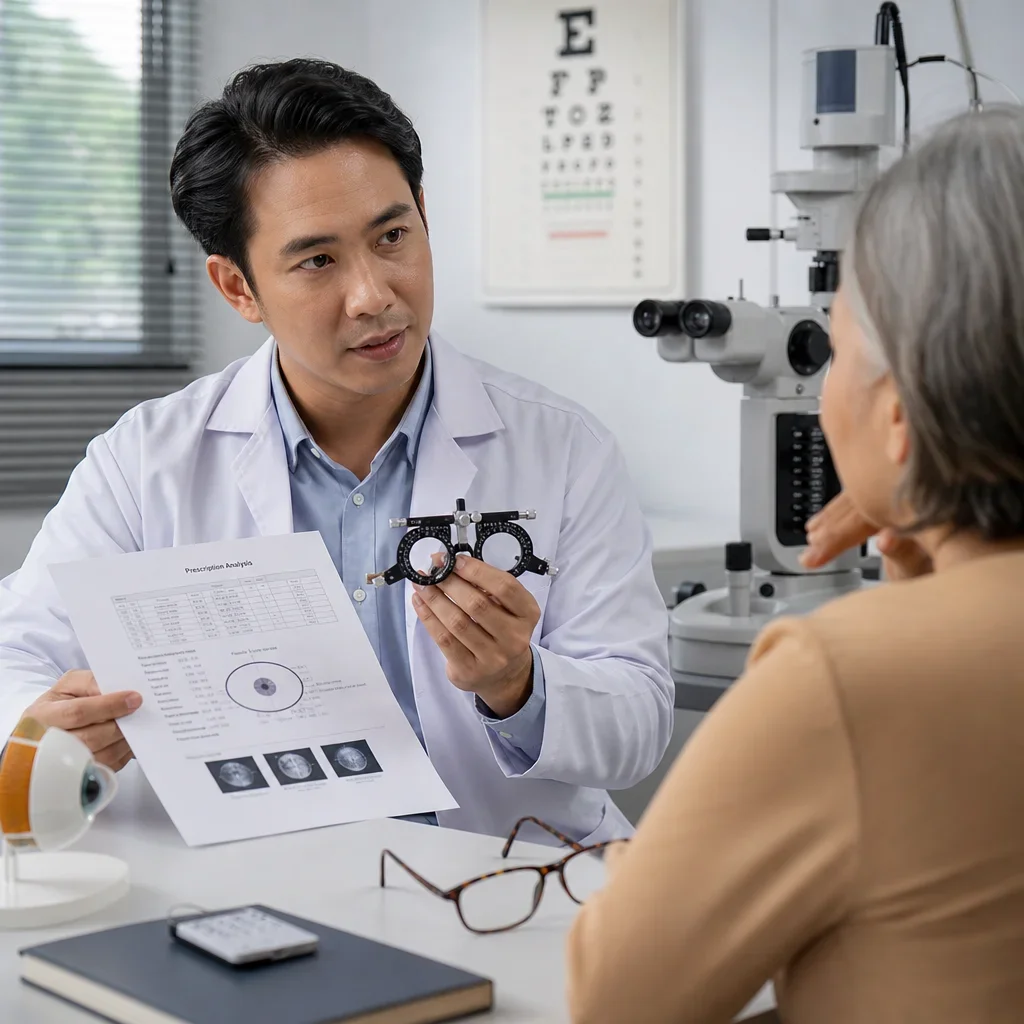
The most common cause of a 20/50 result is refractive error. That includes myopia, hyperopia, astigmatism, and age-related near focusing changes that can make distance or near tasks feel less clear depending on the person and the prescription pattern.
20/50 can also come from dry eye, cataracts, corneal problems, amblyopia, retinal disease, glaucoma, or optic nerve issues. That is why no honest clinic should assign a cause from the acuity number alone.
20/50 vision is not automatically nearsighted or farsighted. Myopia is a common reason for blurred distance vision, but astigmatism, mixed prescriptions, and eye-health problems can produce a similar chart result.
There is no reliable 20/50 vision prescription conversion. Many different prescriptions can land at similar visual acuity, so a 20/50 vision prescription is not a fixed lens power and should never be guessed from a chart result alone.
Can fatigue, dry eye, or screen use make a 20/50 result worse?
Yes, temporary factors can make a vision test look worse than your usual baseline. Tear film instability, long screen sessions, poor sleep, illness, some medications, and contact lens dryness can all reduce clarity enough to affect a screening result.
This kind of fluctuation often shows up later in the day or after hours of close work. People will say the board looked fine in the morning but blurry by evening, or that distance signs seem worse after laptop use, which is a pattern we often see with dry eye and visual strain.
Temporary blur still does not rule out a real prescription change or eye disease. If the blur is persistent, getting worse, one-sided, or paired with pain, distortion, or headaches, book an exam rather than assuming screen time is the only cause.
What if only one eye is 20/50?
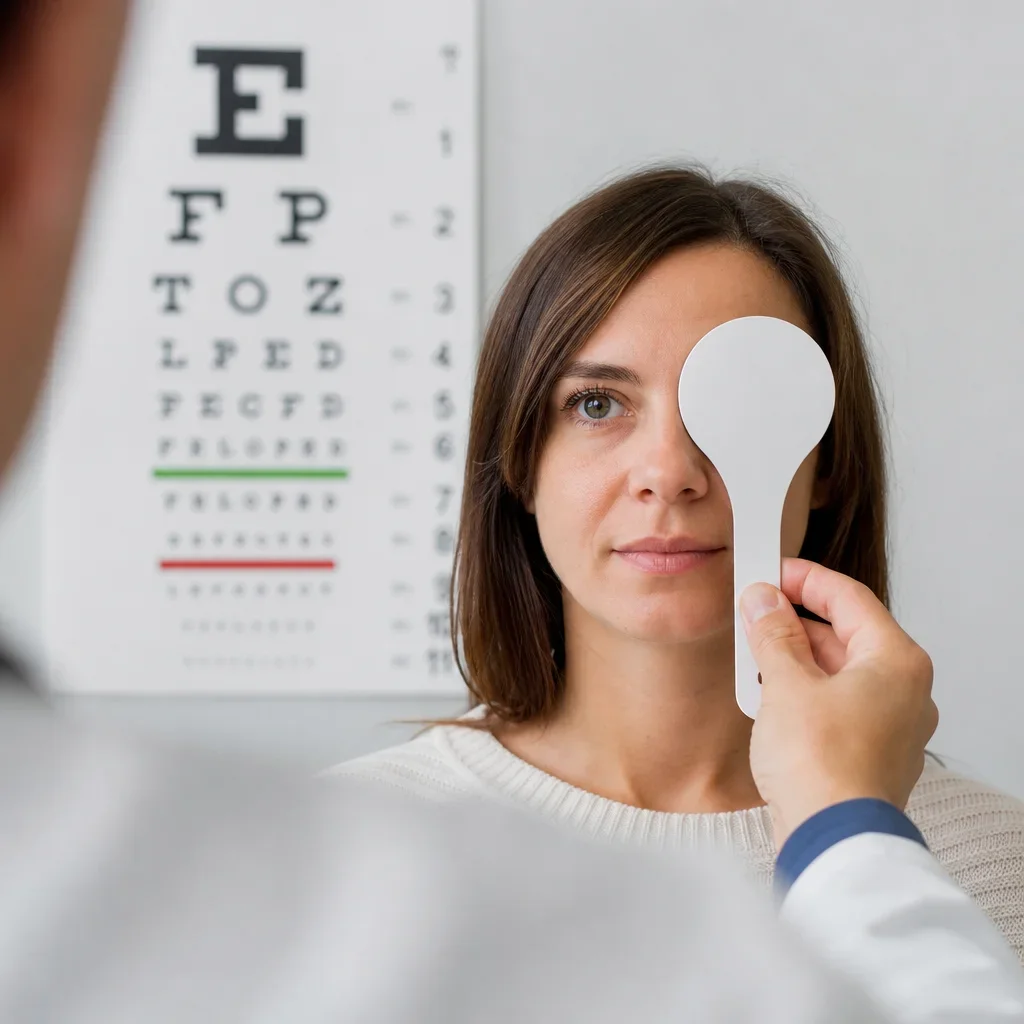
One-eye blur deserves more attention than people give it. A result like 20/50 in one eye can come from unequal prescription, amblyopia history, dry eye, cataract, corneal irregularity, or a retinal or optic nerve problem.
Sudden blur in one eye is a same-day issue if it comes with flashes, many new floaters, pain, distortion, double vision, or a curtain or shadow in your vision. Those symptoms are not typical signs of simply needing glasses.
Longstanding blur in one eye is still worth a full exam even if the other eye feels normal. The stronger eye can mask the problem for years, especially in adults who do not cover one eye often.
What if both eyes are 20/50?
Blur in both eyes often points to a prescription issue, dryness, or a generalized eye-health factor affecting both eyes. It can also be a sign that your current glasses are out of date or that cataracts or another bilateral condition are developing.
The pattern matters. Gradual, symmetrical blur without pain is more likely to fit a routine exam pathway, while sudden blur in both eyes, especially with headache, neurological symptoms, or severe discomfort, deserves prompt medical advice.
Both-eye 20/50 can still affect reading lecture screens, seeing faces at a distance, sports tracking, and confidence while driving. Even if near tasks seem manageable, distance acuity that low is enough to justify a proper assessment.
What if a child has 20/50 vision?
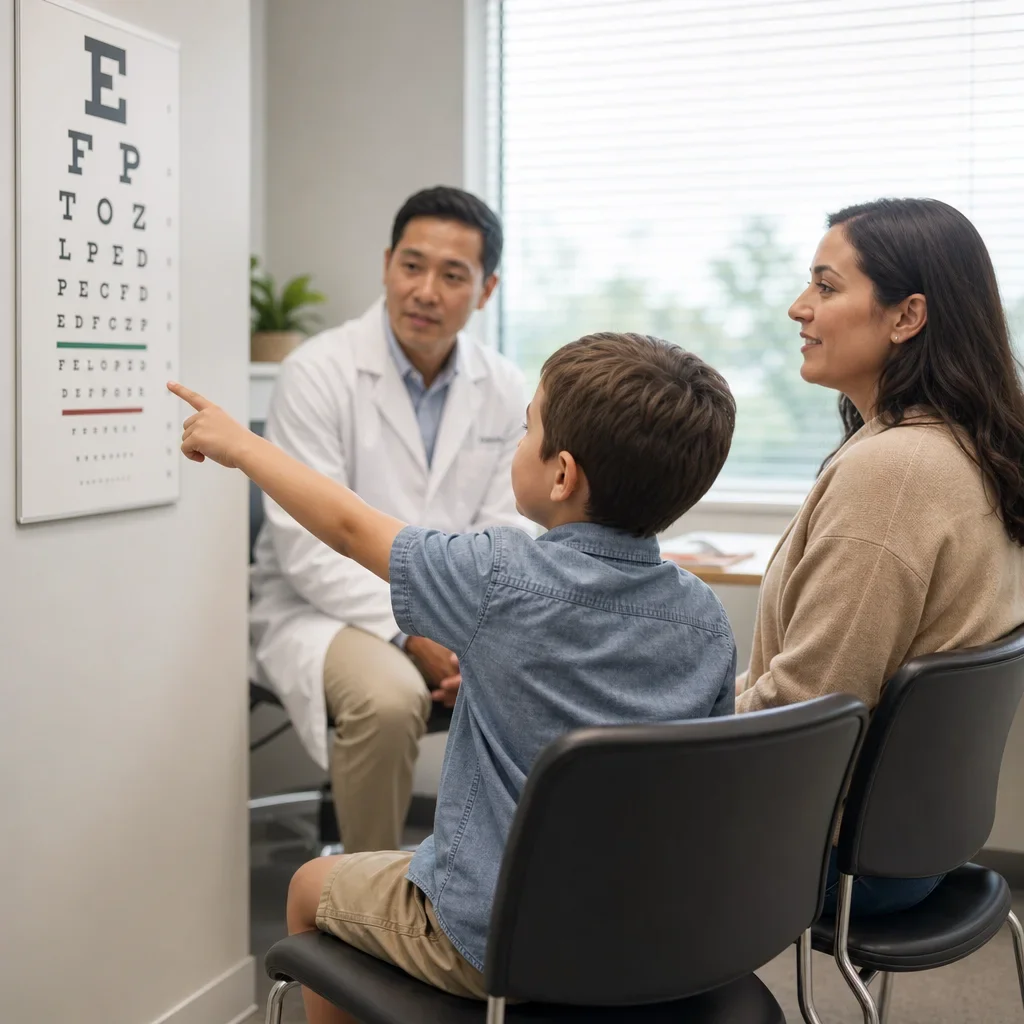
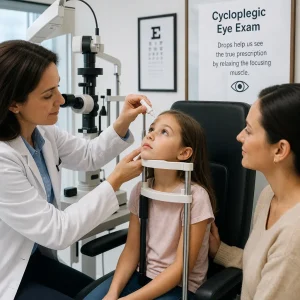
A child who screens at 20/50 should have a proper eye exam rather than being told to wait and see. School or community screening can catch reduced acuity, but it cannot determine whether the cause is a simple prescription, binocular vision issue, amblyopia risk, or something else.
Children may not say they see poorly because they assume everyone sees the same way. Instead, you may notice squinting, headaches, holding devices very close, losing their place while reading, avoiding sports, or struggling to see the classroom board.
Prompt evaluation matters more when the blur is one-sided, new, or paired with an eye turn or frequent eye rubbing. A proper exam can clarify whether glasses are needed and whether any follow-up is time-sensitive.
Does 20/50 vision need glasses or contacts?
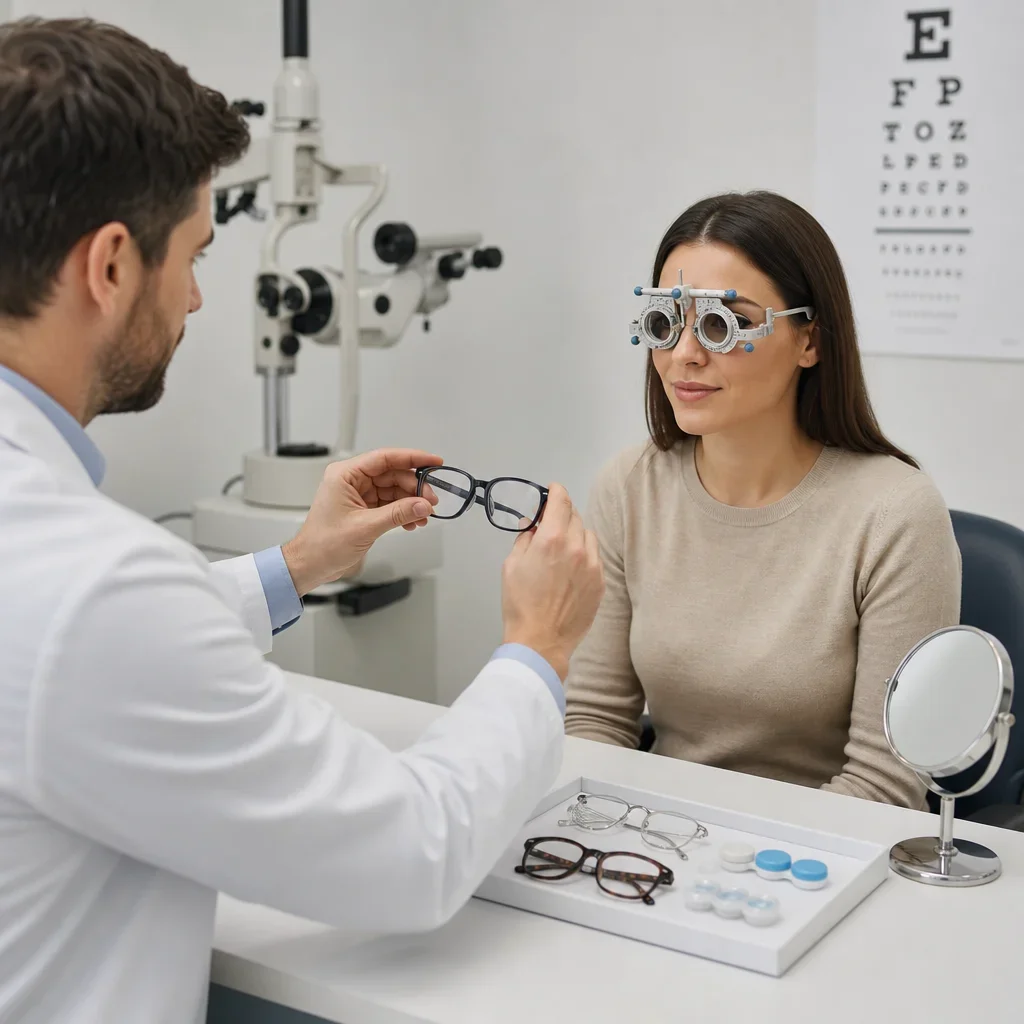
Many people with 20/50 vision benefit from glasses or contacts, especially for driving, school, work, and daily distance clarity. Whether you personally need correction depends on symptoms, age, visual demands, and whether the reduction is in one eye, both eyes, corrected, or uncorrected.
Glasses are not prescribed by the acuity number alone. The exam looks at how much vision improves with refraction, whether you are symptomatic, and whether the cause is purely optical or something that needs medical follow-up.
Should you wear glasses if you have 20/40 vision or 20/50 vision? In many cases, yes for distance tasks, but there is no one-size-fits-all answer without the actual refraction and eye-health findings. I would not tell anyone to order lenses online from a guessed number after one screen.
Can 20/50 vision be corrected or improved?
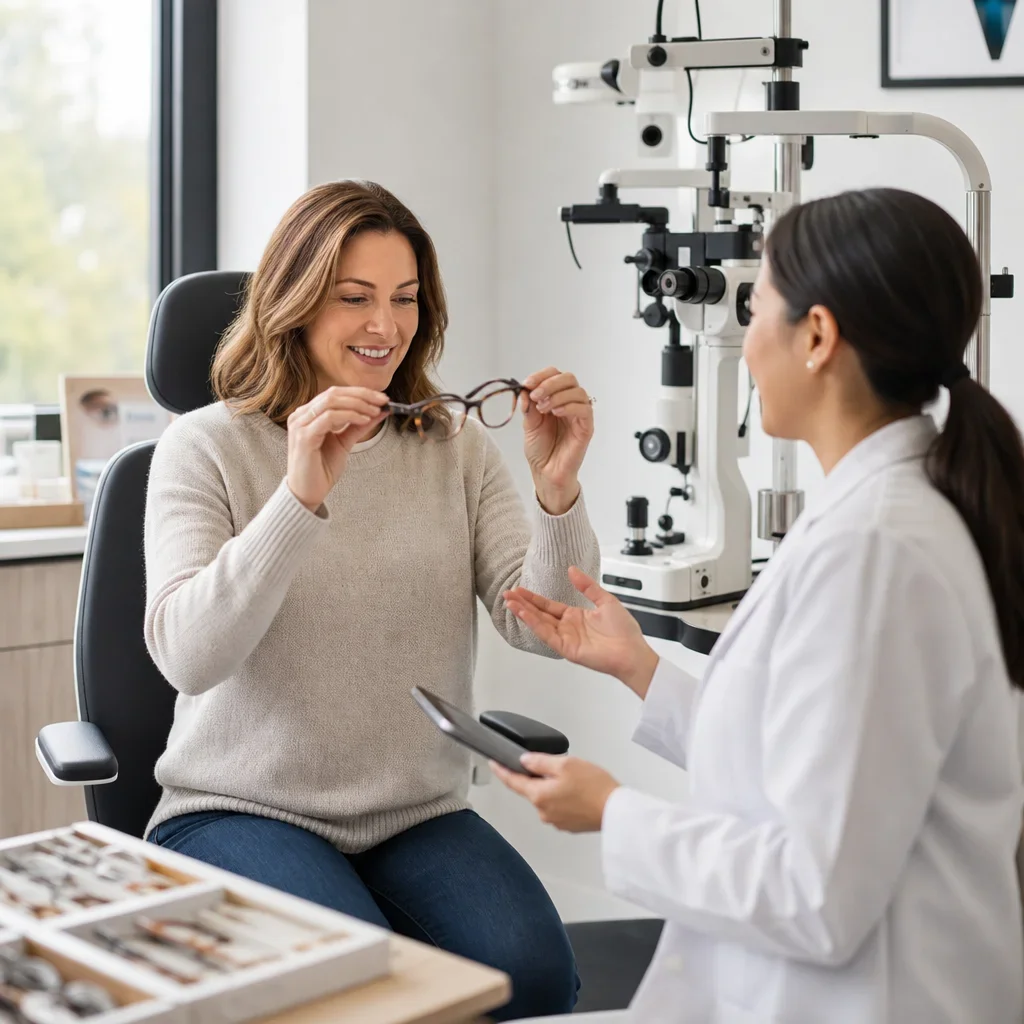
Many cases of 20/50 improve well with updated glasses or contact lenses, but not all do. The result depends on the cause, which is why the best answer comes after refraction and an eye-health exam rather than before it.
If the blur comes from dry eye or another surface problem, treatment of the underlying issue may improve clarity. If cataracts, retinal disease, glaucoma, or another condition is involved, treatment focuses on that condition and the final level of vision may vary.
Refractive surgery such as LASIK or PRK can be an option for some adults after proper medical assessment, but a clinic should not present surgery as the default answer to a chart result. Suitability depends on prescription stability, corneal health, and other factors, and this article is general information, not a recommendation for your eyes.
Can you trust an online or at-home 20/50 vision test?
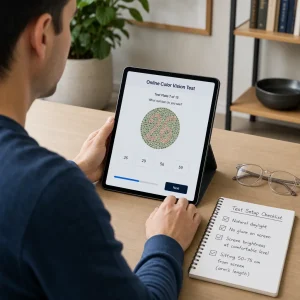
Online and at-home tests are screenings, not medical exams. They can suggest that your distance vision may be reduced, but they cannot diagnose the cause or replace a comprehensive exam.
Home testing is less accurate when the screen size is wrong, the distance is off, the room is dim, the chart is not calibrated, both eyes are tested together, or you memorize the letters. Even wearing the wrong glasses during a phone-based chart can skew the result.
A more useful 20 40 vision test at home setup uses a properly scaled chart, a carefully measured testing distance, one eye at a time, and notes on whether you wore your current distance correction. Compare each eye separately and record symptoms like strain, doubling, or one-sided blur rather than relying on one pass or fail result.
If you got a 20/50 result from a home chart or a 20/40 vision test online, use it as a reason to book an exam, not to self-diagnose. The number can be directionally helpful, but the next step should be a real assessment with visual acuity testing, refraction, and an eye-health check.
When to book a routine eye exam vs seek urgent care
A routine exam is usually appropriate for gradual blur, trouble seeing signs, headaches from squinting, failed school or workplace screenings, or glasses that no longer feel right. Those are common reasons people book an eye exam Waterloo clinics see every week.
Same-day assessment is the safer choice for sudden vision change, eye pain, redness with reduced vision, flashes, many new floaters, a curtain or shadow, double vision, or recent eye trauma. Sudden one-eye blur belongs in that urgent category too.
Do not wait for an online test to look worse if the symptoms are acute or unusual. Functional blur from a refractive error usually does not arrive with pain, field loss, or sudden distortion.
What to expect at an eye exam for blurred distance vision
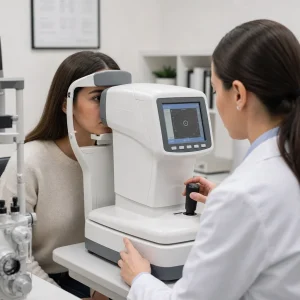
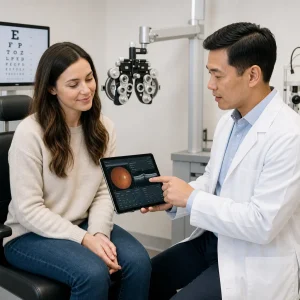
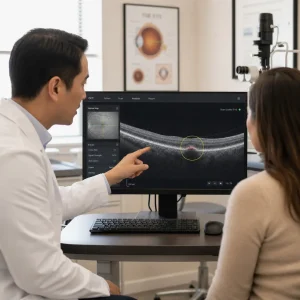
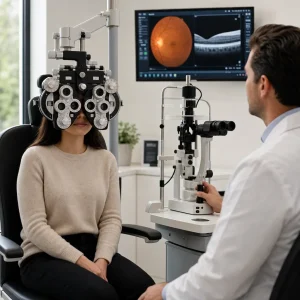
A full exam for blurred distance vision usually starts with history, visual acuity, and refraction, then moves to an eye-health assessment to explain the cause of the blur. That process is what turns a number like 20/50 into an actual answer.
If correction is the issue, you can discuss glasses or contacts after the exam. At Premier Optical, patients can move from exam to frame selection and lens planning in one place, which is useful when you want a real prescription check instead of guessing from a home chart.
Premier Optical also offers an in-house lens lab, direct insurance billing, and 1-hour lenses for eligible prescriptions. Availability can depend on the prescription and lens type, so ask the clinic what applies to your order.
If you want a clear next step, book a comprehensive eye exam in Waterloo and bring your current glasses or contacts. That is the simplest way to learn whether the issue is a prescription change, a surface problem, or something that needs further care.
FAQ
What does it mean if my vision is 20/50?
It means your distance visual acuity is reduced compared with 20/20. At 20 feet, you see what a person with standard 20/20 vision can see at 50 feet.
Does 20/50 vision need glasses?
Many people with 20/50 do benefit from glasses or contacts, especially for distance tasks, but the need depends on symptoms, the refraction, and whether the blur improves with correction.
Is 20/50 legally blind?
No, 20/50 is generally not legally blind. Legal blindness standards are much poorer and are based on best-corrected vision and sometimes visual field, so confirm the current legal definition if you need an official determination.
Can you drive with 20/50 vision?
Possibly, but the answer depends on current Ontario licensing standards, whether glasses or contacts improve your vision, and how each eye performs. Check the current rules and ask your optometrist after a full exam.
What does 20/50 vision look like?
It often looks like reduced sharpness at distance. Signs, board text, faces across a room, and subtitles may be readable only when closer or in better lighting.
Is 20/50 nearsighted or farsighted?
It can be either, or neither by itself. Myopia is a common reason for blurry distance vision, but astigmatism, mixed prescriptions, dry eye, and eye disease can also cause a 20/50 result.
Can 20/50 vision be corrected?
Often yes, especially when the cause is refractive error or dry eye, but not every case returns fully to 20/20. Improvement depends on the cause found during the exam.
What if only one eye is 20/50?
Book an exam promptly, and seek same-day care if the change was sudden or comes with pain, flashes, floaters, distortion, or a curtain effect. One-eye blur can be more concerning than equal blur in both eyes.
Do children with 20/50 vision need an eye exam?
Yes. A school screen can miss the cause, and children may not realize they are seeing poorly. A full exam can check prescription, eye alignment, and eye health.
Can an online test accurately diagnose 20/50 vision?
No. Online tools can screen for possible blur, but they cannot diagnose the cause or replace refraction and a comprehensive eye exam.
If you have a 20/50 result and are still unsure what it means, the best next step is simple: get your eyes checked properly before you assume it is minor or try to solve it with a guess.