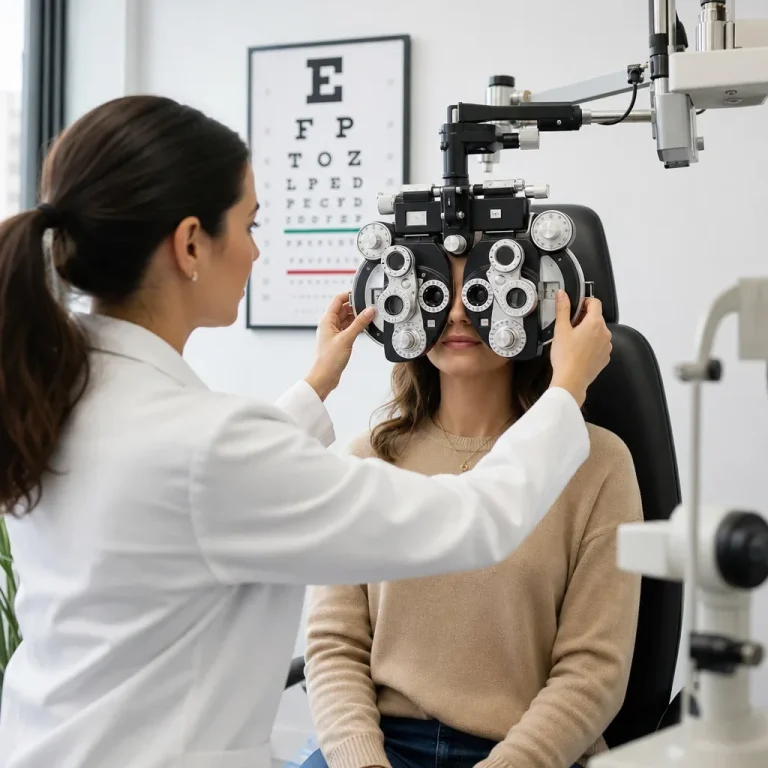
A routine eye examination is not just a glasses check. It looks at your vision, your prescription, and the health of your eyes in one visit, which is why many Waterloo patients book one before they notice a major problem.
What Is a Routine Eye Examination?
A routine eye examination checks both how well you see and how healthy your eyes are. It usually includes prescription testing, eye health assessment, and a review of structures such as the cornea, lens, retina, and optic nerve .
A routine eye test, eye routine exam, and routine vision care appointment are terms people often use for the same visit. The meaningful difference is that a full optometric exam is more thorough than a basic vision screening or sight test, because it looks for eye disease and not just blurry vision .
An optometrist performs the eye examination, assesses findings, and can identify signs that need monitoring, treatment, or referral. An optician helps with frame fitting, lens options, and prescription eyewear after the exam .
What Happens During a Routine Eye Examination: Step by Step
Most routine visits follow a clear sequence from history to results, even though the order can vary by age, symptoms, and clinic equipment. A typical eye examination procedure takes about 30 to 60 minutes .
1. Check-in and history The visit starts with intake. You may be asked about glasses, contact lenses, medications, headaches, diabetes, dry eye, flashes, floaters, and any recent vision changes .
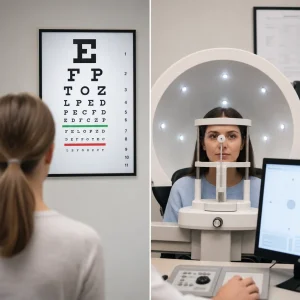
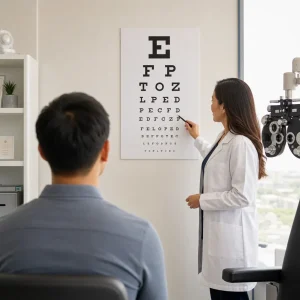
2. Visual acuity testing This is the chart-reading step. It measures how clearly you see at distance and sometimes up close, often with and without your current glasses .
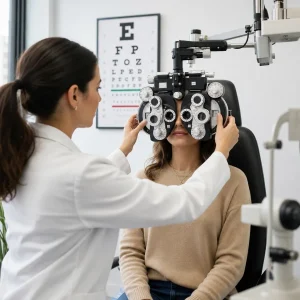
3. Refraction This is the prescription step many patients think of first. The optometrist measures whether lenses can sharpen your vision and determines whether your glasses prescription has changed .
4. Eye teaming and focusing checks These tests look at how your eyes work together, how they track, and how they focus. This matters for reading comfort, screen use, and symptoms like eye strain or double vision .
5. Pupil and eye movement checks The optometrist checks how your pupils react to light and how your eyes move. These findings can help flag visual or neurological concerns that need more attention .
6. Pressure testing if indicated Eye pressure testing, often called tonometry, may be included based on age, family history, symptoms, or glaucoma risk. Pressure alone does not diagnose glaucoma, but it is one useful piece of the picture .
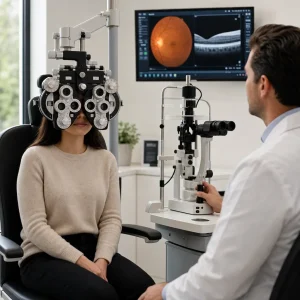
7. Slit-lamp examination A slit lamp is a microscope with a bright light. It lets the optometrist examine the eyelids, tear film, cornea, iris, and lens in detail .
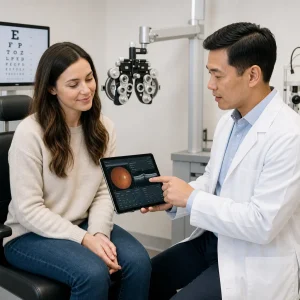
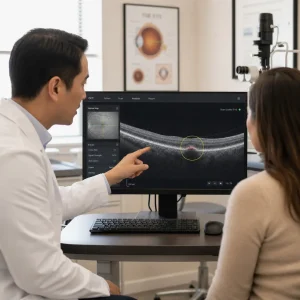
8. Retinal and optic nerve assessment The back of the eye is assessed through the pupils, sometimes with dilation or imaging if needed. This is where the optometrist evaluates the retina, blood vessels, and optic nerve .
9. Results and next steps You leave with an explanation of what was found. That may mean no change, a new prescription, monitoring, more testing, treatment advice, or referral when needed .
The 5 Core Tests in a Routine Eye Exam
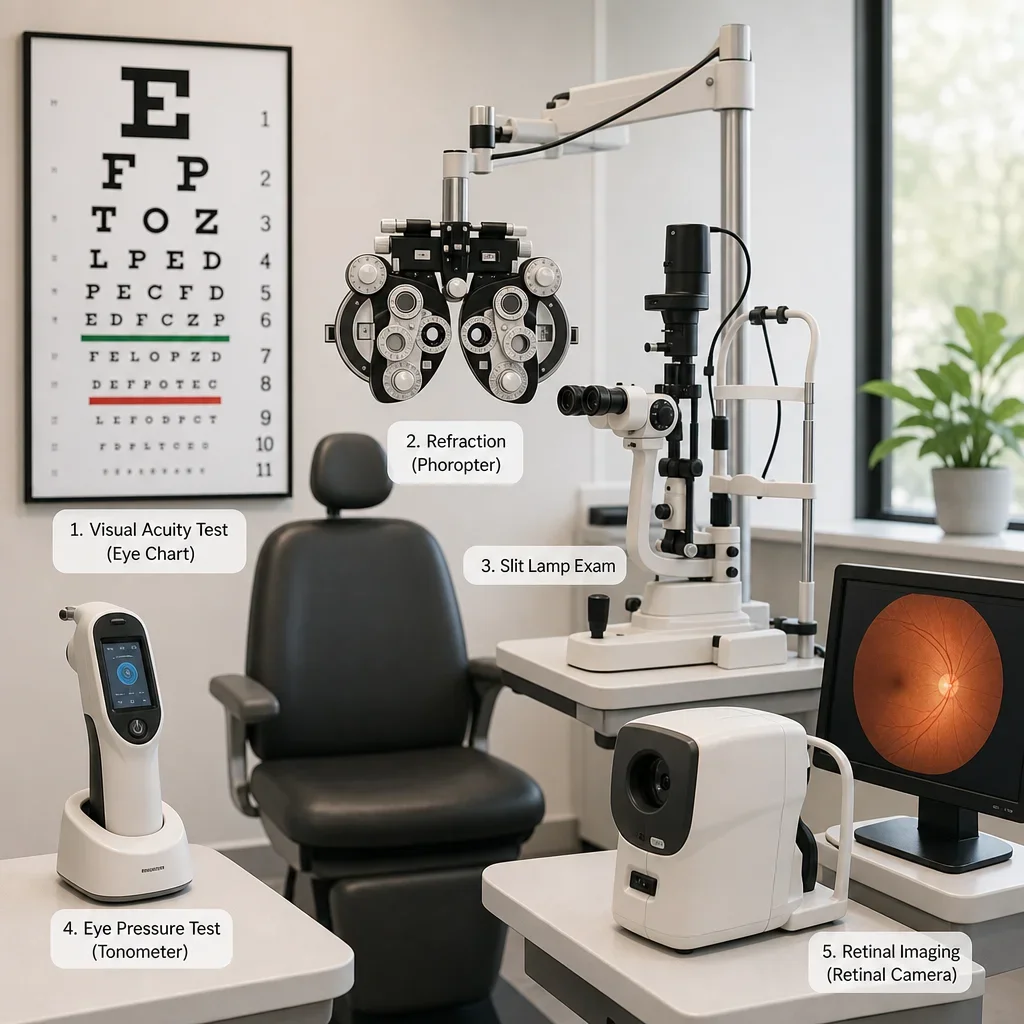
There is no single regulated list used by every clinic, but this is a practical summary of the 5 tests in a routine eye exam most patients can expect .
- Visual acuity to measure how clearly you see
- Refraction to determine your glasses prescription
- Eye alignment and binocular vision testing to see how your eyes work together
- Slit-lamp eye health exam to inspect the front of the eye
- Retinal and optic nerve evaluation to assess the back of the eye
Some clinics also treat pressure testing as part of their core routine eye exam tests, especially for older adults or patients with risk factors. The exact tests in a routine eye exam depend on age, symptoms, family history, and whether added imaging is clinically useful .
Common Tests Included in a Routine Eye Examination
The standard exam usually includes more than one chart test. Patients searching what tests are done during an eye exam are usually asking about a mix of vision, coordination, health, and risk-based testing .
Visual acuity measures sharpness of sight with a letter chart, often a Snellen chart. It shows whether you can see clearly at specific distances with your current prescription or without one .
Refraction is the “which is better, one or two?” part of the visit. It is done with lenses in front of your eyes, often using a phoropter, to fine-tune your glasses prescription .
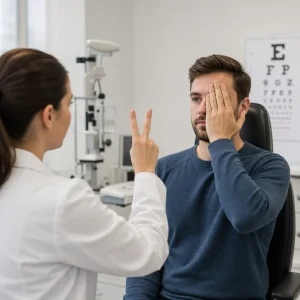
Cover testing, eye movement testing, and focusing checks look for eye turn, poor tracking, reduced focusing stamina, and binocular vision issues. These problems can affect reading, computer comfort, and depth perception .
Pupil response and external observation help assess how the eyes react to light and whether the eyelids, lashes, tear film, and front surface look healthy. Dry eye signs may be noticed here as well .
Slit-lamp examination gives a magnified view of the front of the eye. It helps the optometrist examine the cornea, conjunctiva, iris, and lens for changes such as dryness, irritation, or cataract formation .
Tonometry measures intraocular pressure. It may be added routinely for some patients or used selectively when age, family history, symptoms, or optic nerve findings raise concern about glaucoma .
Retinal and optic nerve evaluation looks at the back of the eye. This can be done through an undilated or dilated pupil, and sometimes with imaging, depending on what the optometrist needs to see clearly .
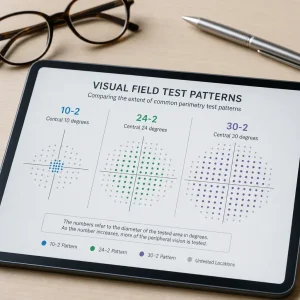
Additional tests may be recommended when risk factors are present. These can include retinal imaging, OCT, visual field testing, pachymetry, or contact lens measurements, but they are not automatically part of every routine eye examination .
What Can a Routine Eye Exam Detect?
A routine eye exam can do more than update glasses. It may detect or help flag glaucoma, cataracts, macular degeneration, diabetic eye disease, dry eye, retinal tears or holes, and focusing or alignment problems .
An optometrist can see the optic nerve during the back-of-eye assessment. That matters because the optic nerve can show changes linked to glaucoma and other conditions that affect how visual signals travel from the eye to the brain .
A routine eye test can help detect glaucoma risk, but glaucoma is not confirmed by one reading alone. Optometrists look at a combination of optic nerve appearance, eye pressure, visual field findings, corneal factors, and follow-up changes over time .
A dilated eye exam can improve the view of the retina and optic nerve. That can support the assessment of glaucoma and other eye disease, although dilation is not required at every visit .
An eye exam can also help flag signs associated with broader health issues such as diabetes, high blood pressure, and high cholesterol. It does not replace diagnosis from your physician, but it can point to changes that deserve medical follow-up .
Can an Eye Exam Show Signs of High Blood Pressure, High Cholesterol, or Other Health Problems?
Yes, an eye exam may reveal signs in the blood vessels, retina, or eyelids that suggest a broader health issue needs medical review. That is one reason routine eye care is part of overall health care, not just prescription updating .
High blood pressure can sometimes affect the retinal blood vessels in ways an optometrist can see during the exam. The exam may raise concern, but it does not replace blood pressure measurement or medical diagnosis .
High cholesterol can sometimes be associated with visible findings, including deposits around the eyelids called xanthelasma or other ocular changes. Those findings are not definitive proof of cholesterol disease on their own .
Some neurological or inflammatory conditions may have eye-related signs, and visual symptoms can sometimes be part of multiple sclerosis. An optometrist may detect findings that warrant referral, but an eye exam alone does not diagnose MS .
Routine vs Medical vs Diagnostic vs Sight Test: What’s the Difference?
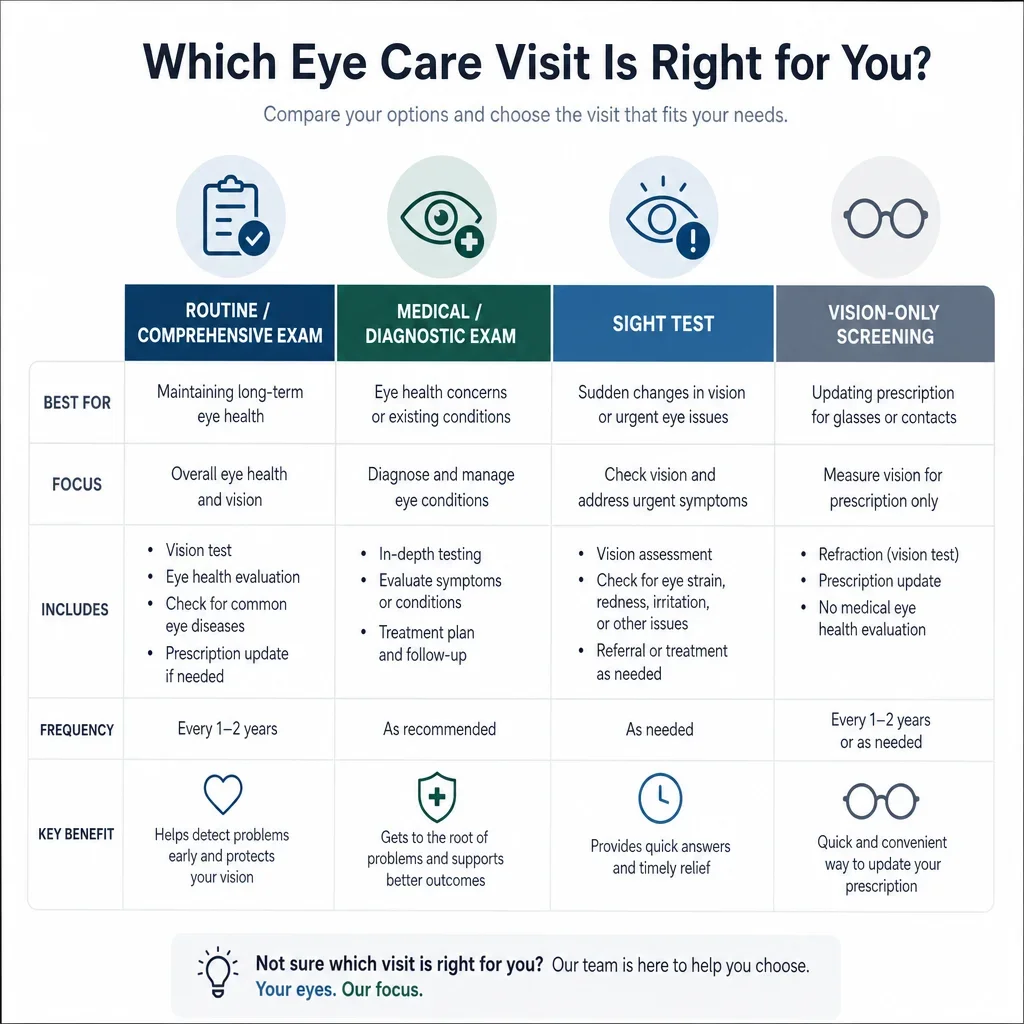
These visits are not interchangeable, and the difference matters when you decide what to book. A routine or comprehensive exam is preventive care, while a medical or diagnostic visit is problem-focused .
| Visit type | What it is for | What it usually covers | What it does not replace |
|---|---|---|---|
| Routine/comprehensive exam | Preventive vision and eye health care | Prescription check, eye health exam, retinal and optic nerve assessment | Urgent treatment for sudden symptoms |
| Medical/diagnostic exam | A specific problem like pain, red eye, flashes, injury, or sudden blur | Focused assessment of the complaint, plus tests needed for that issue | Ongoing preventive exam schedule |
| Sight test | Limited measurement of seeing ability | Basic vision check for lens power or acuity only | Full eye health examination |
A routine eye exam vs comprehensive comparison is usually simpler than it sounds. In everyday patient language, those terms are often used the same way to mean a full preventive eye exam with both vision and health assessment .
A sight test is narrower. It can check whether you see clearly, but it does not replace a full optometric examination of eye health .
How Often Should You Have a Routine Eye Test?
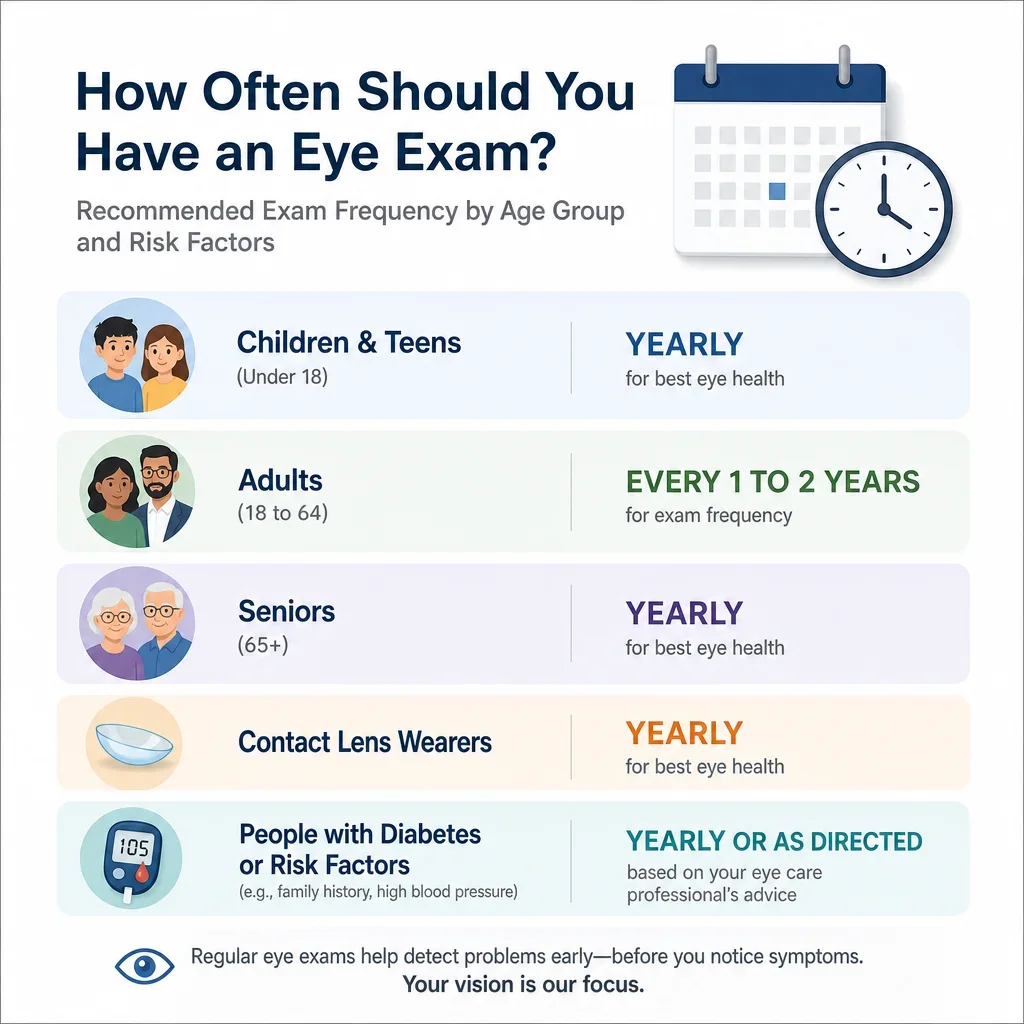
The right schedule depends on age, symptoms, medical history, family history, and what your optometrist finds. A common patient guide is yearly for many children, every 1 to 2 years for many adults 18 to 64, and yearly for many adults 65 and older .
| Group | Usual schedule | Why it may vary |
|---|---|---|
| Children and teens | Often every year | Vision development, school demands, eye teaming issues, symptoms |
| Adults 18 to 64 | Often every 1 to 2 years | Prescription changes, symptoms, health conditions, family history |
| Seniors 65+ | Often every year | Higher risk of cataracts, glaucoma, macular changes, dry eye |
| Contact lens wearers | Often at least yearly | Corneal health, lens fit, comfort, wearing habits |
| People with diabetes or other risk factors | Often at least yearly or as directed | Retinal risk and need for closer monitoring |
If you are asking how often a 70-year-old should have their eyes checked, yearly is a common baseline. The interval may be shorter if there is diabetes, glaucoma risk, vision change, or an eye condition being monitored .
Children often need exams earlier and more regularly than parents expect. Good sight in one eye does not rule out focusing, coordination, or development issues in the other eye .
How to Prepare for a Routine Eye Examination
A little prep makes the visit more useful. Bring your current glasses, sunglasses, contact lenses, lens boxes or case if relevant, a medication list, insurance information, and your health card if coverage may apply .
Write down recent changes before you arrive. Blurry vision, headaches, dry eye, eye strain, light sensitivity, flashes, floaters, and trouble with night driving are all worth mentioning because they change what the optometrist needs to check .
If you wear contact lenses, bring them and bring your case. Some appointments may require lens removal for part of the exam, especially if corneal health or prescription accuracy needs a clearer look .
The main things not to do before an eye exam are showing up rushed, forgetting old prescriptions, or assuming every visit will be quick enough for a tight schedule. If dilation may be needed and you have struggled with driving after drops before, plan accordingly .
What to Expect If Your Eyes Are Dilated
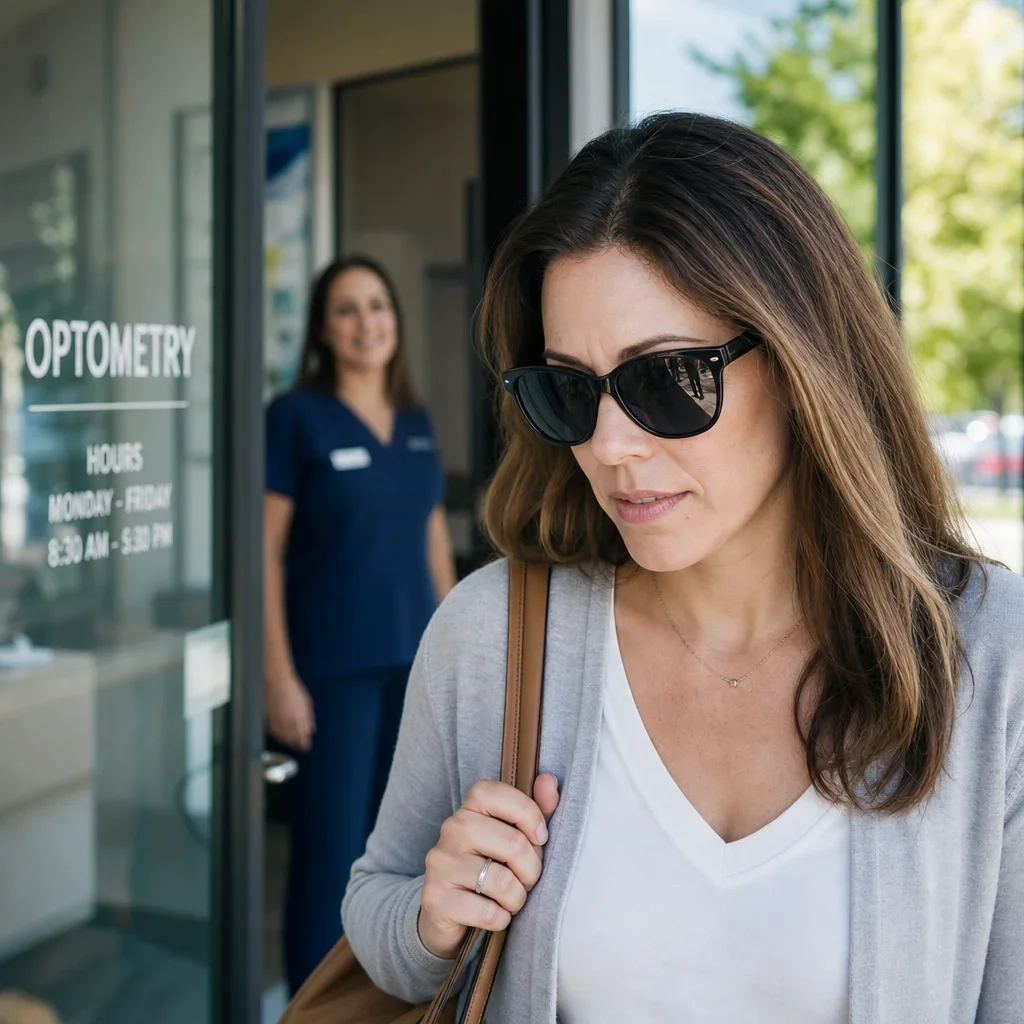
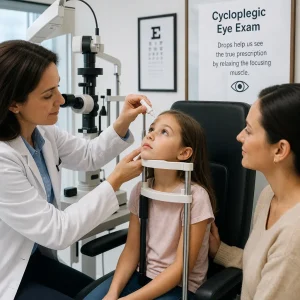
Dilation is used when the optometrist needs a wider view through the pupil to assess the retina and optic nerve. Not every routine exam requires it, but it can be very helpful in some cases .
Dilating drops usually take effect in about 20 to 30 minutes and the effects may last about 2 to 6 hours . During that time, larger pupils, light sensitivity, and blurred near vision are common .
Driving after dilation is not a one-size-fits-all answer. Some people are comfortable after a short period, while others find bright light and blur make driving a poor idea for several hours, especially for longer trips .
Bring sunglasses if dilation might be used. If you know you are sensitive to drops or you had trouble driving after a previous dilated exam, arranging a ride is the safer plan .
Call the clinic if symptoms after dilation seem severe, unusual, or much longer-lasting than expected. Routine light sensitivity and near blur are common, but significant pain or major vision loss is not .
When a Routine Exam Is Not Enough: Red Flags That Need Prompt Care
Some eye symptoms should not wait for the next available routine appointment. Sudden vision loss, flashes of light, a shower of new floaters, a curtain over vision, eye injury, chemical exposure, severe pain, or double vision need prompt assessment .
A painful red eye is another red flag, especially if light sensitivity, nausea, or sudden blur come with it. Those symptoms can point to conditions that need urgent attention rather than preventive care booking .
If the problem is acute, call the clinic right away for direction or seek urgent medical care based on severity. A routine exam is the right visit for prevention, prescription updates, and non-urgent concerns, not emergency triage .
How Routine Eye Exams Differ for Children, Seniors, and Contact Lens Wearers
Children’s exams include more than distance vision. They also look at eye teaming, focusing, alignment, and signs of amblyopia or strabismus that can affect learning and visual development .
Senior exams place more weight on age-related eye disease and medication review. Cataracts, glaucoma, macular changes, dry eye, and changing visual needs are more common with age .
Contact lens wearers need more than a glasses prescription check. The exam may include lens fit, corneal health, wearing habits, comfort review, and discussion of whether your current lens material still suits your eyes .
Patients with diabetes may need more specific retinal monitoring and more frequent follow-up. A regular exam and a diabetes-related eye assessment can overlap, but the reason for closer monitoring is the added retinal risk .
How Much Does a Routine Eye Exam Cost in Ontario, and What Does OHIP Cover?
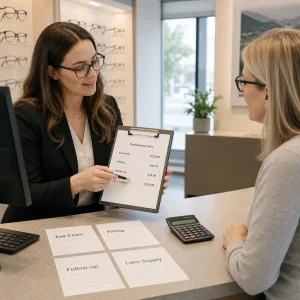
A routine eye exam price in Ontario is often in the broad range of about $100 to $250, depending on the clinic, patient age, exam complexity, and whether extra testing is added . Your exact fee can differ, so it is worth confirming before you book.
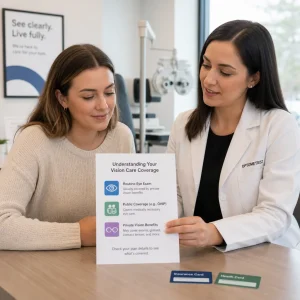
OHIP eye exam coverage in Ontario depends on age and certain medical conditions, and coverage rules can change. If you need exact eligibility for your situation, check the current Ontario rules or confirm with the clinic before your appointment .
Some private insurance plans help cover routine eye exams, glasses, or both. Direct insurance billing can make that easier where available, but the amount covered depends on your plan, not the clinic .
If you are comparing clinics in Waterloo, ask two practical questions: what the exam fee includes and whether added testing is extra. That is more useful than chasing a headline price without knowing what is actually being assessed .
What Happens After the Exam?
The next step depends on the findings. You may be told your prescription is unchanged, given an updated glasses prescription, booked for monitoring, advised to have added testing, or referred if something needs medical follow-up .
If you need glasses, the handoff from exam to eyewear should be straightforward. In a clinic with optometrists, opticians, and an in-house lab under one roof, you can review the prescription, discuss lens options, and choose frames in one location .
That is where the process feels simpler for patients buying glasses. You finish the eye exam, review what changed, and then match lenses and frames to your prescription, work needs, screen time, and budget .
At Premier Optical in Waterloo, patients can move from exam to eyewear selection in one place, with direct insurance billing and in-house lens services available. Turnaround depends on the prescription and lens requirements, so ask what timing applies to your order .
Questions to Ask Your Optometrist at Your Appointment
A short question list helps you leave with clearer answers. Five to eight questions is usually enough to cover the essentials without forgetting anything important .
- Has my prescription changed, and by how much?
- Do you see any early signs of eye disease or dryness?
- Should I be dilated today, or is it not needed?
- How often should I return based on my age and risk factors?
- Are screens contributing to my symptoms or eye strain?
- If I wear contacts, are they still a good option for me?
- What lens options fit my driving, screen, or reading needs best?
- For parents: are my child’s eyes tracking and focusing normally?
- For seniors: do you see any cataract, glaucoma, or macular changes?
Simple Eye Exam Glossary
These terms come up often in a routine ophthalmological examination, and they are easier to follow when translated into plain language .
- Optometrist: A regulated eye care professional who examines eyes, prescribes corrective lenses, and assesses eye health .
- Optician: A regulated eyewear professional who fits glasses and lenses using the prescription provided .
- Ophthalmologist: A medical doctor specializing in eye disease and surgery .
- Visual acuity: A measure of how clearly you can see letters or symbols at a set distance .
- Refraction: The part of the exam used to determine your lens prescription .
- Slit lamp: A microscope with a bright light used to examine the front of the eye .
- Retina: The light-sensitive tissue at the back of the eye .
- Optic nerve: The nerve that carries visual information from the eye to the brain .
- Tonometry: Eye pressure testing .
- Dilation: Eye drops used to widen the pupil for a better view inside the eye .
- OCT: Optical coherence tomography, an imaging test that shows retinal and optic nerve layers in detail .
- Visual field: A test of how well you see to the sides while looking straight ahead .
FAQ
What is a routine eye examination?
It is a full optometric exam that checks your vision, prescription, and eye health in one visit .
What are the 5 tests in a routine eye exam?
A practical five-part summary is visual acuity, refraction, binocular vision or alignment testing, slit-lamp examination, and retinal or optic nerve evaluation .
What can a routine eye test detect?
It may detect prescription changes, dry eye, cataracts, glaucoma risk, retinal problems, and signs that support follow-up for health issues such as diabetes or high blood pressure .
Can a routine eye exam detect glaucoma?
It can help detect glaucoma or raise concern for it, but assessment usually relies on multiple findings rather than one test alone .
Can an eye exam show high cholesterol or high blood pressure?
It may show signs associated with those conditions, especially in the retinal vessels or eyelids, but it does not replace medical diagnosis .
What is the difference between a routine eye exam and a diagnostic eye exam?
A routine exam is preventive and broad, while a diagnostic exam is focused on a specific symptom or problem such as pain, flashes, redness, or sudden blur .
How often should you have a routine eye test?
Many adults book every 1 to 2 years, while children, seniors, contact lens wearers, and people with diabetes often need yearly care or closer follow-up .
How long does a routine eye exam take?
A typical visit takes about 30 to 60 minutes .
What not to do before an eye exam?
Do not arrive without your current glasses, contact lens details, medication list, or symptom notes. Do not assume you will be comfortable driving if you know dilation affects you strongly .
Can I drive after eye dilation?
Maybe, but it depends on how your eyes respond, the lighting, and the length of the drive. If you have reacted poorly before, arrange a ride .
How much does a routine eye exam cost in Ontario?
A broad consumer range is about $100 to $250, depending on the clinic and what the visit includes .
What does OHIP cover for eye exams?
Coverage depends on age and certain medical conditions, and the rules can change. Confirm current eligibility before booking if coverage matters to your decision .
If you are deciding whether to book, the most practical next step is simple: book the exam before you shop for glasses. At Premier Optical in Waterloo, you can have the exam, review the results, and look at frames and lenses in one place.