Choosing the right lenses for your vision needs can be a daunting task, especially when considering options like progressive lenses and bifocals. Each type of lens offers unique benefits and features that cater to different visual requirements. This article will explore the distinctions between progressive lenses and bifocals, helping you make an informed decision based on your lifestyle and vision health. We will delve into how each lens type works, their advantages, cost comparisons, and the designer eyewear options available at Premier Optical Boutique in Waterloo, Ontario. By understanding these factors, you can find the best solution for your vision needs.
What Are Progressive Lenses and How Do They Benefit Your Vision?
Progressive lenses are multifocal lenses designed to provide a seamless transition between different vision zones, allowing for clear vision at various distances. Unlike traditional bifocals, which have a distinct line separating the two lens powers, progressive lenses offer a gradual change in lens strength. This design helps users avoid the abrupt shift in vision that can be disorienting. The primary benefit of progressive lenses is their versatility, making them suitable for individuals who require correction for both near and far vision.
How Do Progressive Lenses Provide Seamless Vision Correction?
Progressive lenses utilize a gradient of lens powers that gradually change from the top to the bottom of the lens. This design allows for a smooth transition between different focal points, enabling users to see clearly at all distances without the visible lines found in bifocals. The adaptation period for users can vary, but many find that they can adjust to the new lenses within a few days to a couple of weeks. This seamless vision correction is particularly beneficial for those who frequently switch between tasks, such as reading and driving.
For more specific details on the technical design and advancements in progressive addition lenses for presbyopia, research highlights how these lenses have evolved to provide optimal visual correction.
Progressive Lenses: Design and Presbyopic Correction
1. Presbyopia, a prevalent age-related condition, is primarily addressed using progressive addition lenses (PALs) as a corrective method. This systematic review synthesized contemporary evidence (2015–2025) concerning the technical design of PALs for presbyopia, with a focus on significant advancements in design methodologies, performance assessment, and novel lens concepts.
Design of Progressive Addition Lens for Presbyopia: A Systematic Review, J Li, 2026
What Are the Key Benefits of Choosing Progressive Lenses?

Choosing progressive lenses comes with several advantages:
- Versatility: They cater to multiple vision needs, allowing users to see clearly at various distances without needing to switch glasses.
- Aesthetic Appeal: The absence of visible lines gives progressive lenses a more modern and stylish appearance compared to bifocals.
- Comfort: Users often experience less eye strain due to the gradual transition between different lens powers.
For those considering progressive lenses, Premier Optical Boutique offers a range of stylish frames that complement these advanced lenses, ensuring both functionality and fashion. You can explore their extensive collection of eyeglass frames that will suit your new lenses.
Additionally, advancements in ophthalmological technology, such as personalized progressive lenses, have revolutionized how individual parameters are measured and integrated into lens design to ensure optimal vision correction.
Personalized Progressive Lenses: Advanced Measurement Technology
1. Ophthalmological technology is continuously advancing. In addition to laser eye surgeries, personalized progressive lenses have been developed, designed according to the precise measurements of each patient’s individual parameters. To obtain these measurements—especially crucial for individuals with significant facial asymmetries—specialized measurement devices have been created. These devices, available as both stationary and mobile units, capture images and process them to deliver highly accurate measurements. Accurately positioning the optical centres of customized progressive lenses on the patient’s pupil projections is essential for clear image perception. A mobile tablet device, equipped with specialized software, captures images, processes them, and converts the pixel data into millimetre-based measurements. These measured parameters are then integrated into the construction of the progressive lens, ensuring customization that accommodates the patient’s unique asymmetries. As a result, the wearer perceives a clear image due to the precise alignment of the optical centres with the measured pupil projections. Proper vision correction for near and intermediate distances is crucial for progressive lens users, making it essential to determine the correct working position and the corresponding lens areas accurately during the design process. Currently, the measurement devices available in the optics and optometry market are sensitive to near and intermediate working distances. However, there is still room for improvement in refining parameter measurements for even greater accuracy. Development of an Optomechatronic Device for Measuring Optometric Parameters in Progressive Lens Personalization, D Comeagă, 2025
What Are Bifocal Lenses and What Advantages Do They Offer?
Bifocal lenses are designed with two distinct optical powers, typically for distance and near vision. The upper portion of the lens is for distance vision, while the lower part is for reading or other close-up tasks. This design is particularly effective for individuals experiencing presbyopia, a common age-related condition that affects the ability to focus on close objects. Bifocals provide a straightforward solution for those who need correction for both near and far vision.
How Do Bifocal Lenses Work to Correct Presbyopia?
Bifocal lenses work by incorporating two separate lens zones within a single lens. The upper zone is optimized for distance vision, while the lower zone is tailored for near vision tasks. This design allows users to switch between the two zones easily, making it a practical choice for those who frequently alternate between different visual tasks. However, some users may find the transition between the two zones less smooth compared to progressive lenses.
What Are the Main Advantages of Bifocal Lenses Compared to Other Options?

Bifocal lenses offer several key advantages:
- Cost-Effectiveness: Generally, bifocals are less expensive than progressive lenses, making them a budget-friendly option for vision correction.
- Simplicity in Design: The straightforward design of bifocals can be easier for some users to adapt to, especially those who are accustomed to traditional lens types.
- Targeted Vision Correction: Bifocals provide clear vision for specific tasks, making them ideal for individuals who primarily need correction for distance and reading.
At Premier Optical Boutique, you can explore various bifocal options that suit your style and vision needs. For a closer look at what they offer, visit Premier Optical Boutique.
How Do Progressive and Bifocal Lenses Compare in Cost and Warranty?
When considering lenses, cost and warranty coverage are essential factors. Progressive lenses tend to be more expensive due to their advanced design and technology. Bifocal lenses, on the other hand, are typically more affordable, making them an attractive option for budget-conscious consumers.
What Is the Cost Difference Between Progressive and Bifocal Lenses in Waterloo?
In Waterloo, the average cost for progressive lenses can range from $300 to $600, depending on the brand and specific features. Bifocal lenses usually cost between $150 and $300. Insurance coverage may vary, so it’s advisable to check with your provider for specific details regarding coverage for each lens type.
What Warranty Coverage and Services Are Available for Each Lens Type?
Both progressive and bifocal lenses typically come with warranty options that cover defects in materials and workmanship. At Premier Optical Boutique, customers can expect comprehensive warranty services, ensuring peace of mind with their purchase. It’s essential to inquire about the specific warranty details when selecting your lenses to understand the coverage provided.
Which Designer Eyewear Options Complement Progressive and Bifocal Lenses?
Choosing the right frame is crucial for both comfort and style when wearing progressive or bifocal lenses. The frame style can significantly impact lens performance and overall comfort.
What Designer Frame Brands Are Available at Premier Optical Boutique?
Premier Optical Boutique offers a selection of exclusive designer frame brands, including: Ray-Ban: Known for their classic styles and high-quality materials. Gucci: Offers trendy and luxurious frames that make a fashion statement. Oakley: Ideal for those seeking sporty and durable eyewear.
These brands provide a variety of styles that can enhance the functionality of both progressive and bifocal lenses. Whether you need prescription safety glasses or stylish sunglasses, exploring their range is recommended. Discover their full selection of sunglasses and other eyewear options.
How Do Frame Styles Affect Lens Performance and Comfort?
The style of the frame can influence how well the lenses perform. For instance, larger frames may provide a wider field of vision, which is particularly beneficial for progressive lenses. Additionally, the fit of the frame is essential for comfort, as a well-fitted frame can help reduce pressure points and improve overall wearability. At Premier Optical Boutique, expert staff can assist you in selecting frames that complement your lenses and suit your personal style.
How Can You Book Eye Exams and Lens Fitting Services for the Best Lens Choice?
Booking an eye exam is a crucial step in determining the best lens type for your vision needs. Comprehensive eye exams help assess your vision health and identify any specific requirements for lens correction.
Why Are Comprehensive Eye Exams Essential Before Choosing Lenses?
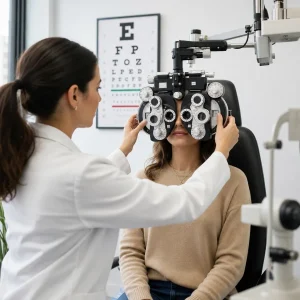
Comprehensive eye exams are essential because they provide a thorough assessment of your vision and eye health. During the exam, an optometrist will evaluate your visual acuity, check for any underlying conditions, and determine the appropriate prescription for your lenses. This information is vital for ensuring that you select the most suitable lens type for your needs. Consider booking your next appointment with Premier Optical for a thorough evaluation.
What Is the Process for Lens Fitting and Free Adjustments at Premier Optical Boutique?
At Premier Optical Boutique, the lens fitting process involves several steps to ensure optimal comfort and performance. After selecting your frames and lenses, a trained technician will take precise measurements to ensure a perfect fit. Additionally, the boutique offers free adjustments to your frames, ensuring that they remain comfortable and functional over time. This commitment to customer service helps ensure that you are satisfied with your eyewear.
What Are Common Questions About Progressive and Bifocal Lenses?
As you consider your options, you may have questions about the adjustment period and suitability of progressive lenses for specific tasks. For detailed information about computer glasses and their benefits, particularly in the Waterloo area, consult resources that specialize in this field.
How Long Does It Take to Adjust to Progressive Lenses?
The adjustment period for progressive lenses can vary from person to person. Many users report that they begin to feel comfortable with their new lenses within a few days, while others may take up to two weeks to fully adapt. It’s essential to give yourself time to adjust and to follow any guidance provided by your optometrist.
Can Progressive Lenses Be Used for Computer Work?
Yes, progressive lenses can be used for computer work, but it’s important to ensure that the lenses are optimized for this task. Some users may benefit from specific lens designs that enhance comfort during prolonged computer use. For specific recommendations and solutions tailored to computer work in Waterloo, exploring local optometry services is advised. You can find specialized computer glasses in Waterloo that can significantly improve your experience.
Additionally, for those who frequently engage in reading or close-up tasks, specialized reading glasses in Waterloo are available to ensure comfort and clarity.