Asian fit eyeglasses are designed to sit securely on a lower or less prominent nose bridge. Also called low bridge fit, this design can give the frame more room to clear your cheeks. At the fitting table, the useful clues are where the frame rests and what moves when you smile.
What Asian Fit Means in Eyeglasses
Low bridge fit describes how the frame rests on your nose, not who should wear it. Anyone can wear it, and people of Asian descent don’t automatically need it. A lower bridge projects less from the face where the glasses rest. A more prominent bridge projects farther and may seat better in a different bridge contour or with adjustable pads.
Alternative fit glasses can offer similar support, but the labels aren’t interchangeable across makers. A frame called universal fit may sit differently from one labelled low bridge fit. Even frames that look identical from the front can have different pad projection, meaning how far the pads extend back from the frame towards your nose.
How to Tell if You Need Low Bridge Fit Glasses
The strongest clue is a frame that doesn’t get steady support at the nose, even when the sides fit well. A mirror can show where the frame makes contact, but it won’t measure your bridge or tell you which size to order. Look for these signs in the pair you wear now:
- The frame repeatedly slides when you look down.
- Smiling lifts the frame, or the lower rims touch your cheeks at rest.
- Your lashes brush the lenses when you blink.
- One pad presses harder than the other, or a pad barely touches.
- The bridge pinches or leaves persistent, uncomfortable marks.
Try this mirror check with your current pair, then repeat it with a frame you’re considering:
- Look straight ahead. Notice where the bridge or pads rest and whether both sides make contact.
- Smile, then blink. Check whether your cheeks lift the frame or your lashes touch the lenses.
- Look down, then gently turn your head. Notice whether the frame shifts or slides.
- Feel at your temples and behind your ears. Check for looseness or pinching rather than tightening the sides to compensate.
Slipping alone doesn’t tell you that you need a different bridge. Loose temples, worn pads, a frame that’s too wide, or a heavy lens and frame combination can all contribute. Low bridge glasses can still slide if the rest of the fit is wrong.
Low Bridge Fit vs. Standard, Narrow, and Wide Frames
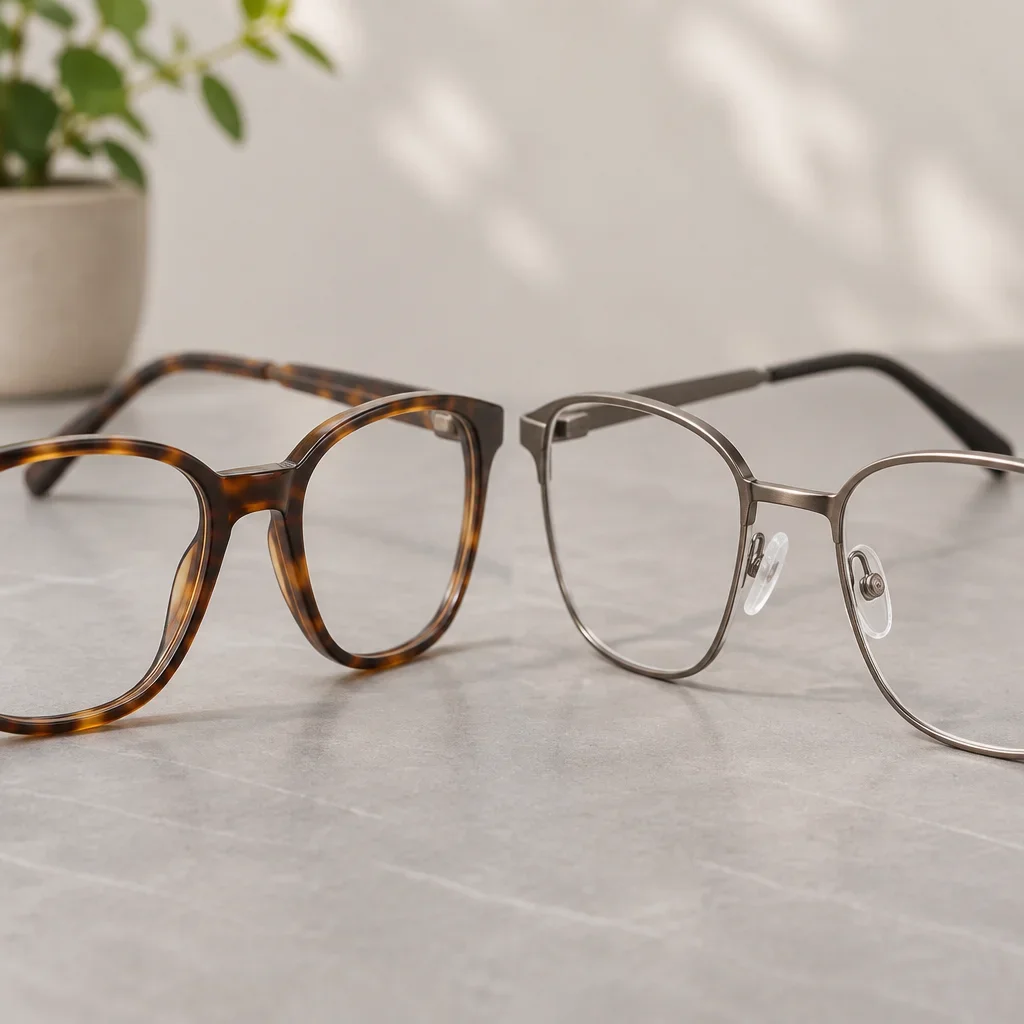
Low bridge fit changes how a frame sits. Narrow and wide usually describe the overall frame width, while wide bridge refers to a dimension or shape at the nose. A higher bridge fit is meant to seat on a more prominent nose bridge. The labels help you choose what to try, but contact and clearance tell you whether it fits.
| Feature | Standard-fit designs | Possible low-bridge-fit changes | What to check on your face |
|---|---|---|---|
| Nose pads | Fixed or adjustable, with projection that depends on the model | Pads that extend farther towards the nose or offer more adjustment | Both pads rest comfortably without pressing along an edge |
| Bridge contact | The moulded bridge or pads may seat well on a more prominent bridge | A different contour or pad position may give a lower bridge better support | The frame rests steadily without pinching or sliding |
| Cheek and lash clearance | Clearance depends on lens shape and how the front sits | Added pad projection or a different lower rim shape may create space | Smile and blink without lifting the frame or brushing the lenses |
| Front angle and curve | Tilt and curvature vary by frame | A different tilt or curve may move the lower rim away from the cheeks | Check clearance at rest and when you smile. Tilt is how the top and bottom of the frame lean relative to your face |
| Temple fit | The width and bends of the arms vary by model | Some models change the arm shape or bend; others don’t | The arms feel secure behind the ears without squeezing at the sides |
Start with the part of the frame that isn’t sitting well:
- Low bridge, average face width: Try a low bridge model in the same overall width as your best-fitting pair. You don’t need a wider frame to get more nose support.
- High cheeks, good bridge support: Try a shallower lens shape first. A shorter lower rim may clear your cheeks without changing the bridge fit.
- Loose sides, stable bridge: Have the temple bends checked, or compare a narrower front if the arms sit too far apart.
- Pinching bridge: Try a different contour or adjustable pads that rest flat. A larger printed bridge number doesn’t necessarily spread the pressure.
- Standard frame that already sits securely: Keep it in the running. If it stays put and clears your cheeks and lashes, there’s no reason to switch labels.
What the Bridge Number on Glasses Actually Measures
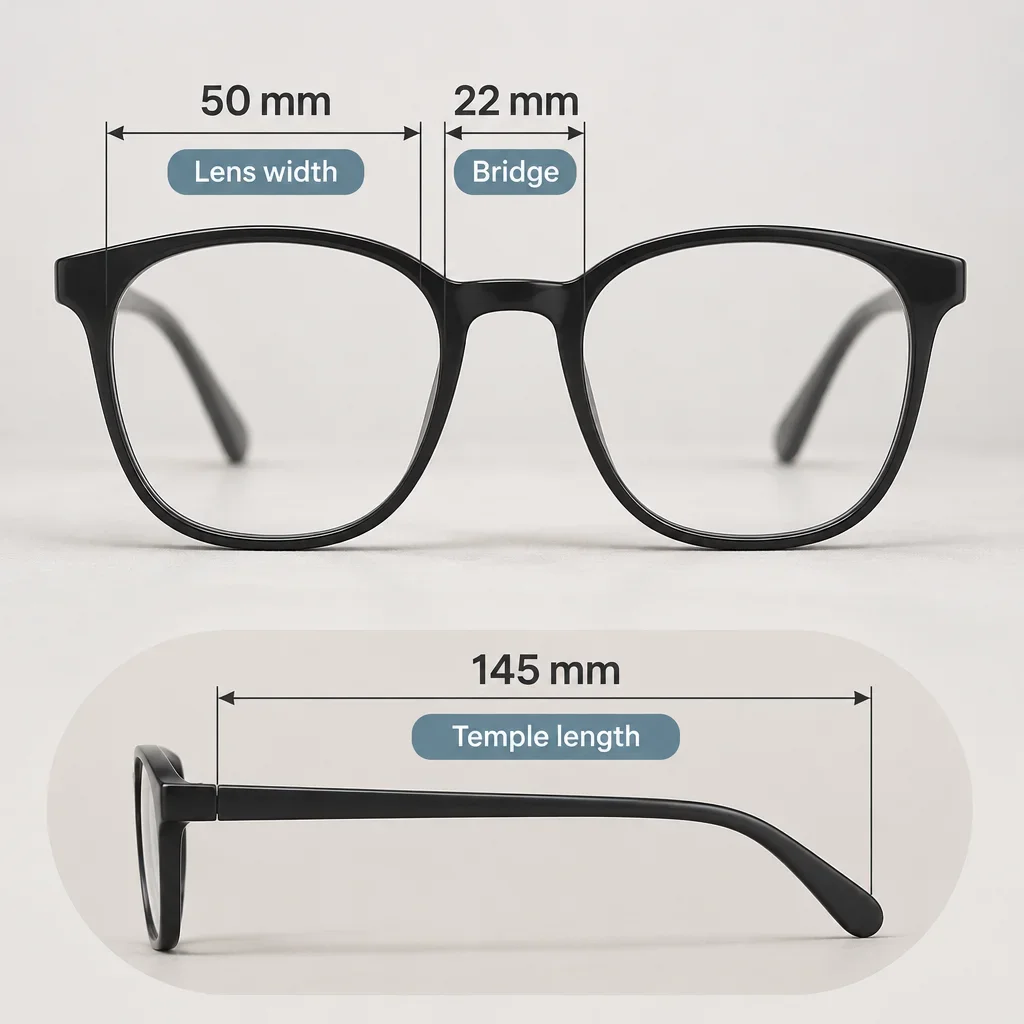
On a frame marked 50–22–145, the numbers indicate a 50 mm lens width, a 22 mm nominal bridge dimension, and a 145 mm temple length. The bridge number typically describes the distance between the lens shapes at their closest points in the frame sizing system. It doesn’t measure your nose width, bridge height, or the space between the nose pads.
No, a 20 mm bridge isn’t automatically too big, and a 22 mm bridge doesn’t mean low bridge fit. A moulded frame with a 22 mm marking may sit lower than a frame with the same marking and adjustable pads that project farther towards your nose. The second frame may clear your cheeks even though both listings show the same bridge size.
Treat 20, 22, 24, and 25 mm as listing values, not a ladder from snug to roomy. Start with a comfortable pair and compare both the printed markings and the overall front width. Compare fixed bridges with similar fixed bridges, or adjustable-pad frames with similar pad designs. Then check where the frame makes contact. A market average won’t tell you which contour will sit well, and there’s no ethnicity-specific bridge width to shop by.
Skip the ruler-to-size formula when measuring your nose for glasses. We look at where the pads or moulded bridge bear weight, whether the contact is even, and how much room the frame leaves for your cheeks and lashes. Those checks tell us more than a nose-width measurement alone.
When an Adjustment Can Save Your Current Glasses
Yes, an adjustment can help when the frame has room to move in the right direction. We can assess compatible nose pads, temple bends, and frame alignment before suggesting a replacement. An adjustment can change how the frame sits, but it can’t reshape a fixed bridge to match your nose.
| Fit problem | What an optician checks | When another frame may fit better |
|---|---|---|
| Sliding | Worn or misaligned pads, loose temple bends, and weight at the front | The fixed bridge can’t get stable contact, or the front is too wide |
| Pinching | Whether the pads sit flat, the frame is level, or the arms squeeze | The fixed bridge presses at its edges even when the frame is aligned |
| Frame lifts when you smile | Pad position, front tilt, and the shape of the lower rim | The rim still rests on your cheeks after a fitting adjustment |
| Lashes touch the lenses | How close the lenses sit and whether compatible pads can move the front forward | The frame can’t clear your lashes without losing stable support |
Clean the lenses and pads with products safe for the frame and coating. Use a clean microfibre cloth and store the glasses in a case when you take them off. Leave bending, heating, and structural adjustments to an optician.
Choosing Frames and Lenses for Low Bridge Fit
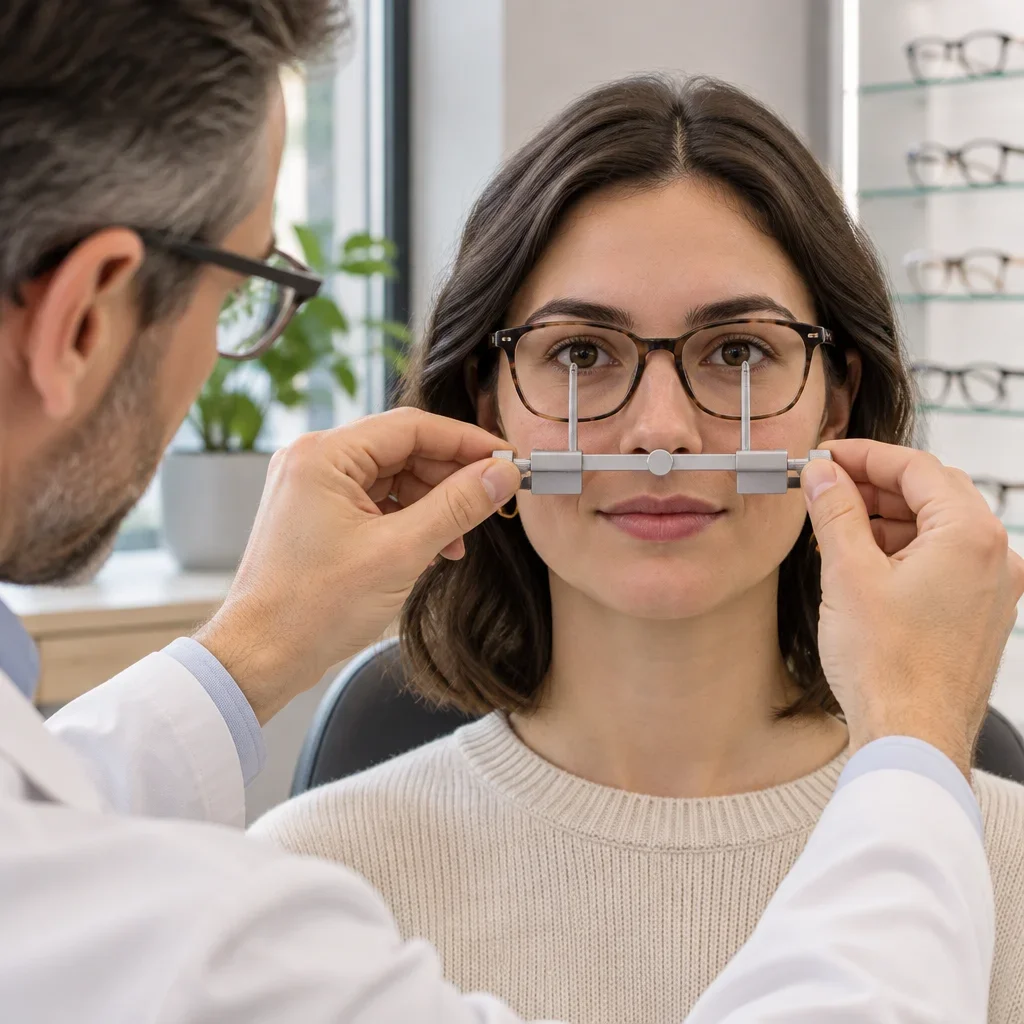
The best frame shape is the one that clears your cheeks, supports your lenses, and suits your style. A shallower rectangular or oval front may help if the lower rim touches your cheeks. A deeper shape may work well if you have clearance and your progressive lens design needs more usable height. Colour, face shape, and men’s or women’s labels are preferences, not fitting rules.
Construction matters more than the material name, whether you’re comparing basic or designer glasses. Moulded-pad acetate frames depend on the shape already built into the bridge, so check for even contact before buying. Metal and titanium frames with adjustable pads give us more control over pad angle and projection. Rimless designs remove the full rim, but the lens edge still needs to clear your cheeks. Try the frame with the expected weight of your prescription in mind.
We fit the frame before measuring where the prescription lenses should sit. Pupillary distance (PD) measures pupil spacing and is separate from frame bridge size. When measuring each eye separately, we record its position relative to the centre of the nose. For progressives, we also measure the fitting height in the adjusted frame, so the distance, intermediate, and reading zones are positioned for how you wear it. If the glasses slide or a later adjustment changes how high they sit, those zones can shift relative to your eyes.
A 1 mm PD difference isn’t universally acceptable or unacceptable. Its effect depends on prescription strength, lens design, and how the discrepancy is distributed between the eyes. If the measurements don’t agree, have the PD and lens positioning rechecked rather than rounding the number or substituting the bridge size.
Lens thickness and weight depend on the prescription, lens size and shape, centring, and material. A minus lens is thicker at the edge; a plus lens is thicker at the centre. A smaller frame that keeps your pupils closer to the centre of the lens shapes can help limit thickness in some prescriptions. High-index material can make a lens thinner, but it isn’t automatically the lightest or best choice for every frame.
Low bridge frames come in prescription and non-prescription options. Anti-reflective coatings reduce reflections from lens surfaces. Polarization cuts reflected glare from surfaces such as roads and water; UV protection is a separate feature to look for in sunglasses. A wraparound sun or sport frame can have prescription limits specific to its shape and lens design.
Shopping for Low Bridge Fit Glasses Online or in Waterloo
When shopping online in Canada, start with listings that identify the exact fit variant. A standard version can look like its low bridge counterpart in a front photo. Use this list to compare listings before ordering:
- Look for side photos and a clear view of the bridge or pads.
- Compare overall front width, lens size, bridge marking, and temple length with a pair that fits.
- Check whether the frame works with your prescription and chosen lens design, especially for progressives or wraparound sunglasses.
- Read the return and remake terms for custom prescription lenses, not just for the frame.
- Compare the total cost for the frame, prescription, lens design, and coatings rather than the advertised frame price alone.
Virtual try-on can preview colour and proportions, but it can’t reliably show nose pressure, grip behind the ears, or cheek clearance when you smile. At Premier Optical in Waterloo, we can compare your current pair with other frames while you look down, smile, and blink. That lets us see whether a different bridge, a narrower front, or an adjustment makes more sense.
Low Bridge Fit FAQ
Sunglasses and bridge fit
Sunglasses come in standard and low bridge designs. Check that the frame provides the coverage you want without sitting on your cheeks, and that the model can take prescription lenses if you need them.
Sports eyewear and goggles
Yes, anyone can wear low bridge goggles if the fit suits them. Check whether the goggles stay stable or form a comfortable seal, depending on the design. A fit label alone doesn’t tell you whether the eyewear provides the protection your activity requires.
Low bridge frames for children
Yes, children can wear low bridge frames. Choose a child-sized frame that stays in place when they look down and keeps the lenses in their line of sight. An adult frame with the same fit label may still be too wide or too long behind the ears.
Progressives in low bridge frames
Yes, a low bridge frame can take progressive lenses if it sits steadily and has enough usable height for the chosen lens design. We check the height in the fitted frame, not from the product photo or bridge marking.
Fitting and Eye Exams at Premier Optical
If your prescription is current, bring it and your usual glasses to Premier Optical in Waterloo. For shoppers coming from Kitchener or nearby, that familiar pair gives us a useful starting point for comparing bridge support and frame width.
If you need an updated prescription, book a comprehensive eye exam with one of our optometrists. Our optometrists, opticians, and in-house lens lab work under one roof, so we can go from the exam to frame fitting and lens selection without sending you to a separate store.