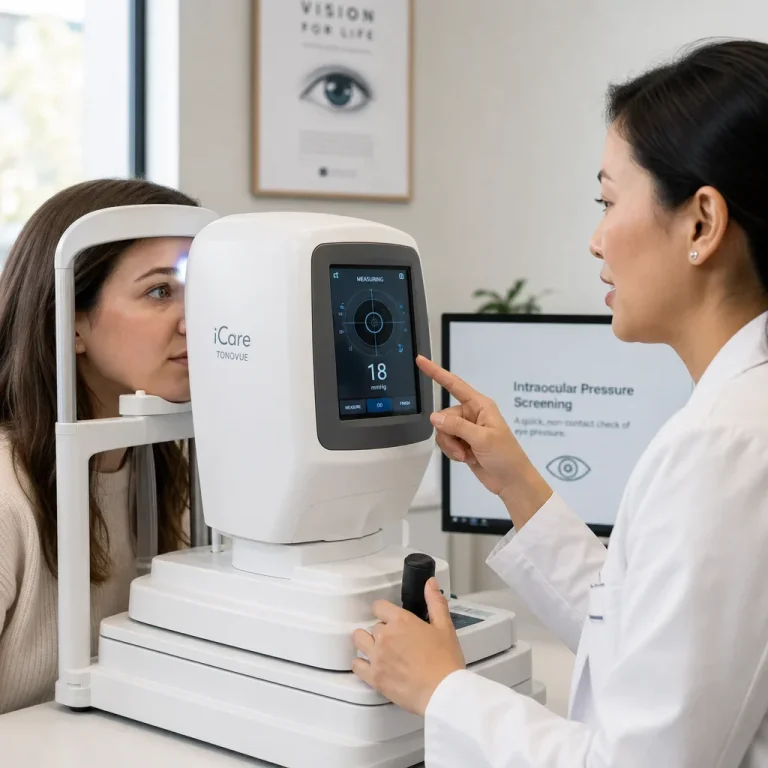
Most people think the air puff eye test is the worst part of an eye exam. They’re wrong. For most patients, it lasts a split second, does not touch the eye, and tells us one useful thing: your intraocular pressure, or IOP, which means the pressure inside the eye.
What the Air Puff Eye Test Is and Why It’s Done
The air puff eye exam is a quick screening test that estimates intraocular pressure, also called IOP. That is the pressure inside the eye, not your glasses prescription, not your vision sharpness, and not your eye muscle strength.
The point of this air pressure test for eyes is to screen for one glaucoma risk factor during a routine eye exam. A higher reading can matter, but the test by itself does not diagnose glaucoma.
The air puff machine at the eye doctor sends a brief pulse of air toward the front surface of the eye and records how the cornea responds. The cornea is the clear front window of the eye.
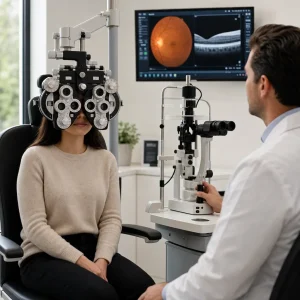
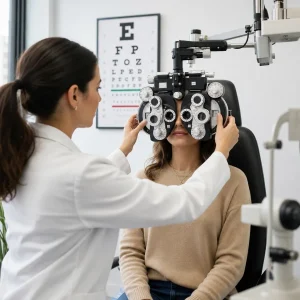
In routine Waterloo eye exams, this eye care pressure check is commonly one part of a larger visit that may also include refraction, eye health screening, and an optic nerve assessment. If the pressure reading looks higher than expected, we may repeat it or confirm it with another method.
What the Puff of Air Measures
The air puff eye pressure test measures intraocular pressure in millimetres of mercury, written as mmHg. IOP comes from the balance between fluid made inside the eye and fluid draining out of it.
That fluid is called aqueous humour. In plain language, the eye is always making and draining a small amount of fluid, and pressure rises or falls depending on how that balance is working.
Checking intraocular pressure matters because pressure can affect the optic nerve over time in some people. The optic nerve carries visual information from the eye to the brain.
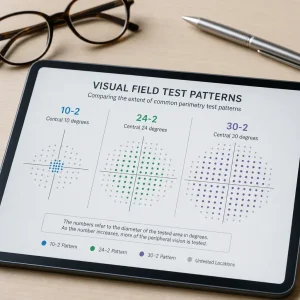
Checking IOP is only one part of glaucoma screening. We also look at the optic nerve, your health history, family history, and sometimes imaging or visual field testing before drawing conclusions.
How Air Puff Tonometry Works
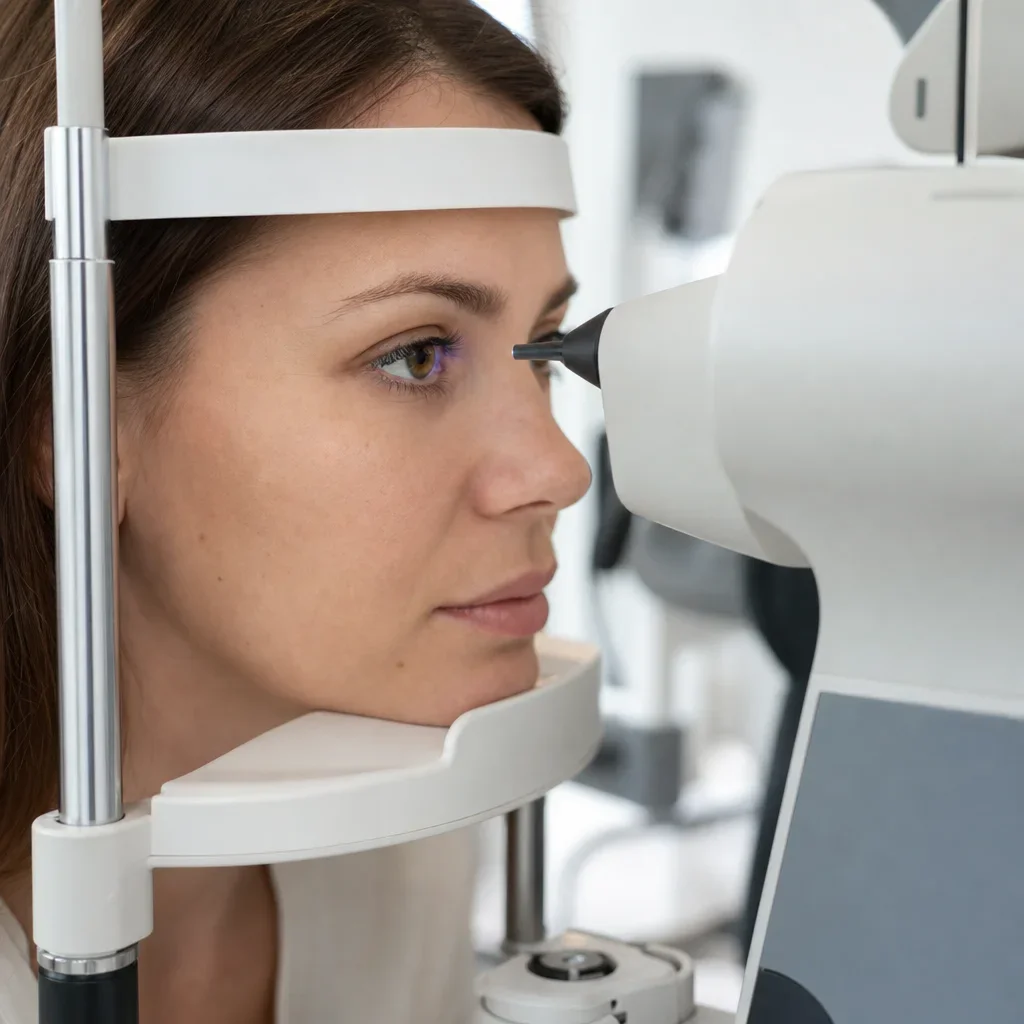
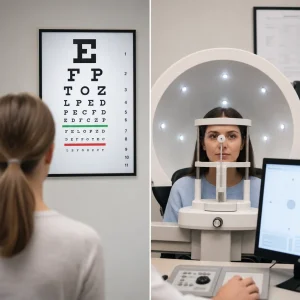
Air puff tonometry is a non-contact tonometry method, which means the test does not touch the eye. You place your chin on a rest, your forehead against a bar, and look at a target inside the machine.
The puff itself lasts well under 1 second . The device briefly flattens the cornea just enough to estimate eye pressure from that response.
An air puff test eye reading may be repeated 1–3 times per eye for consistency . If you blink, squeeze, or move, the machine may not get a reliable reading on the first try.
That is why the air puff in eye test can feel more surprising than painful. The startle is usually the issue, not the force of the air.
Does the Air Puff Eye Test Hurt or Touch Your Eye?
The air puff test optometrist offices use is usually not painful, and it does not touch the eye. Most people describe eye air puff testing as sudden, odd, or mildly uncomfortable for a moment.
The test is harder for patients with a strong blink reflex, anxious first-time wearers, and some children. We see that every back-to-school season and with plenty of UW students who have not had a full eye exam in years.
A few simple changes make it easier. Keep both eyes open. Breathe normally. Rest your forehead firmly against the bar. Try not to squeeze your eyelids shut.
If you hate the air puff test, say so before we start. We can coach you through it, and if needed, the optometrist may choose an alternative to eye puff test methods depending on the exam and the equipment available.
Normal Eye Pressure Range and What Your Result Means
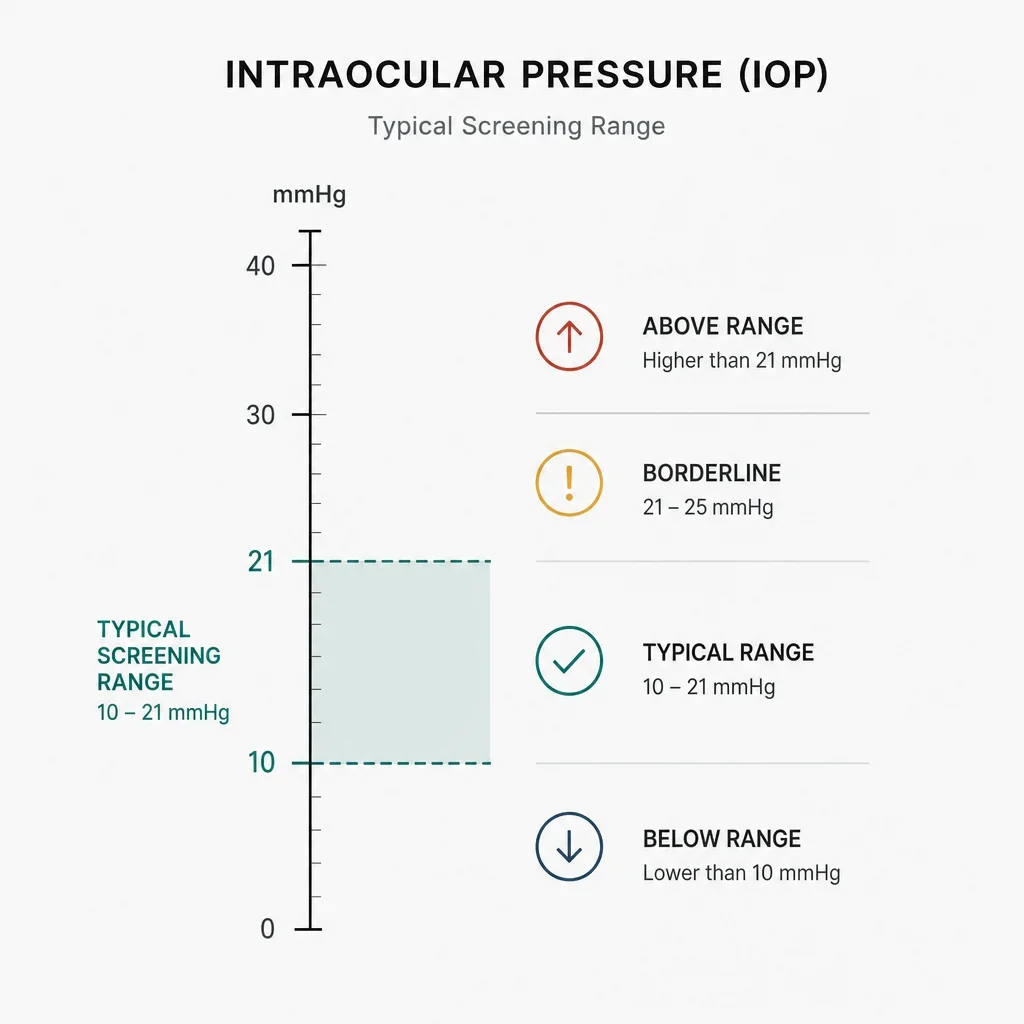
A commonly cited normal eye pressure range is about 10–21 mmHg . That range is a guide, not a diagnosis.
There is no separate normal eye pressure by age that automatically changes because someone is 70. A normal eye pressure for a senior is generally interpreted in the same clinical range, then weighed against optic nerve findings, corneal thickness, health history, and glaucoma risk.
A single air puff eye test result does not tell us whether you have glaucoma. Two people can both measure 20 mmHg and have very different risk depending on the rest of the exam.
| Reading category | What it may mean | Common next step |
|---|---|---|
| Below typical range | Sometimes normal for that person, sometimes worth rechecking | Repeat reading and interpret with full exam |
| About 10–21 mmHg | Often within expected screening range | Review with optic nerve and exam findings |
| Borderline or inconsistent | Could be affected by blinking, cornea, or test conditions | Repeat test or confirm with another device |
| Above the typical screening range | May suggest ocular hypertension or a reading that needs confirmation | Recheck, compare methods, assess optic nerve, and follow up as needed |
We would need to see your full exam to say what your number means for you. Pressure is never interpreted in isolation.
What It Means If Your Air Puff Reading Is High
You do not really fail the eye air puff test high reading the way you fail a school test. A high number means the optometrist may want more information.
The next step is often to repeat the pressure test, use a different machine, or compare the result with the rest of the eye exam. That may include a closer look at the optic nerve and, depending on the clinic setup, imaging or referral for further glaucoma workup.
Ocular hypertension means eye pressure is higher than expected without confirmed glaucoma damage. In plain language, the pressure is up, but that alone does not prove the optic nerve has been harmed.
Higher pressure can raise glaucoma risk, but high pressure does not automatically mean glaucoma. The reverse is also true. Some people develop glaucoma with pressures that fall inside the usual range.
Can You Have Glaucoma With Normal Pressure — or High Pressure Without Glaucoma?
Yes on both counts. Glaucoma is defined by damage to the optic nerve, not by one pressure number alone.
Some patients have ocular hypertension for years and never develop optic nerve damage. Others have normal-tension glaucoma, where pressure readings can sit in the usual range but the optic nerve still shows damage.
That is why a full eye exam matters more than a single screening number. We examine pressure, optic nerve appearance, retinal health, and sometimes imaging and visual fields to understand the real picture.
Early Warning Signs of Glaucoma and Symptoms of High Eye Pressure
Early glaucoma often causes no obvious symptoms. That is the problem. In the early stages, people can feel completely normal while vision loss starts slowly at the edges.
The most common early change in chronic glaucoma is gradual peripheral vision loss, and many people do not notice it at first. It is not usually eye pain, and it is not usually a dramatic blur at the beginning.
High eye pressure by itself often causes no symptoms at all. That means you generally cannot feel your IOP accurately without testing.
A different situation is acute angle-closure glaucoma, which is an emergency. Warning signs can include sudden eye pain, redness, blurred vision, halos around lights, headache, nausea, or vomiting. Those symptoms need urgent assessment the same day.
> Urgent symptom callout > Sudden eye pain, a red eye, blurred vision, halos around lights, headache, nausea, or vomiting are not routine air puff test issues. They need urgent eye care or emergency assessment the same day.
Air Puff vs Blue Light vs Handheld Eye Pressure Tests
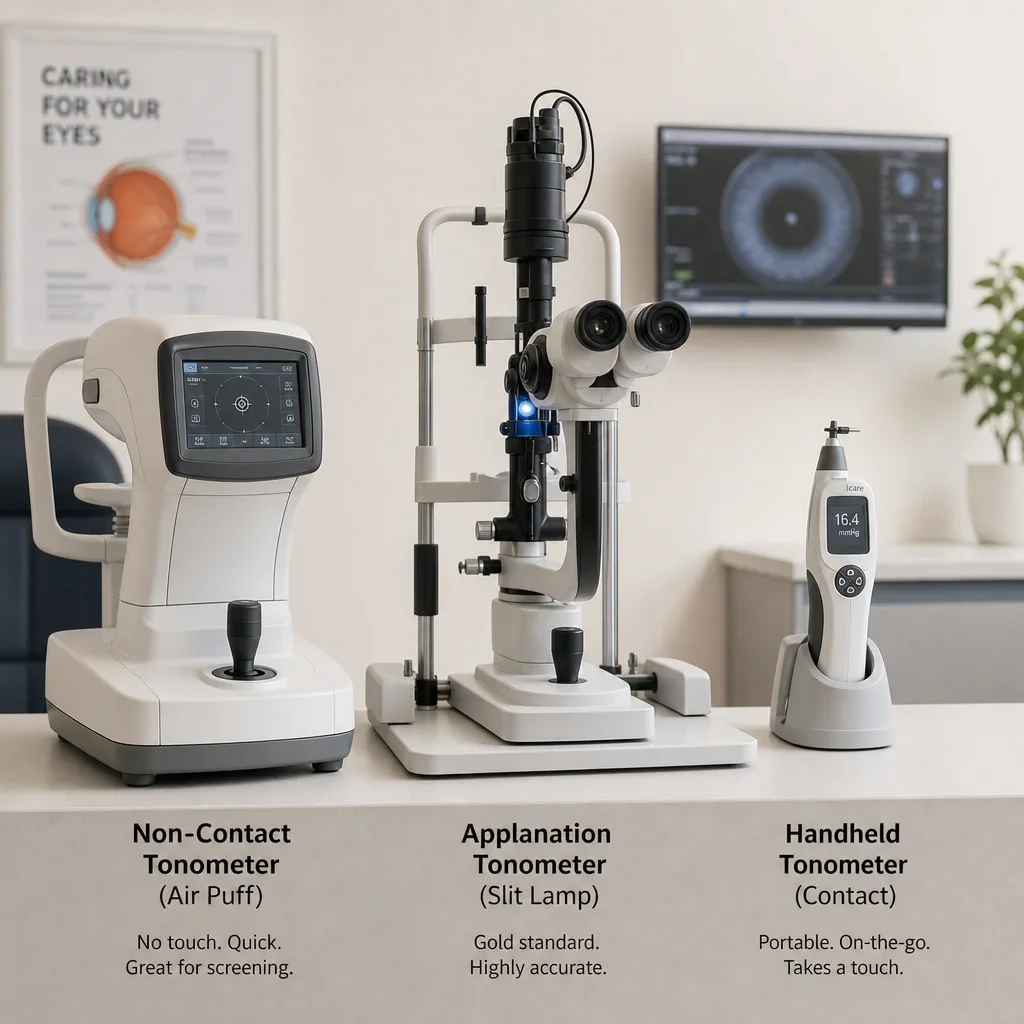
The best way to check eye pressure depends on the patient, the reading, and what the optometrist needs to confirm. Air puff tonometry is common for screening, while contact methods are often used when we want a confirmation.
The blue light eye pressure test usually refers to applanation tonometry done at the slit lamp after numbing drops. The dye and blue light help the optometrist measure pressure more directly.
Drops to check eye pressure are numbing drops used for contact methods, not for the standard air puff test. Standard non-contact tonometry does not require drops.
| Method | Touches the eye? | Numbing drops? | Typical use | Comfort profile | Why it may be preferred |
|---|---|---|---|---|---|
| Air puff tonometry | No | No | Routine screening | Startling but brief | Fast, non-contact, easy first check |
| Goldmann applanation, often called the blue light test | Yes | Yes | Confirmation and detailed assessment | Usually well tolerated once numb | Widely used reference method in clinics |
| Rebound tonometry or iCare | Yes | Often no | Children, anxious patients, quick checks | Usually brief and easier for some blinkers | Useful alternative when air puff is difficult |
| Tono-Pen or other handheld contact methods | Yes | Usually yes | Flexible positioning, special cases, confirmation | Short contact after numbing | Helpful when standard positioning is hard |
If your optometrist repeats the air in eye test with a blue light or handheld method, that is not bad news by itself. It usually means they want a better comparison before deciding what the reading means.
Why Readings Can Differ From One Test to Another
Different eye pressure tests can give different numbers because they measure the eye in different ways. The air puff test is a screening estimate, while contact methods may be used to refine or confirm it.
Corneal thickness can change how pressure reads. A thicker or thinner cornea can make the number look higher or lower than the true risk suggests, which is one reason pressure alone never tells the whole story.
Blinking, squeezing the eyelids, holding your breath, poor positioning, and even the time of day can affect checking IOP. Recent contact lens wear, dry eye, corneal scarring, or past refractive surgery can also matter.
Anxiety may change the testing conditions, especially if someone squeezes hard or stops breathing for the reading, but that is different from saying anxiety alone causes glaucoma. Nine times out of ten, a repeated measurement solves the concern more than the first machine reading did .
What to Do If You Blink, Squeeze, or Hate the Air Puff Test
Blinking during the eye air puff is common and not embarrassing. We simply repeat the reading until we get a usable result or switch methods.
A few tricks help right away. Look at the target, not at the nozzle. Keep your forehead in place. Let your shoulders drop. Breathe out slowly instead of bracing for it.
Some patients do better if we count them in. Others do better if we do not count at all. In practice, the right approach depends on whether anticipation is the problem or the startle is the problem.
If you still cannot tolerate the test, another pressure-checking method may be better. That is personalized care, not a failed attempt.
Can You Check Eye Pressure at Home?
You cannot reliably check eye pressure at home by pressing on your eye with your fingers. That is not accurate, and it is not a safe substitute for tonometry.
Home tonometry devices do exist for select glaucoma patients, but they are not standard for most people and are not how we screen the general public. They are usually considered in specific monitoring situations under an eye doctor’s guidance.
If you are worried about symptoms of high eye pressure, the best way to check it is with a proper eye exam. Eye pressure and blood pressure are different measurements, and one does not tell you the other.
After the Test: Driving, Contacts, Side Effects, and Normal Activities
After a standard air puff eye test, most people can return to normal activities right away. There are usually no lasting side effects from the puff itself.
You can generally drive after the air puff test because no drops are needed and nothing touches the eye. Driving concerns are more often related to dilation, not to non-contact tonometry.
Contact lenses are usually not a problem after a non-contact pressure check because the test does not touch the eye. If numbing drops or a contact method was used instead, the optometrist may give separate guidance.
If your comprehensive exam includes dilation, blur and light sensitivity can last about 2–6 hours . That timing varies, and the eye doctor decides whether you should drive based on how your eyes respond.
When You Should Book an Eye Pressure Check
An eye pressure check is usually part of a comprehensive eye exam, not a stand-alone number that tells the whole story. That is the right way to approach glaucoma screening.
It makes sense to book an exam if you are overdue, have a family history of glaucoma, have been told your pressure ran high before, notice vision changes, or need monitoring for an existing eye condition. The optometrist decides how often IOP should be checked based on your age, findings, and health history.
At our Waterloo clinic, we handle the exam, the eyewear discussion, and follow-up under one roof. If you want your eye pressure checked as part of a full eye health assessment, book a comprehensive eye exam and bring your current glasses, contact lens details, and insurance card if you have one.
FAQ
What is the air puff eye test?
It is a non-contact screening test that estimates intraocular pressure, or the pressure inside the eye.
Does the air puff eye test hurt?
Usually no. It is more startling than painful for most patients.
Does the air puff test touch your eye?
No. Standard air puff tonometry does not touch the eye.
What does the air puff test measure?
It measures intraocular pressure in mmHg.
Is the air puff test for glaucoma?
It screens one glaucoma risk factor, but it does not diagnose glaucoma by itself.
What is a normal eye pressure range?
A commonly cited range is about 10–21 mmHg , but the optometrist interprets that number with the rest of the exam.
What does it mean if my eye pressure is high?
It means the reading may need confirmation and follow-up. It does not automatically mean glaucoma.
Can you have high eye pressure without glaucoma?
Yes. That is called ocular hypertension when there is no confirmed optic nerve damage.
Can you have glaucoma with normal eye pressure?
Yes. Some patients have normal-tension glaucoma.
Why did my optometrist repeat the test with a different machine?
Different devices measure pressure differently. A second method helps confirm whether the first reading was accurate enough to trust.
What is the blue light eye pressure test?
It usually means applanation tonometry done after numbing drops at the slit lamp. It is often used to confirm or refine pressure readings.
Can I check my eye pressure at home?
Not accurately with your fingers. Home devices exist for select patients, but they are not standard for most people.
Can I drive after the air puff eye test?
Usually yes. If your exam also included dilation, driving advice depends on how long the drops affect you.
Can I wear contact lenses after an eye pressure test?
Usually yes after a non-contact air puff test. If contact tonometry or drops were used, follow the optometrist’s advice.
What if I hate the air puff test or keep blinking?
Tell us before the test starts. Coaching often fixes it, and another method may be used if needed.