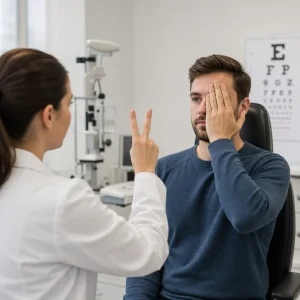
Most people think you should avoid an eye exam during pregnancy unless something is badly wrong. That is usually not true. In most cases, you can get an eye exam while pregnant, but the exam plan may be adjusted based on your symptoms, health history, stage of pregnancy, and whether dilation or medicated drops are being considered.
Can you get an eye exam while pregnant? The short answer
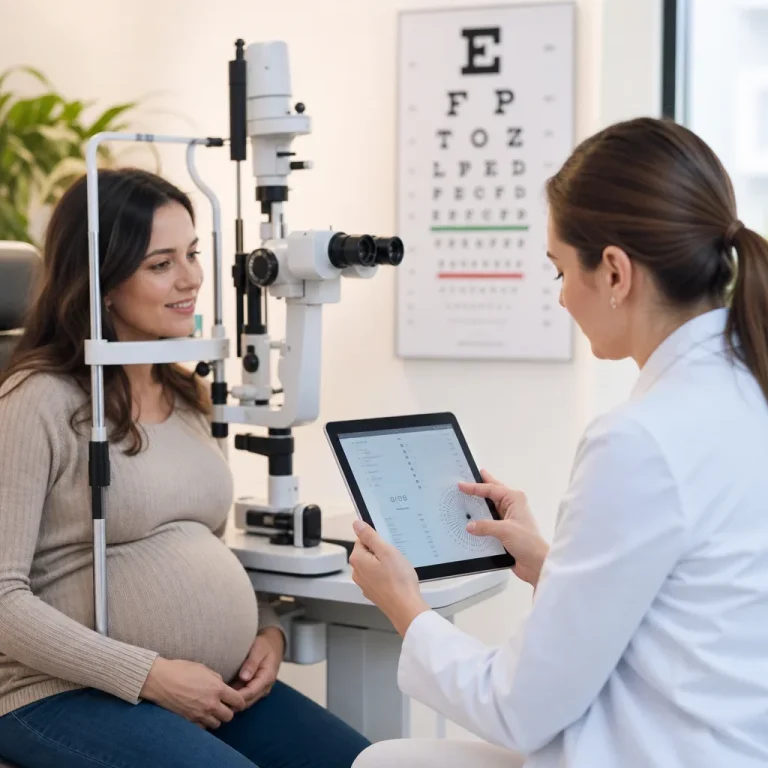
Yes, many pregnant patients can have an eye exam during pregnancy. The safer and more accurate way to say it is that routine eye care, symptom-based visits, and urgent eye assessments are all still possible, but the optometrist tailors the visit to your symptoms, medical history, and whether extra testing is clinically necessary.
Pregnancy itself is a reason to tell us more, not a reason to avoid care. We ask patients to mention pregnancy when booking and again at check-in because that changes how we review medications, plan testing, and discuss dilation, retinal imaging, or follow-up.
A routine vision check is not the same as a same-day visit for sudden blur, flashes, floaters, or severe headache with visual changes. New or severe symptoms need faster medical judgment, and in some cases your optometrist, family doctor, midwife, OB-GYN, urgent care, labour and delivery triage, or emergency department may all play a role.
Why pregnancy can affect your vision
Pregnancy can change vision because hormones and fluid shifts can affect the tear film, the cornea, and refraction. Refraction is the part of the exam where we measure lens power, and when the front of the eye holds fluid differently or the tear layer becomes less stable, vision can blur or fluctuate even if nothing dangerous is happening.
The most common pattern is temporary change, not permanent damage. We often see mild blur, dry eye, light sensitivity, puffy lids, and an eye prescription change during pregnancy that settles after delivery, and sometimes later if breastfeeding-related hormonal changes are still affecting the eyes.
Contacts can feel different for the same reason. A cornea that is a bit drier or slightly altered in shape may make a usual lens feel tight, irritating, or less crisp, even when the lens brand itself is not the problem.
Common pregnancy-related eye changes that are often normal
Mild blurry vision during pregnancy can be normal when it develops gradually and stays mild. That does not mean it should be ignored for months, but it often reflects temporary refractive fluctuation, dry eye, or contact lens intolerance rather than an emergency.
Dry eyes are also common enough that we see them regularly in contact lens wearers and screen-heavy office workers. The dryness can feel odd because some patients feel burning or grittiness, while others get watery eyes, which is the eye’s reflex response to surface irritation.
Light sensitivity, tired eyes, and contact lenses feeling less comfortable can also happen without a serious eye disease. A first-time wearer or a long-time wearer may suddenly tolerate fewer hours, need more breaks, or prefer glasses for part of the day.
New visual aura with migraine can happen in pregnancy, but new, severe, one-sided, painful, or fast-changing symptoms should not be written off as normal. That is where the history matters, and the optometrist decides whether this looks like an eye issue, a migraine pattern, a blood pressure concern, or something that needs urgent medical assessment.
Normal changes vs warning signs: when to call an optometrist, OB-GYN, or seek urgent care
The key difference is speed, severity, and what comes with the vision change. Gradual mild blur and dry eye symptoms are often routine; sudden vision loss, a curtain over vision, or severe headache with visual symptoms are not.
| Symptom | Often not urgent | Same-day call | Urgent or emergency care |
|---|---|---|---|
| Mild gradual blurry vision | Mild fluctuation, both eyes, no pain | If it keeps worsening or affects driving or work | If it becomes sudden or severe |
| Dry, irritated, watery eyes | Surface irritation, contact lens discomfort | If redness, discharge, or pain develop | If severe pain or sudden drop in vision occurs |
| Light sensitivity | Mild with dryness or migraine history | If new and persistent | If paired with severe headache, eye pain, or neurologic symptoms |
| Flashes or new floaters | Not routine in pregnancy just because of pregnancy | Same-day call to an optometrist | Emergency care if a curtain, shadow, or vision loss follows |
| Double vision | Not something to watch casually | Same-day medical advice | Emergency care if sudden or with neurologic symptoms |
| Severe headache with visual changes | Not routine | Same-day OB-GYN or physician advice | Urgent assessment if severe, with swelling, high blood pressure, or neurologic symptoms |
| Sudden blurry vision | Not routine | Same-day call | Emergency assessment if severe, with headache, pain, or blood pressure concerns |
| Eye pain | Not routine | Same-day call | Emergency care if severe or with nausea, redness, or vision loss |
Sudden blurry vision in pregnancy can be a sign of something outside the eyes, including blood pressure problems or preeclampsia. Visual changes with severe headache, swelling, high blood pressure, chest pain, shortness of breath, or neurologic symptoms need urgent obstetric or emergency advice rather than a wait-and-see approach.
Diabetes also changes the picture. Blood sugar shifts can blur vision, and diabetic eye disease can worsen during pregnancy, so a pregnant patient with pre-existing diabetes should follow the eye care plan set by the optometrist and physician.
What to tell your eye doctor before the appointment
Tell the clinic you are pregnant before the appointment and remind us when you arrive. That single detail changes the medication review, affects whether we discuss dilation or alternative imaging, and gives the optometrist the right context for pressure readings, corneal changes, contact lens discomfort, and prescription instability.
Bring a short health summary if you can. The most useful details are how far along you are, whether you have diabetes or gestational diabetes, high blood pressure, a history of preeclampsia, migraine with aura, glaucoma, current prescription eye drops, and any recent sudden vision changes.
Bring your current glasses and contact lens information too. If you have an old prescription, contact lens box, or details from your last eye doctor appointment while pregnant or before pregnancy, that helps us compare what changed and whether the change looks temporary or clinically important.
A simple checklist helps:
- how far along you are
- current pregnancy complications, if any
- diabetes, gestational diabetes, or high blood pressure
- history of preeclampsia or migraine
- glaucoma or other eye conditions
- all prescription medications and eye drops
- supplements if your doctor wants them reviewed with medications
- whether you are breastfeeding postpartum
- sudden blur, flashes, floaters, pain, or headache with vision changes
- your current glasses and contact lens details
What an eye exam during pregnancy usually includes
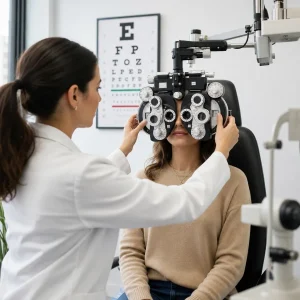
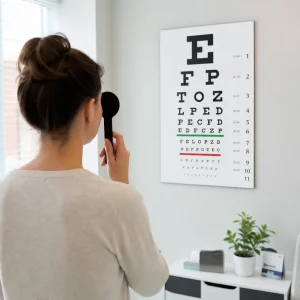
A pregnancy eye exam usually includes the same core steps as any comprehensive visit, with a few decisions made case by case. We start with history, then measure visual acuity, check how each eye sees, and perform refraction to determine whether your prescription has changed.
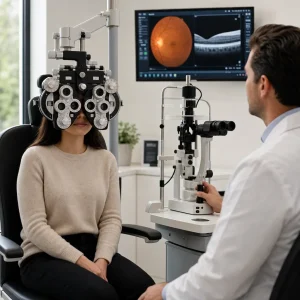
We also examine the front of the eye with a slit lamp. A slit lamp is the microscope we use to examine the cornea, lids, tear film, and lens in detail, which matters when dry eye, irritation, or contact lens discomfort is part of the problem.
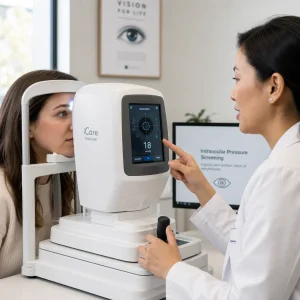
Intraocular pressure may also be checked if clinically indicated. Intraocular pressure is the fluid pressure inside the eye, and it matters more if you have glaucoma, eye pain, a concerning history, or symptoms that need a fuller review.
Internal eye health is assessed based on symptoms, risk factors, and the optometrist’s judgment. That may involve a non-dilated view, retinal imaging, dilation, or a combination, depending on what needs to be ruled in or ruled out.
If the findings suggest a broader medical issue, the optometrist may advise prompt follow-up with your OB-GYN, family doctor, or emergency care. That coordination matters when the eye symptoms may reflect blood pressure, diabetes, neurologic changes, or medication questions rather than a simple glasses issue.
Dilation, retinal imaging, and eye drops during pregnancy
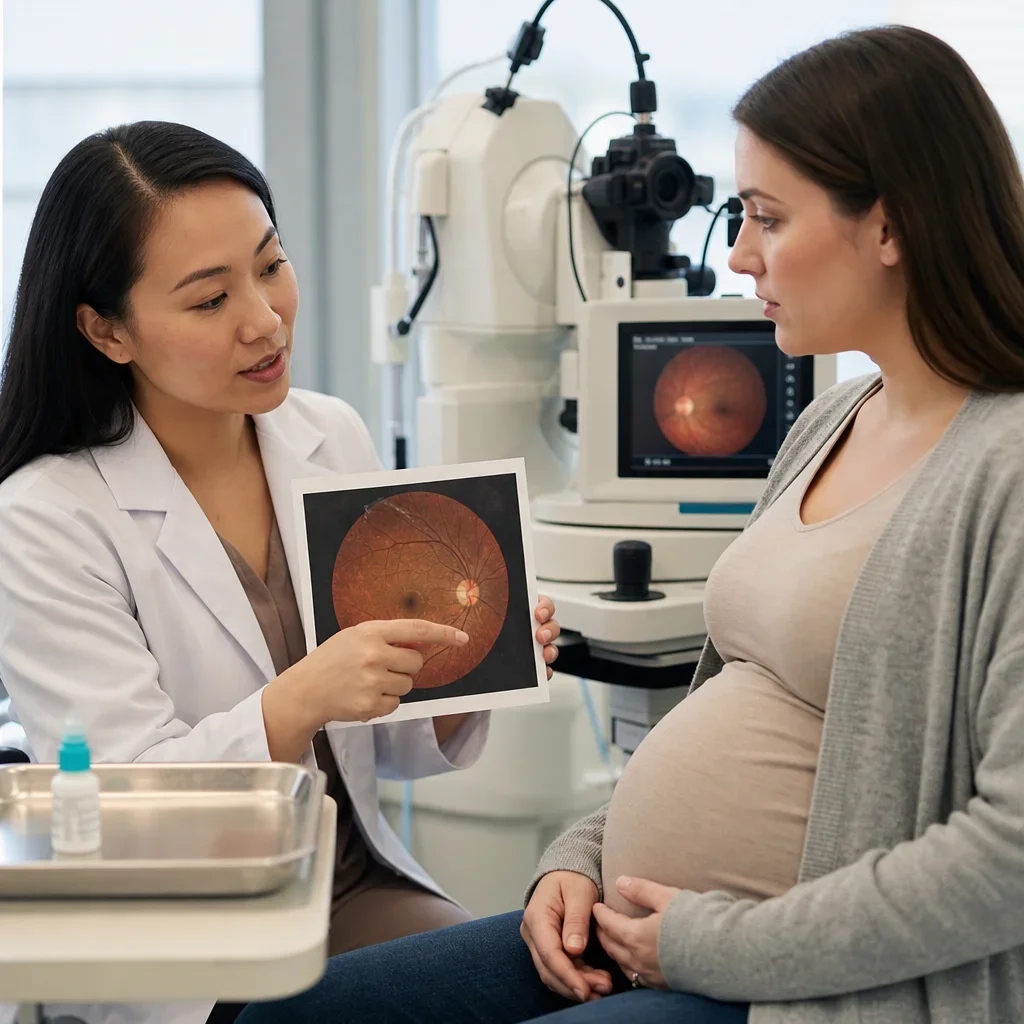
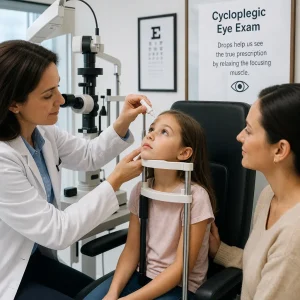
Dilation during pregnancy is not an automatic yes and not an automatic no. If you are asking about the risks of eye dilation during pregnancy, the practical answer is that the optometrist weighs the benefit of seeing the retina more fully against the reason for the test, your symptoms, and whether another approach could answer the question well enough.
A non-dilated exam can still be useful, but it is not the same as a dilated retinal exam in every case. If you have flashes, new floaters, diabetes, unexplained vision loss, or a retinal concern, the optometrist may decide that a better internal view is worth discussing even during pregnancy.
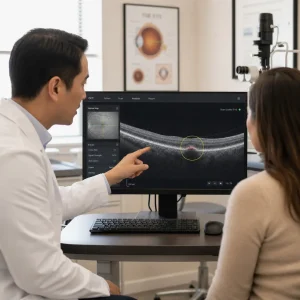
Retinal imaging is generally used as a photography-based view of the back of the eye, and many patients asking “is retinal imaging safe during pregnancy” are really asking whether there is a non-drop option. It can be helpful in some cases, but it is not a perfect substitute for dilation in every clinical situation.
Diagnostic eye drops should be discussed case by case. That includes dilating drops and any medicated drops used for treatment or pressure management, because pregnancy and breastfeeding both affect how cautious we need to be.
Temporary blur and light sensitivity after dilation can last for several hours . That is why we tell patients to bring sunglasses and to avoid driving if vision feels unsafe afterward.
A simple do and don’t list helps:
- do tell the optometrist you are pregnant
- do ask why dilation is recommended
- do ask whether retinal imaging can answer part of the question
- do bring sunglasses if dilation may be used
- don’t use medicated eye drops without asking your doctor or optometrist
- don’t assume a non-dilated exam answers everything
- don’t drive if dilation leaves you too blurred or light-sensitive
Dry eyes, artificial tears, and contact lenses during pregnancy

Yes, pregnant women can often still wear contact lenses, but comfort may drop. When patients ask whether pregnancy can make contact lenses feel uncomfortable, the usual reason is a less stable tear film, mild corneal swelling, or a prescription that is shifting just enough to make the lens feel wrong.
The practical fix is usually simpler than people expect. Shorter wear time, more glasses breaks, better lens hygiene, and a discussion about preservative-free lubricating drops can help if the problem is dryness rather than the lens itself.
Some patients should pause contact lens wear earlier than others. If lenses are suddenly painful, vision is unstable, the eyes are red, or the surface looks irritated under the slit lamp, we may advise a temporary switch to glasses until the eyes settle.
A brand-new contact lens fitting or a major lens change may be worth delaying if vision is fluctuating a lot. That is not because contacts are forbidden in pregnancy; it is because an unstable prescription makes fitting less predictable.
Should you change your glasses prescription while pregnant or wait?
Mild prescription changes are often worth waiting on, while big functional changes are not. If your current glasses are only slightly off and you can still work, read, and drive safely, it may make sense to hold off on new lenses until your vision is more stable after delivery.
You should update sooner if your current glasses are making daily life hard or unsafe. We take a practical view here: headaches from strain, trouble at a computer, poor night driving, or blurred distance vision can justify new single-vision lenses even if the prescription may shift again.
This is where we explain the tradeoff clearly. A temporary eye prescription change during pregnancy can settle later, so a non-urgent pair may become less useful after birth or after breastfeeding-related changes calm down.
The timing is not one-size-fits-all. We would need to see your prescription to say for sure, and stronger prescriptions, progressives, or work-specific lenses deserve a more careful discussion because the cost of changing them twice is higher than a basic single-vision update.
Pregnancy, diabetes, high blood pressure, and glaucoma: when extra eye care matters
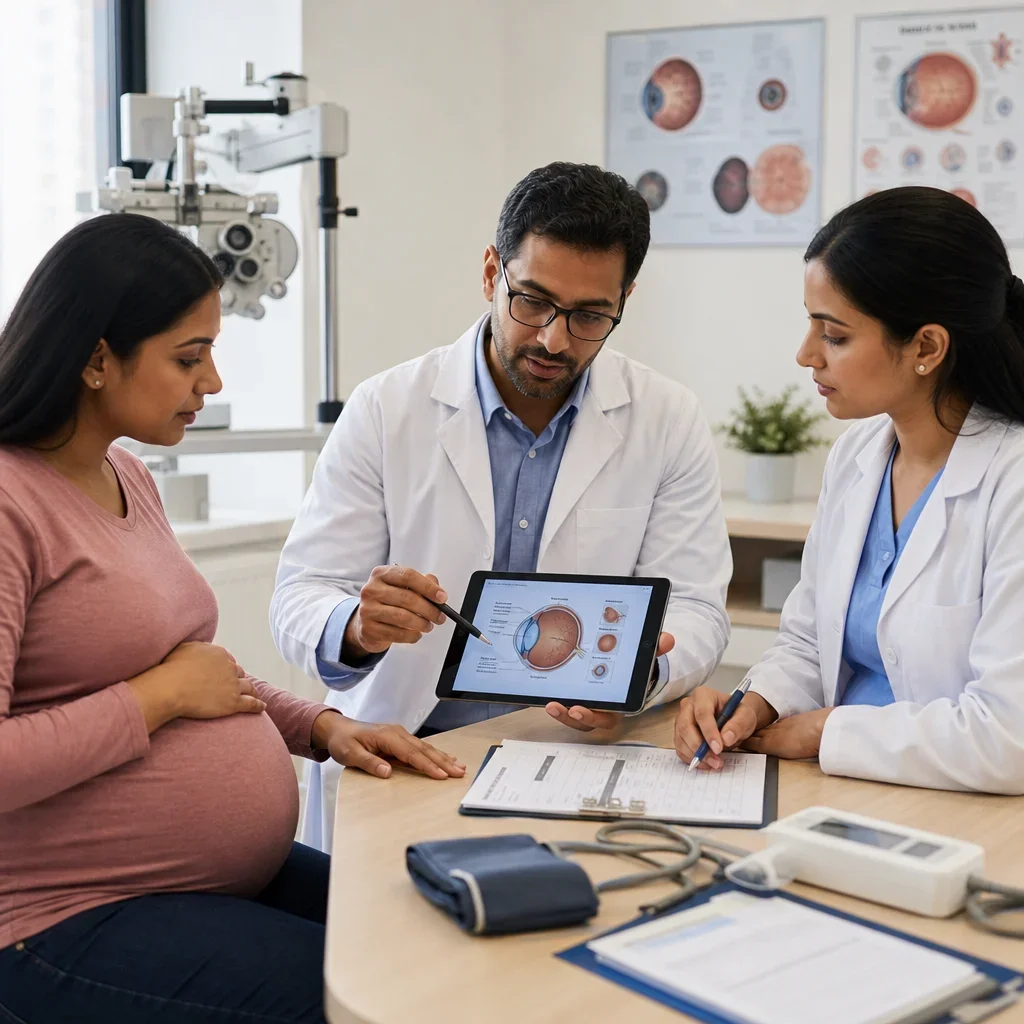
Pregnancy-related blur is more concerning when diabetes, high blood pressure, or glaucoma are already in the picture. In those cases, the question is not only whether you can go to the eye doctor while pregnant, but whether you should be seen sooner and whether your medical team also needs to know.
Pre-existing diabetes can require closer eye monitoring during pregnancy. The exact frequency is set by the optometrist or ophthalmologist based on retinal findings and your physician’s guidance, so we do not give a blanket schedule without seeing your history.
Gestational diabetes and blood pressure issues can also change how quickly we want symptoms assessed. A gradual mild blur may still be a glasses or tear-film issue, but sudden changes, fluctuating vision, or symptoms paired with headaches or swelling deserve broader medical review.
Glaucoma adds a medication question as well as an eye pressure question. If you use glaucoma drops, pregnancy is a good time to review them with the prescribing doctor and your prenatal team rather than making changes on your own.
First trimester, third trimester, and postpartum: does timing matter?
Routine eye care is often still possible in the first trimester, second trimester, and third trimester. The bigger differences are comfort, logistics, and whether the exam may involve dilation, extra testing, or a treatment discussion.
First-trimester visits are often driven by nausea, fatigue, or new questions. If you are wondering whether you can have an eye test when pregnant early on, the answer is usually yes, but we still want to know if your symptoms are mild and gradual or sudden and severe.
Third-trimester visits can be more about comfort and transportation. A shorter appointment, a ride plan if dilation is possible, and sunglasses afterward can matter more late in pregnancy than they would during a routine adult exam at another time.
Postpartum symptoms and postpartum prescription updates are different decisions. Urgent symptoms should be assessed promptly after delivery, while elective glasses changes may be better timed once vision stabilizes.
A stable final prescription may take weeks to months after delivery, and sometimes longer if hormonal changes are still affecting the eyes during breastfeeding . That is why non-urgent eyewear updates are sometimes deferred, while urgent visual problems are never something to postpone.
Practical appointment tips: driving, sunglasses, companions, and insurance
Ask ahead whether dilation may be recommended. That one phone call makes the visit easier because you can bring sunglasses, plan a ride if needed, and avoid being caught off guard by temporary blur.
Book earlier in the day if fatigue or nausea hits hard later on. We see this with students, parents, and working professionals in Waterloo and Kitchener all the time, and a morning slot usually makes the visit easier to get through.
Bring a companion if you are unsure how you will feel after the appointment. That matters more if you are having headaches, light sensitivity, or a same-day symptom assessment rather than a straightforward routine check.
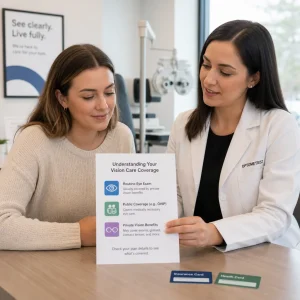
Pregnancy does not automatically make routine adult eye exams free in Ontario. OHIP coverage depends on age and qualifying medical conditions, not pregnancy by itself, so the safest advice is to confirm current eligibility through OHIP and check any private insurance before the visit.
We can direct-bill many private insurance plans, but coverage depends on your insurer, plan type, and whether the visit is an eye exam, eyewear purchase, or both. We usually tell patients to bring their insurance card and expect the plan details to decide the rest.
When to book an eye exam in Waterloo
Book sooner if you have new symptoms, diabetes, blood pressure concerns, or contacts that suddenly feel wrong. A pregnant patient does not need to wait until after delivery just to ask whether the change is normal.
A routine visit also makes sense if you are due for care and want a clearer plan on whether to update glasses now or later. That is often the real value of seeing an optometrist in Waterloo during pregnancy: sorting temporary blur from something that needs treatment, referral, or simply better timing.
At Premier Optical, we can examine the eyes, review your prescription, fit eyewear, and cut lenses on-site under one roof. If your pregnancy-related blur turns out to be a simple glasses issue, that keeps the next step straightforward; if it looks medical, the optometrist can guide referral or co-management appropriately.
FAQ
Can you get an eye exam while pregnant?
Yes. Many pregnant patients can still have an eye exam, but the optometrist may adjust the plan based on symptoms, health history, and whether dilation or medicated drops are being considered.
Is it safe to have an eye exam during pregnancy?
In many cases, yes. Routine eye care is generally still possible, but the exact testing used should match your symptoms, pregnancy history, and medical needs.
Do I need to tell my eye doctor I’m pregnant?
Yes. Tell the clinic when booking and again at check-in so the optometrist can review medications, testing choices, and any medical red flags properly.
Can you get your eyes dilated while pregnant?
Sometimes, yes, but it is a case-by-case decision. Dilation is discussed based on why it is needed, your symptoms, and whether a non-dilated view or retinal imaging could answer enough of the question.
Is retinal imaging safe during pregnancy?
Retinal imaging is often used as a non-drop way to document the back of the eye, but it is not identical to a dilated exam in every case. The optometrist decides whether it is enough for your situation.
Should I get new glasses while pregnant?
Sometimes. If the change is mild and vision is still functional, waiting may save you from replacing lenses twice. If work, reading, or driving are difficult, updating sooner may be worth it.
How long after pregnancy should you wait to get your eyes checked?
Urgent symptoms should be checked right away, even postpartum. For a non-urgent final prescription update, many people wait until vision feels more stable, which can be weeks to months after delivery .
Can pregnancy change your vision permanently?
It can, but many pregnancy-related changes are temporary. The optometrist needs to assess whether the blur looks like a short-term refractive shift, dry eye problem, or something more significant.
Can pregnant women wear contact lenses?
Often, yes. Some do well throughout pregnancy, while others need shorter wear times, more glasses days, or a pause if dryness or irritation becomes significant.
When should I call an optometrist or OB-GYN about vision changes during pregnancy?
Call promptly for sudden blur, flashes, new floaters, double vision, eye pain, severe headache with visual changes, or symptoms with swelling or blood pressure concerns. Those symptoms should not be treated as routine.
Do you get free eye tests when pregnant in Ontario?
Pregnancy alone does not automatically make routine adult eye exams free in Ontario. OHIP coverage depends on age and eligible medical reasons, so it is best to confirm current rules and your insurance coverage.
Can you get your eyes dilated while breastfeeding?
That is also a case-by-case discussion. If you are breastfeeding, tell the optometrist before the exam so any drops or treatment choices can be reviewed in that context.
If you are in Waterloo or Kitchener and are deciding whether to book now or wait, bring your current glasses, your health details, and the symptoms that changed. We can usually tell you fairly quickly whether this looks like a routine vision issue, a temporary pregnancy change, or something that should be escalated.