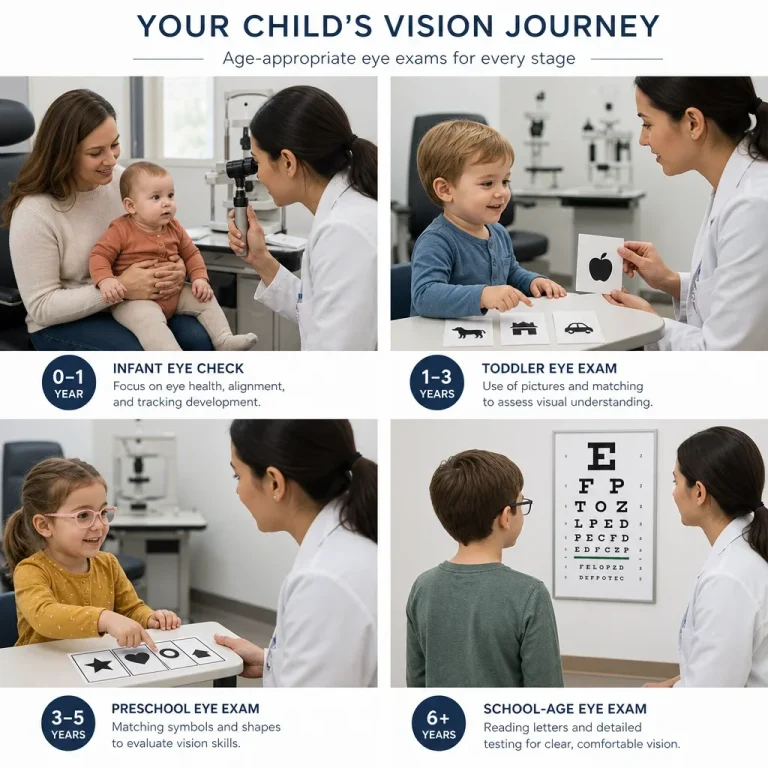
Most people think a child needs to know letters before a proper eye exam. They’re wrong. The recommended age for first eye exam in Ontario is in the first year, often around 6 to 9 months according to Canadian optometry guidance, and children can be assessed earlier if there are concerns .
A first eye exam is not the same as waiting for school age. Babies, toddlers, and preschoolers can all have a comprehensive eye exam before they can read, talk clearly, or name shapes. In Waterloo, that matters because some children with focusing, eye alignment, or prescription problems look completely fine at home.
Direct answer: when should a child have their first eye exam?
A child’s first eye exam should usually happen at about 6 to 9 months, with earlier assessment if there are concerns from birth onward . That is the clearest answer for parents asking what age for first eye exam timing in Ontario.
A baby can have an infant vision test before 6 months if there are warning signs, prematurity, family history, or a referral concern. The earliest age a baby can have an eye exam is essentially whenever an optometrist needs to assess a concern, because much of the exam is based on eye health, eye alignment, pupil response, and how the baby fixates and follows rather than letters or speech.
A child does not need to read, know the alphabet, or speak well for a first eye test. We examine how the eyes see and work using age-appropriate methods, and the optometrist chooses the tests based on age, development, and cooperation.
Child eye exam timeline by age: infant, toddler, preschool, school age
The easiest routine schedule is first year, around age 3, before starting school, then every year for school-age children unless the optometrist sets a different recall based on health or prescription .
| Age band | Main goal of the exam | Typical ways vision is checked | When to book |
|---|---|---|---|
| Newborn to under 6 months | Check for early concerns, eye health, eye alignment, pupil response | Observation, pupil response, ocular health view, fix-and-follow as development allows | Book sooner if there is concern, family history, prematurity, or abnormal appearance |
| About 6 to 9 months | First routine comprehensive exam | Fix-and-follow, alignment, objective refraction, eye health assessment | Routine first eye appointment |
| Around 2 to 3 years | Check vision development, focusing, alignment, early prescription needs | Matching tasks, symbol or picture-based acuity, refraction, eye teaming checks | Routine follow-up even if the child seems fine |
| Around 4 to 5 years | Confirm readiness for school demands | Visual acuity, eye movement control, focusing, depth perception, refraction | Before kindergarten or early school years |
| School age | Monitor prescription and visual comfort for learning | Chart-based acuity, refraction, binocular vision, ocular health checks | Usually yearly, or sooner if symptoms or glasses are involved |
Children who already wear glasses, have amblyopia, strabismus, developmental concerns, or a stronger prescription are often seen more often than routine recalls. The eye doctor decides exam frequency based on your child’s health, findings, and how stable the prescription is.
Why sources disagree on first eye exam age
Parents see ranges like 6 months, 6 to 9 months, or 6 to 12 months because different organizations and countries word the first routine exam timing slightly differently. The underlying point is consistent: the first comprehensive exam should happen in the first year, not when a child is old enough for letters.
Ontario parents are better served by Ontario and Canadian guidance than by a U.S. article that mixes different screening systems, insurance rules, and school programs. That is why this guide stays focused on Canadian-style comprehensive eye exams and Ontario coverage rather than copying advice from other provinces or countries.
What happens at a child’s first eye exam?
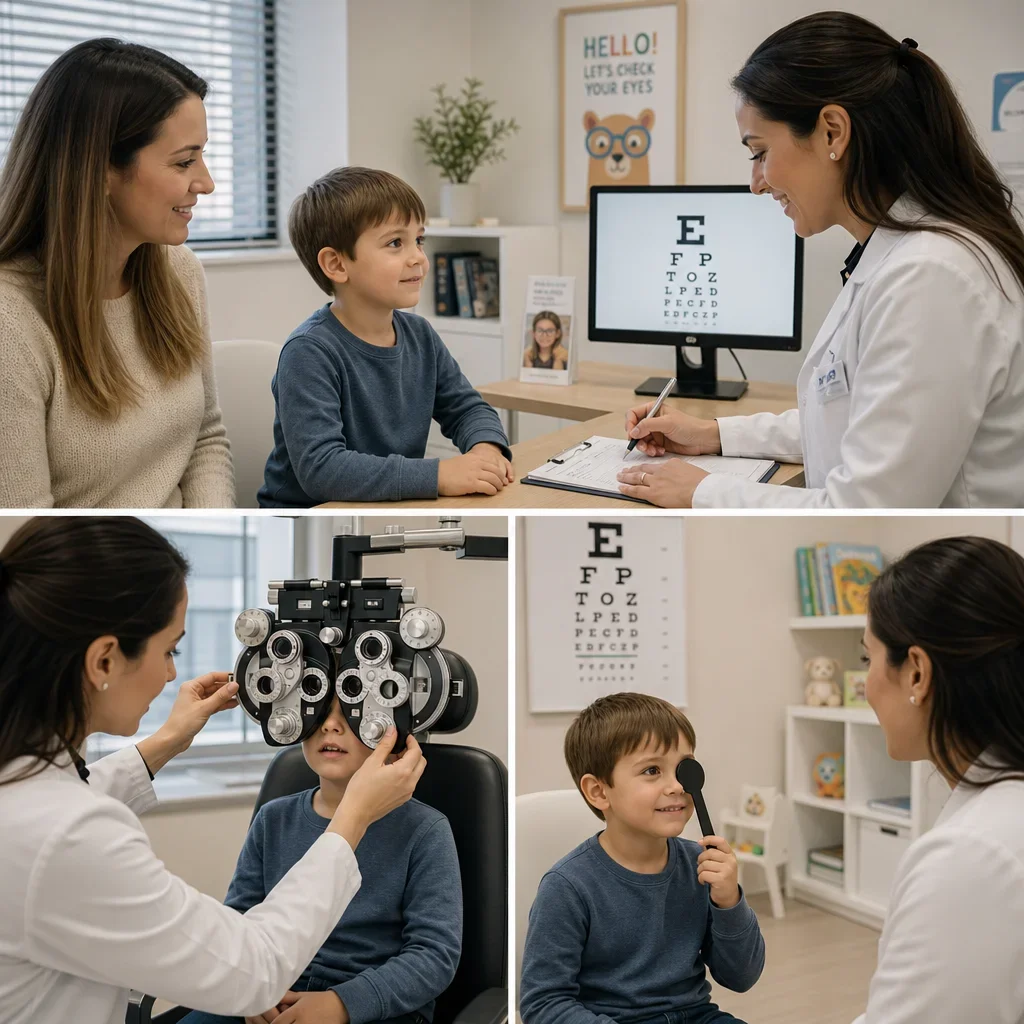
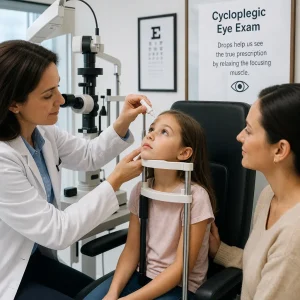
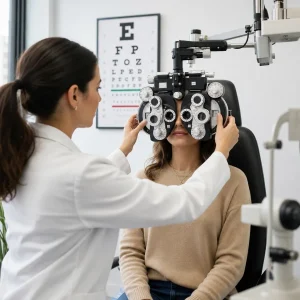
A child’s first eye appointment usually starts with history, moves into age-appropriate testing, and ends with a plain-English discussion of results and next steps. Most pediatric exams take about 30 to 60 minutes, depending on age, cooperation, and whether extra testing is needed .
The history part covers pregnancy or birth history if relevant, prematurity, eye turns, family history, glasses concerns, headaches, screen habits, school concerns, and any failed screening. Bringing your child’s health card, current glasses, and a short note about what you have noticed saves time.
The testing is adapted to the child. A baby may sit on a parent’s lap. A toddler may move around, point, or lose interest halfway through. A preschooler may use pictures or matching cards instead of letters. That is normal. The optometrist expects age-appropriate behaviour and builds the exam around it.
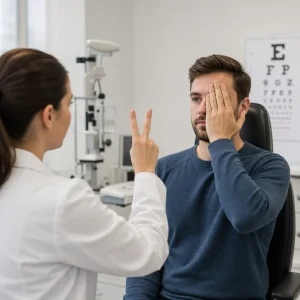
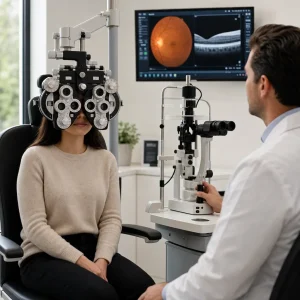
The exam usually includes refraction, which is the measurement of prescription, plus checks of eye alignment, focusing, tracking, pupil response, and eye health. In some visits, dilation drops may be used to help the optometrist judge prescription or view the back of the eye more clearly, but that decision is made case by case rather than assumed for every child.
How vision is tested in babies, toddlers, and 4-year-olds
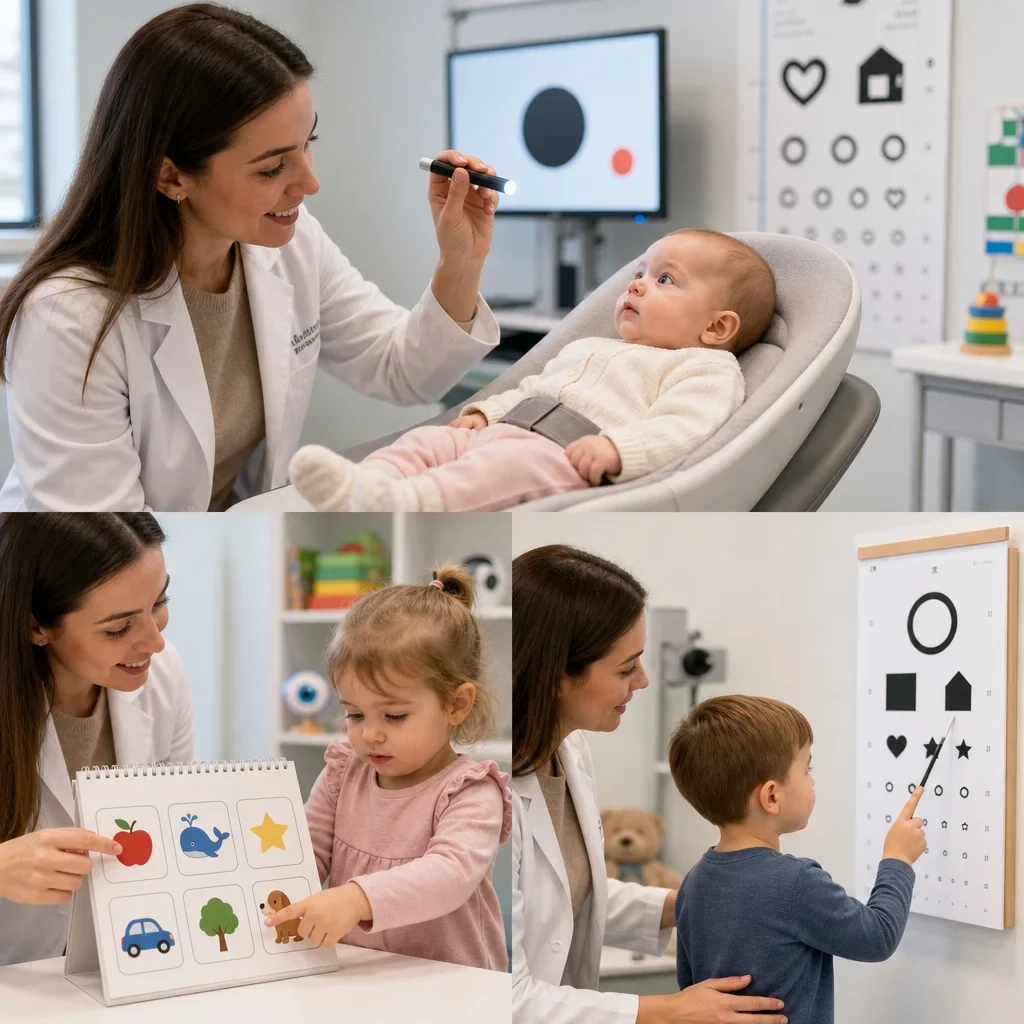
Babies are tested without letters by watching how they fixate, follow, react to light, and use both eyes together. That is how an infant vision test works in practice.
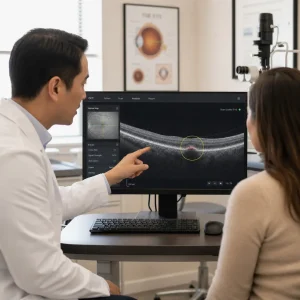
The optometrist may use retinoscopy, which means measuring prescription by watching how light reflects from the eye, and ophthalmoscopy, which means examining the inside of the eye with a lighted instrument. Those tests help estimate farsightedness, nearsightedness, astigmatism, and basic eye health even in nonverbal children.
Toddlers are often tested with picture, symbol, or matching tasks instead of a standard chart. If parents ask how do they test a 2 year old’s vision, the answer is usually with simple games, object naming if the child can speak, eye alignment checks, and objective prescription testing rather than reading letters.
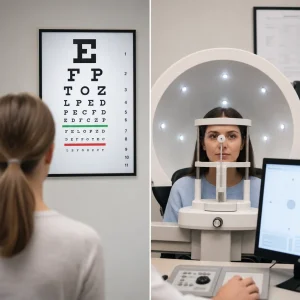
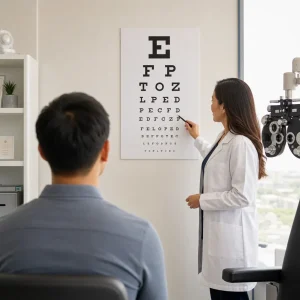
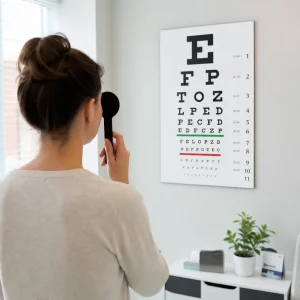
Preschoolers and many 4-year-olds can usually do more structured visual acuity testing, including matching shapes or symbols on a chart. If parents ask how do they check a 4 year old’s eyes, that usually includes vision in each eye, eye teaming, depth perception, refraction, and an eye health exam.
Not every test is done in every child. The optometrist chooses the best sequence based on attention span, developmental level, symptoms, and whether there is a specific concern like an eye turn or suspected lazy eye.
Vision screening vs. a comprehensive eye exam: what’s the difference?
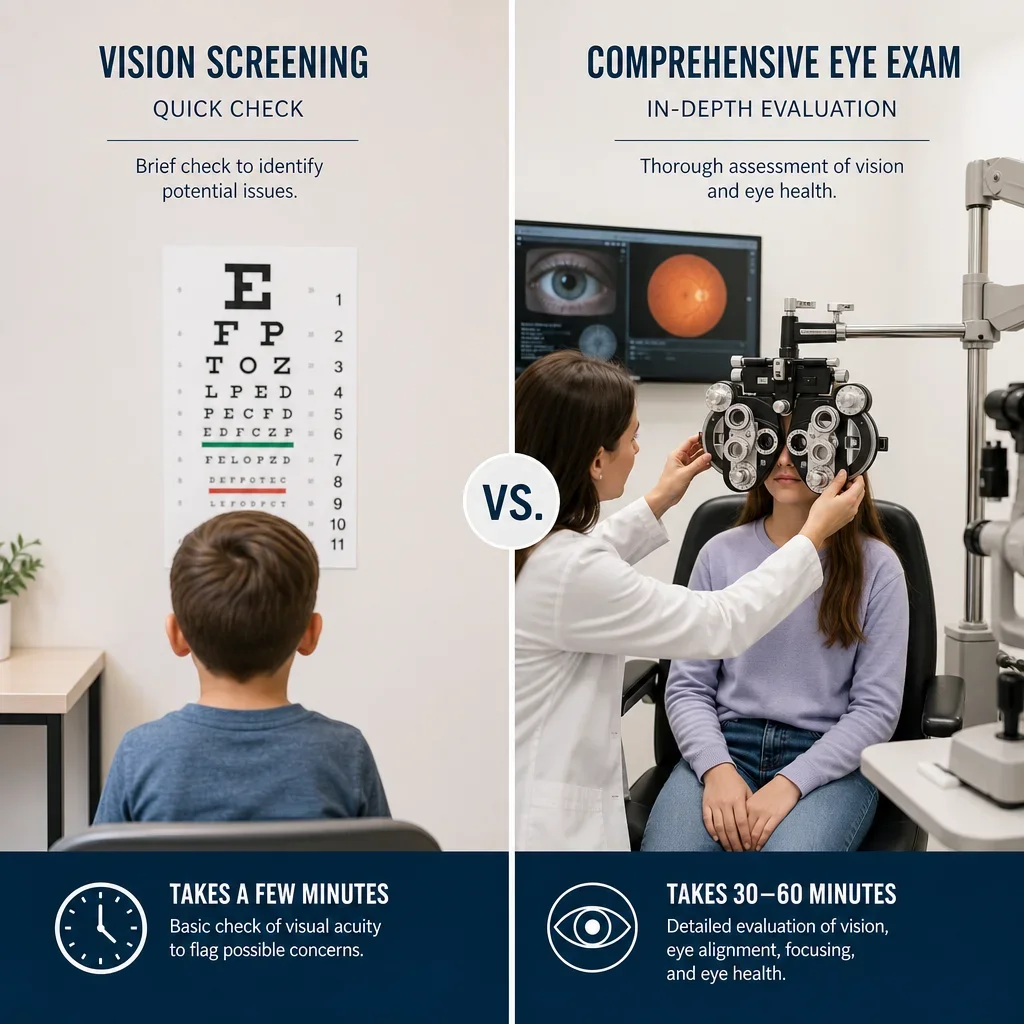
A vision screening is a quick pass-or-refer check, while a comprehensive eye exam is a full assessment by an optometrist. They are not interchangeable.
A screening may catch reduced distance vision, but it can miss focusing problems, eye teaming issues, depth perception problems, some refractive errors, and eye health findings. Passing a school or daycare screening does not always mean everything is normal.
A comprehensive exam looks at more than whether a child can spot a symbol across the room. It checks how the eyes line up, how they focus, whether one eye is working less well than the other, and whether there are signs of ocular health problems. That is why an eye exam for kids should not be replaced by a school screen alone.
Signs your child may need an eye exam sooner
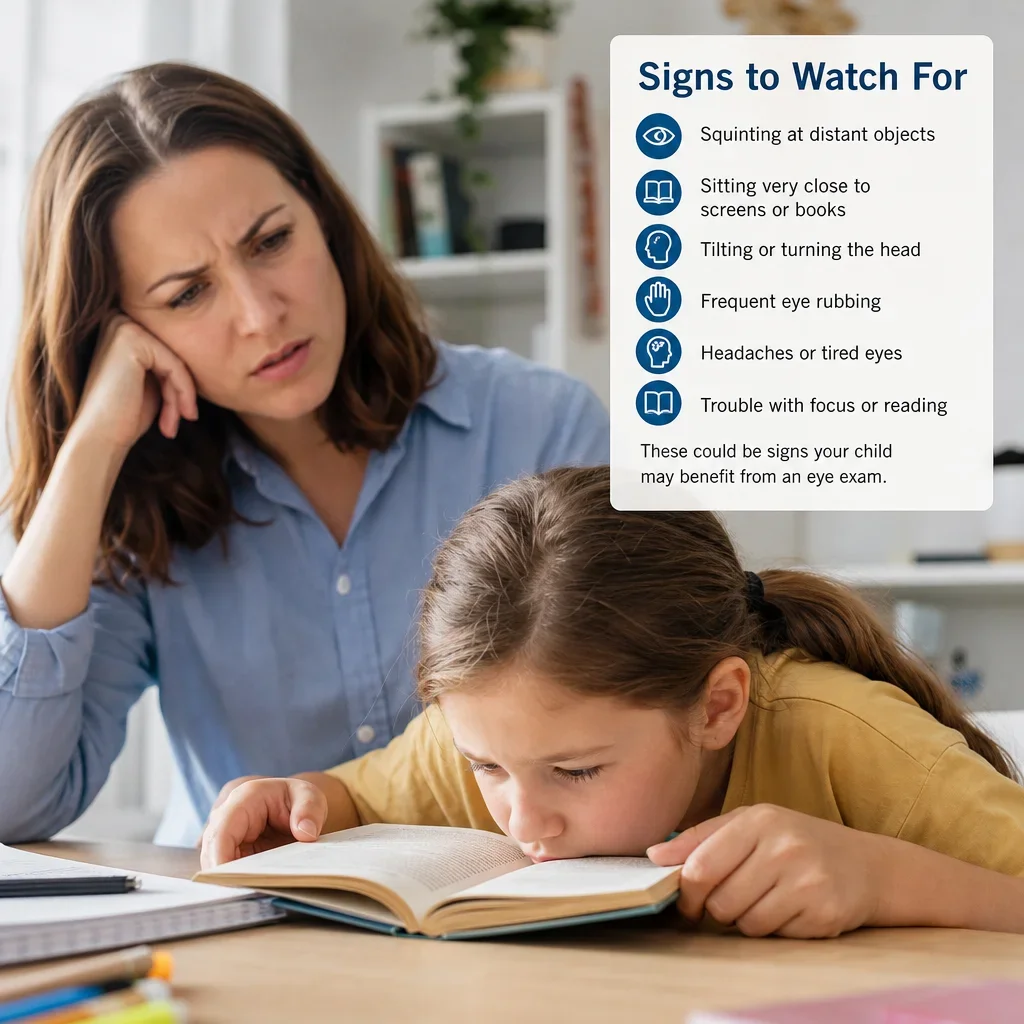
Some children need a first eye doctor visit earlier than the routine schedule because symptoms or signs show up first. Others show no clear signs at all, which is why routine exams still matter.
For babies, book sooner if you notice:
- eyes that constantly turn in or out
- poor eye contact or poor tracking
- one eye seeming to wander repeatedly
- unusual light sensitivity
- excessive tearing or discharge
- a cloudy-looking eye
- a white pupil in photos
- one eyelid drooping more than expected
For toddlers and older children, book sooner if you notice:
- squinting often
- sitting very close to screens
- holding books very close
- rubbing eyes often
- covering one eye
- tilting the head to look
- headaches with near work
- clumsiness on stairs or catching balls
- avoiding colouring, puzzles, or reading tasks
- complaints that things look blurry
An eye turn, failed screening, or persistent visual complaint should not be left until the next school year. Those are reasonable prompts to book promptly.
Urgent vs routine: when to book soon and when to seek prompt care
Routine concerns can wait for a scheduled comprehensive exam, but sudden or striking changes need faster medical guidance. A blog cannot triage an injury as safely as a clinician can.
| Situation | Timing |
|---|---|
| No symptoms, routine first eye exam age, school readiness check | Routine appointment |
| Failed screening, frequent squinting, noticeable eye turn, suspected vision change, family history with concern | Book promptly |
| Sudden eye injury, severe eye pain, sudden marked light sensitivity with redness, sudden vision loss complaint, new major swelling, white pupil in a photo | Seek urgent medical assessment rather than waiting for a routine exam |
If your child has an eye injury or a sudden major change, seek urgent medical advice the same day. Routine online booking is not the right next step for emergencies.
Book earlier if: prematurity, family history, glasses concerns, or developmental risk factors
Higher-risk children should be seen earlier or followed more closely, even if they seem to see well day to day. Risk changes timing.
Book earlier if your child was born prematurely, had a low birth weight, has a parent or sibling with strabismus or amblyopia, has a strong family history of high prescription, or has a known developmental or neurological condition that could affect vision. Those factors can increase the chance that a child needs earlier assessment or closer follow-up.
Parental concern also counts. If something about how your baby looks, tracks, or uses their eyes seems off, that is a valid reason to book rather than waiting for the routine first eye exam age milestone.
Why early eye exams matter for learning and development
Early eye exams matter because vision is more than sharp distance sight. Children use their visual system for tracking, focusing, depth judgment, hand-eye coordination, and keeping both eyes working together.
A child may have hyperopia, which means farsightedness, astigmatism, which means the eye focuses unevenly, strabismus, which is an eye turn, or amblyopia, often called lazy eye, without saying that anything is wrong. Some of those issues are easier to support when found early, especially before school demands increase.
An early exam does not guarantee a learning outcome, and it does not mean every child needs glasses. It does mean the optometrist has a better chance to find problems before they show up as frustration, avoidance, or reduced visual comfort.
How to prepare for your child’s first eye appointment
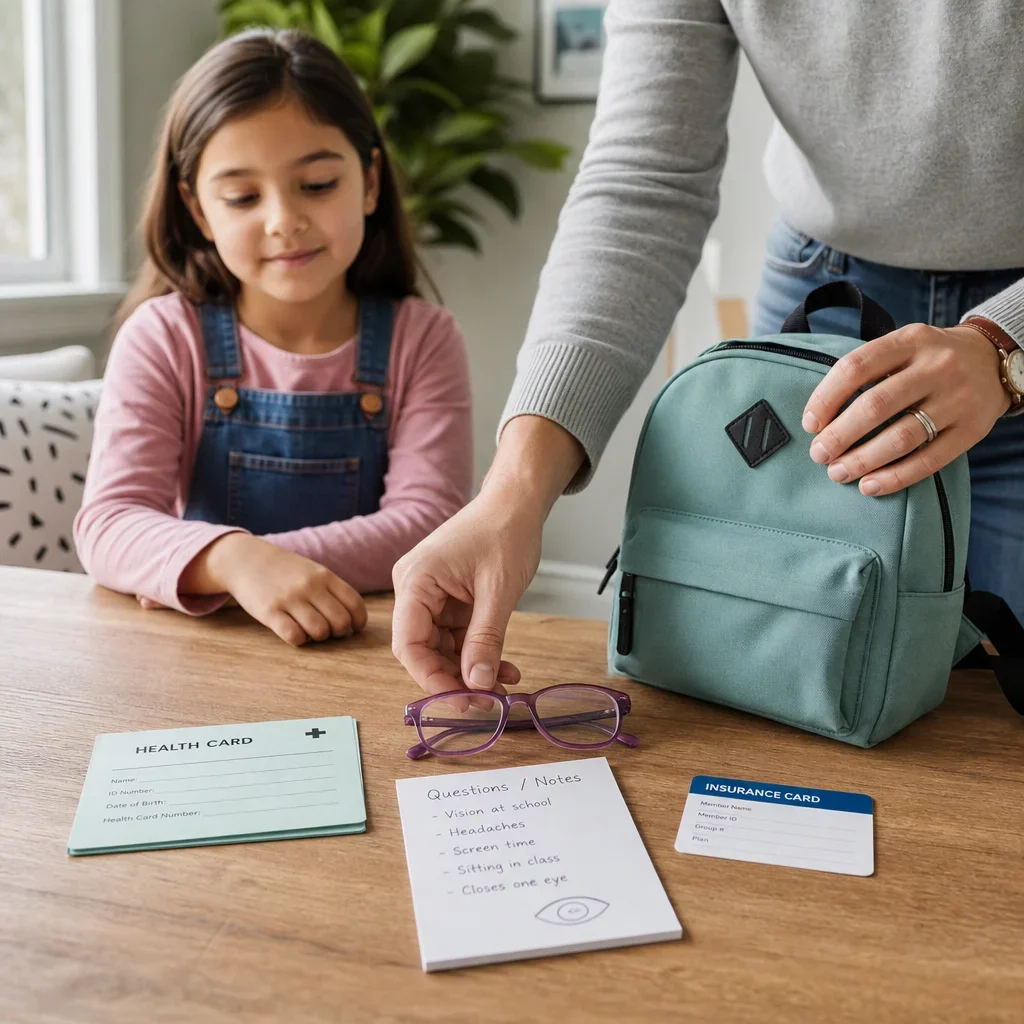
A smoother first optometrist appointment usually comes down to timing, simple language, and bringing the right information. A rested child usually does better than an overtired one.
Bring your child’s health card, any current glasses, a medication list, family eye history, and notes from a teacher, daycare, or pediatric provider if they raised concerns. If you have private insurance for eyewear or non-OHIP items, bring that information too.
Tell your child the visit in simple terms. We usually suggest something like, “The eye doctor will check how your eyes see and work.” That is enough. Avoid coaching answers, drilling letters, or making the visit sound scary.
Do not book over nap time if you can help it. Do not assume a passed screening means no exam is needed. Do not arrive expecting the same test sequence another family had online, because pediatric exams are individualized.
Are children’s eye exams covered in Ontario?
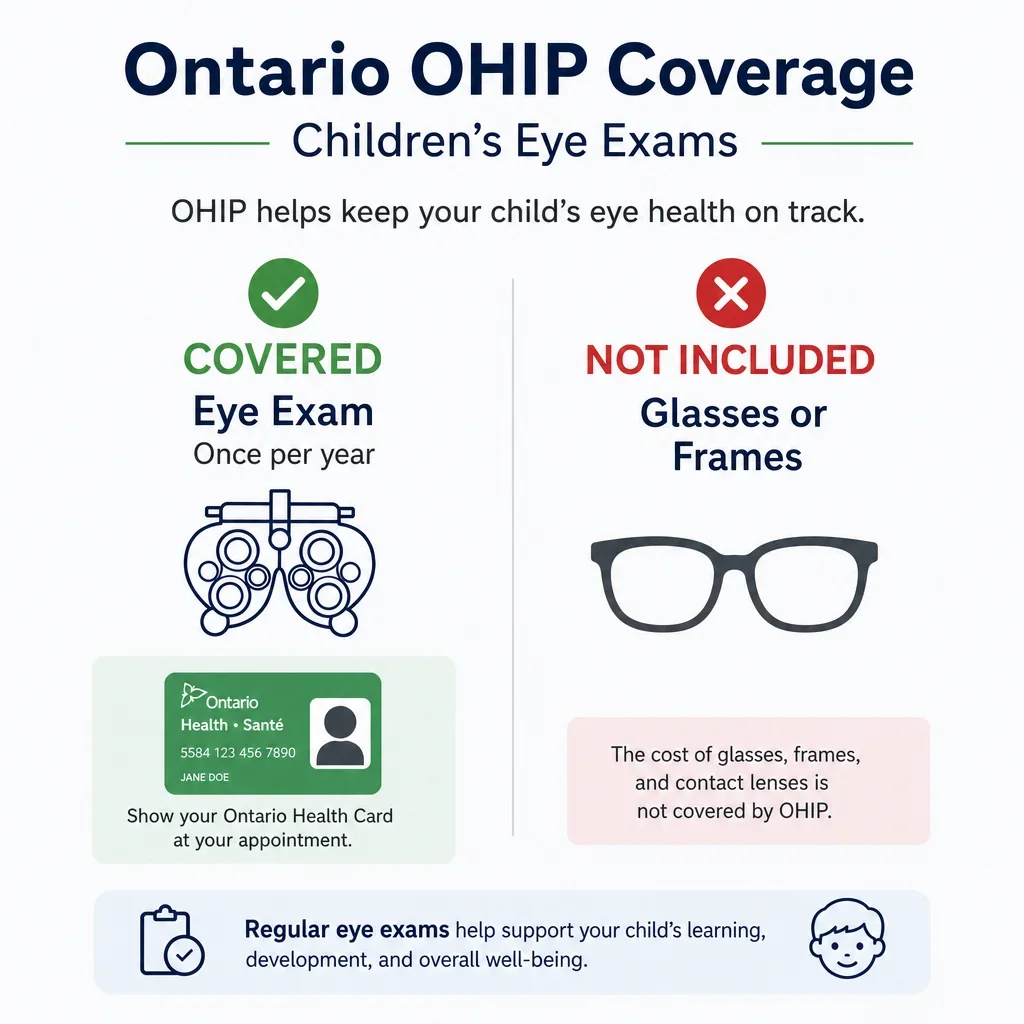
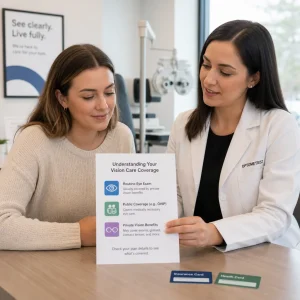
In Ontario, medically necessary insured eye assessments and routine eye exams for patients under 20 are generally covered by OHIP once every 12 months, plus any follow-up assessments that are medically required .
That is the answer parents usually mean when they ask, are children’s eye exams covered by OHIP or is an eye exam for child in Ontario free. The exam itself may be covered if your child meets OHIP eligibility, but glasses and many eyewear products are separate and are not paid for by OHIP.
Coverage rules can change, and details can depend on the reason for the visit and the service provided. We always tell families to bring the child’s health card and, if they have it, private insurance information for eyewear or other non-OHIP items. We can direct-bill many private plans for eligible products, but the insurer decides the final benefit amount.
If you are reading from outside Ontario, do not assume your province works the same way. BC, Alberta, and other provinces use different public coverage rules, exam frequencies, and age cutoffs.
For Waterloo families, the practical step is simple: book the exam, bring the health card, and we can confirm what is billed through OHIP and what is not before anything else is ordered.
Common myths about a child’s first eye exam
Myth: My child is too young for an eye exam. Reality: A baby can have an eye exam in the first year, and earlier if there are concerns.
Myth: They need to know letters first. Reality: A first eye test can be done with observation, light reflexes, retinoscopy, symbols, matching, and age-based tasks.
Myth: If they are not complaining, they must see fine. Reality: Children often do not know what normal vision should look like.
Myth: School screening is enough. Reality: Screening is limited and does not replace a comprehensive eye exam.
Myth: Only kids who obviously need glasses need an exam. Reality: Eye alignment, focusing, and eye health issues may show up before obvious glasses signs do.
What to expect at a first eye exam, by age
The first eye exam feels different at different ages, but the goal stays the same: measure how the eyes see, focus, line up, and stay healthy.
For babies under 1 year, the exam often looks more like observation than testing in the adult sense. The optometrist watches visual attention, checks eye movements, uses light-based tools, and estimates prescription without asking the baby to respond verbally.
For a 2 year old, expect simple games, pointing, matching, or watching responses. If parents ask how do they check a 2 year old’s eyes, the short answer is with behaviour-based testing plus objective measurement tools.
For a 4 year old, expect more structured chart work, though it may still be picture-based rather than letters. If one part does not work, the optometrist changes course and still gets useful information another way.
FAQ
What is the recommended age for a child’s first eye exam in Ontario?
The recommended age for first eye exam timing is in the first year, commonly around 6 to 9 months in Canadian guidance .
Can a baby have an eye exam before 6 months?
Yes. A baby can be assessed earlier if there are concerns like an eye turn, poor tracking, unusual appearance, prematurity, or family history.
Can I take my 2 year old for an eye test?
Yes. A 2 year old can have a comprehensive eye exam even without knowing letters.
Can I get my 3 year old eyes tested?
Yes. Around age 3 is a common follow-up point because children can usually do more interactive testing by then.
Should my 4 year old have an eye test?
Yes. Around ages 4 to 5 is an important time to confirm vision, focusing, and eye teaming before school demands increase.
How do they test a 2 year old’s vision?
They use age-appropriate methods like matching, picture tasks, eye alignment checks, and objective refraction rather than standard letter reading.
How do they check a 4 year old’s eyes?
They often check each eye’s acuity, eye teaming, depth perception, prescription, and eye health using child-friendly chart and light-based tests.
How is vision tested in infants?
Infants are tested with fix-and-follow behaviour, pupil response, eye alignment checks, ocular health assessment, and objective techniques like retinoscopy.
What happens at a child’s first eye exam?
The visit usually includes health history, observation, age-appropriate vision testing, refraction, eye alignment and health checks, then a review of findings with the parent.
Is a school vision screening enough?
No. A screening is useful, but it is only a limited check and does not replace a full comprehensive exam.
What signs of vision problems in babies should I watch for?
Watch for constant eye turning, poor tracking, unusual light sensitivity, excessive tearing, cloudy appearance, or a white pupil in photos.
Does family history mean my child should be seen earlier?
Often yes. Family history of amblyopia, strabismus, high prescription, or some eye diseases can justify earlier assessment.
Are children’s eye exams covered by OHIP in Ontario?
Routine eye exams for eligible patients under 20 are generally covered once every 12 months through OHIP, with medically necessary additional visits as needed .
How often should children have eye exams after the first visit?
Many children are seen again around age 3, before school, and then yearly through school age, but the exact schedule depends on the optometrist’s findings and your child’s needs .
A simple next step for Waterloo parents
If you are trying to decide whether to wait, the safer rule is simple: book the first exam in the first year, and book earlier if something seems off. If your child already has glasses, symptoms, or a family history that worries you, bring that information to the visit so the optometrist can set the right follow-up schedule for your child.