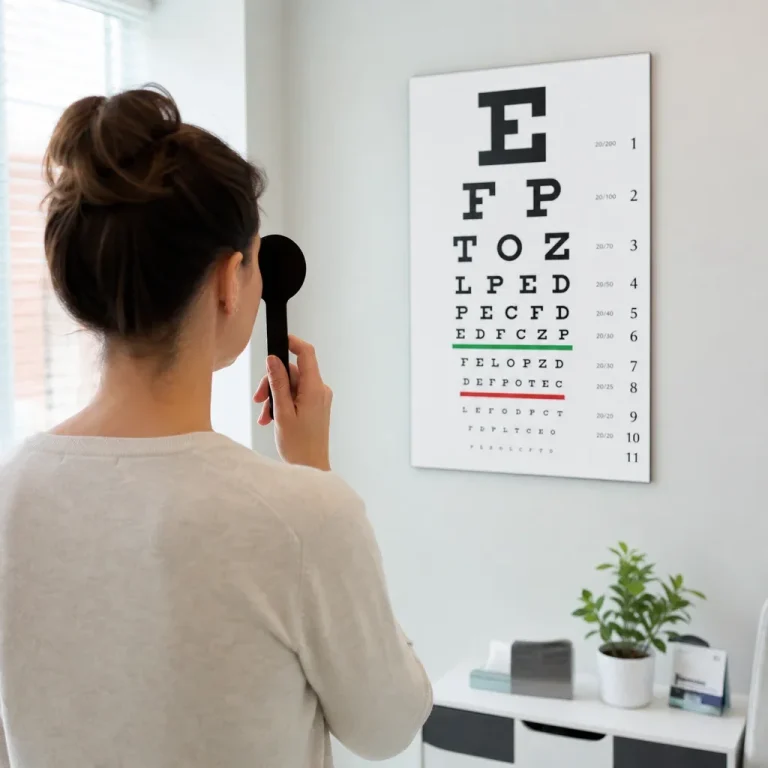
Most people think a 20 20 eye vision test tells them everything about their eyes. It does not. 20/20 describes distance visual acuity on a chart, not your prescription, not your eye health, and not whether you will need glasses for reading or screen work.
What a 20/20 eye vision test actually means
20/20 means you can read at 20 feet what a standard observer can read at 20 feet on a Snellen chart. In Canada, you may also see this written as 6/6, which is the metric equivalent of the same visual acuity.
The first number is the testing distance. The second number is the distance at which the line is expected to be read by a person with standard distance acuity. A 20 20 Snellen result is commonly treated as normal distance vision under test conditions.
20/20 is good eyesight, but it is not perfect vision. A person can measure 20/20 and still have dry eye, eyestrain, poor night vision, reduced contrast sensitivity, focusing trouble, or eye disease that a chart cannot detect.
What 20/20 vision actually looks like is simple. Street signs, classroom boards, TV captions, and faces across a room should look reasonably sharp at distance, assuming lighting is normal and no glare is interfering.
The 20/20 line on an eye chart is the line labelled for that acuity level. On a standard 20 20 vision chart, each lower line represents smaller detail and therefore sharper acuity if you can read it accurately.
How to read a Snellen chart
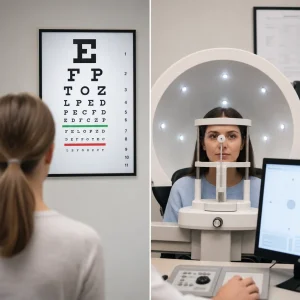
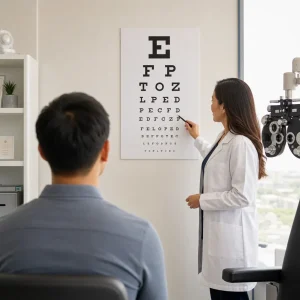
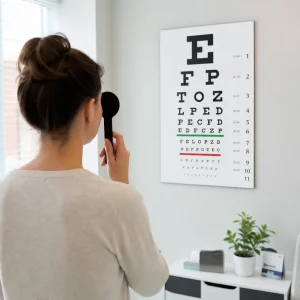
A Snellen chart is a distance eye chart made of rows of letters that get smaller line by line. The chart measures visual acuity, which means how clearly you can resolve fine detail at a set distance.
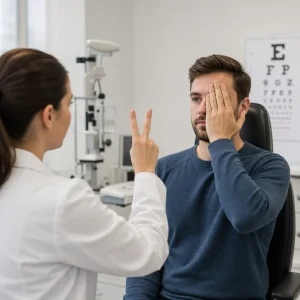
Most charts are read one eye at a time first, then sometimes with both eyes together. One-eye testing is called monocular testing. Both-eyes testing is binocular testing. We separate the eyes because one stronger eye can hide a weaker eye if you only test both together.
The testing distance depends on the chart design. Some charts are set for 20 feet, some for 10 feet, and some use mirrors or digital systems to create the same optical equivalent. That is why a printed 20 20 eye test chart only works if it is printed to scale and used at the distance written on that chart.
A line usually counts only if enough letters are identified correctly, but the exact scoring rule can vary by chart and clinic. That is why partial-line notation matters. A score like 20/20-2 means you reached the 20/20 line and missed 2 letters. A score like 20/50+1 means the 20/50 line was read and 1 extra letter was read on the next smaller line.
If you can only read the large top letter on a chart, that suggests quite reduced distance acuity on that setup. On many common charts, the top line is around 20/200, but chart formats differ, so the exact label should be read from that specific chart rather than guessed.
Here is the plain reading order for any 20 20 vision snellen chart:
1. Stand at the chart’s stated distance. 10 feet, 20 feet, or 6 metres are all used depending on chart design. 2. Cover one eye without pressing on it. 3. Read from the top down until the letters become unclear. 4. Record the smallest line you can read reliably. 5. Repeat with the other eye. 6. Test with both eyes together if you want a binocular 20 20 vision check. 7. Note whether you tested with glasses, contacts, or uncorrected vision.
Visual acuity comparison table: 20/10 vs 20/15 vs 20/20 vs 20/25 vs 20/40 vs 20/100 vs 20/200 vs 20/400
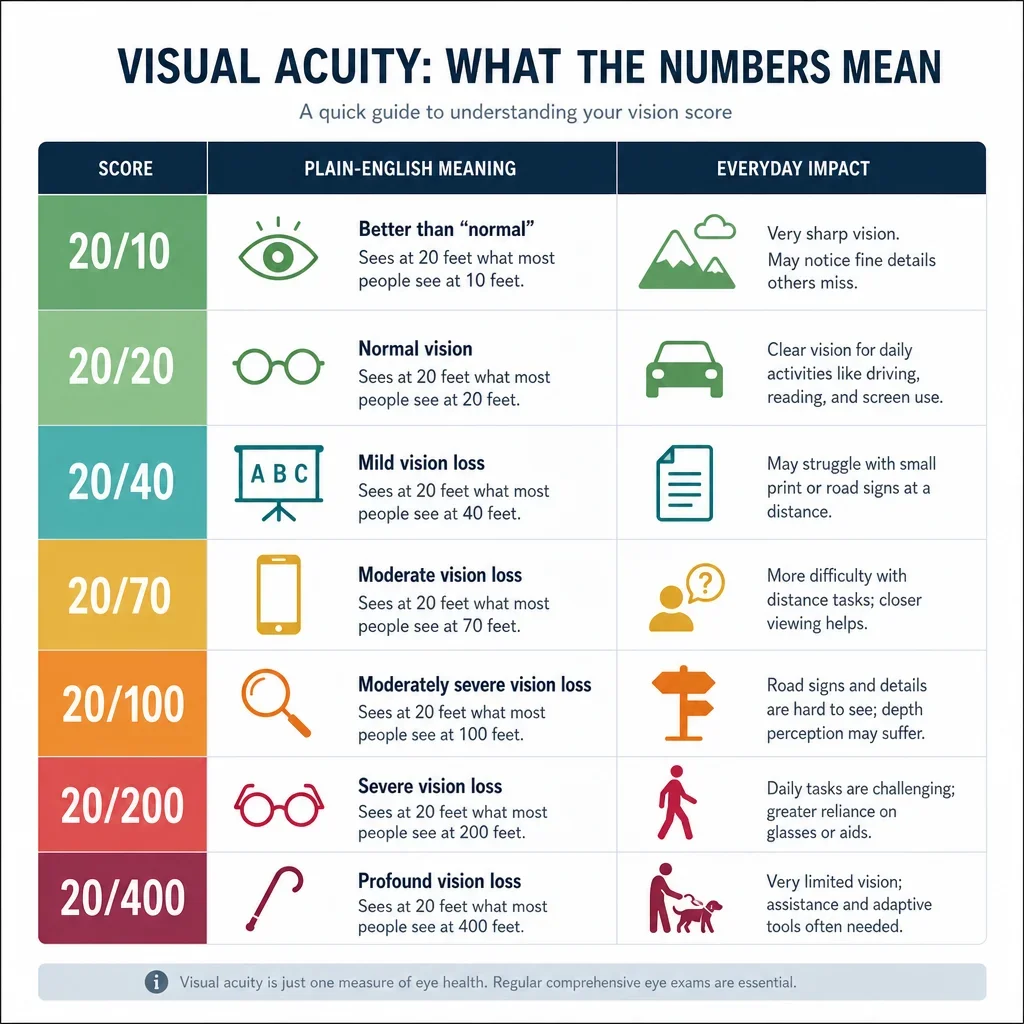
Smaller second numbers mean sharper distance acuity. 20/10 is better than 20/20. 20/40 is worse than 20/20. 20/200 is worse than 20/100.
| Score | Plain-English meaning | Everyday impact | Common next step |
|---|---|---|---|
| 20/10 | You see at 20 feet what a standard observer sees at 10 feet. | Distance detail looks unusually sharp. | No treatment just for the number if the exam is otherwise normal. |
| 20/15 | Better than standard 20/20. | Signs and distant detail look a bit sharper than average. | Usually no action unless symptoms exist. |
| 20/20 | Standard normal distance acuity. | Most everyday distance tasks are clear. | Still have routine eye exams. |
| 20/25 | Slightly less sharp than 20/20. | Mild blur may show up on small distant detail or night tasks. | Glasses may help depending on symptoms and refraction. |
| 20/30 | Mild reduction in distance acuity. | Boards, street names, and subtitles may take more effort. | Eye exam if this is new or bothersome. |
| 20/40 | Noticeably less sharp than 20/20. | Distance signs and classroom detail are harder. | Exam to check for glasses or other causes. |
| 20/100 | You must be at 20 feet to see what a standard observer sees at 100 feet. | Faces, road signs, and board work are blurred at distance. | In-person eye exam is appropriate. |
| 20/200 | Severe reduction in distance acuity. | Large signs and distant objects are very hard to resolve. | Prompt professional assessment is needed. |
| 20/400 | Very severe reduction in acuity. | Distance detail is extremely limited. | Urgent or prompt eye assessment depending on cause and onset. |
A 20 200 vision chart line represents much larger letters than the 20/20 line. A 20 100 vision chart line is also larger than 20/20, but smaller than 20/200. A 20 10 eye chart line, when present, is smaller than the standard 20/20 line.
What 20/10, 20/40, 20/100, and 20/200 vision look like in real life
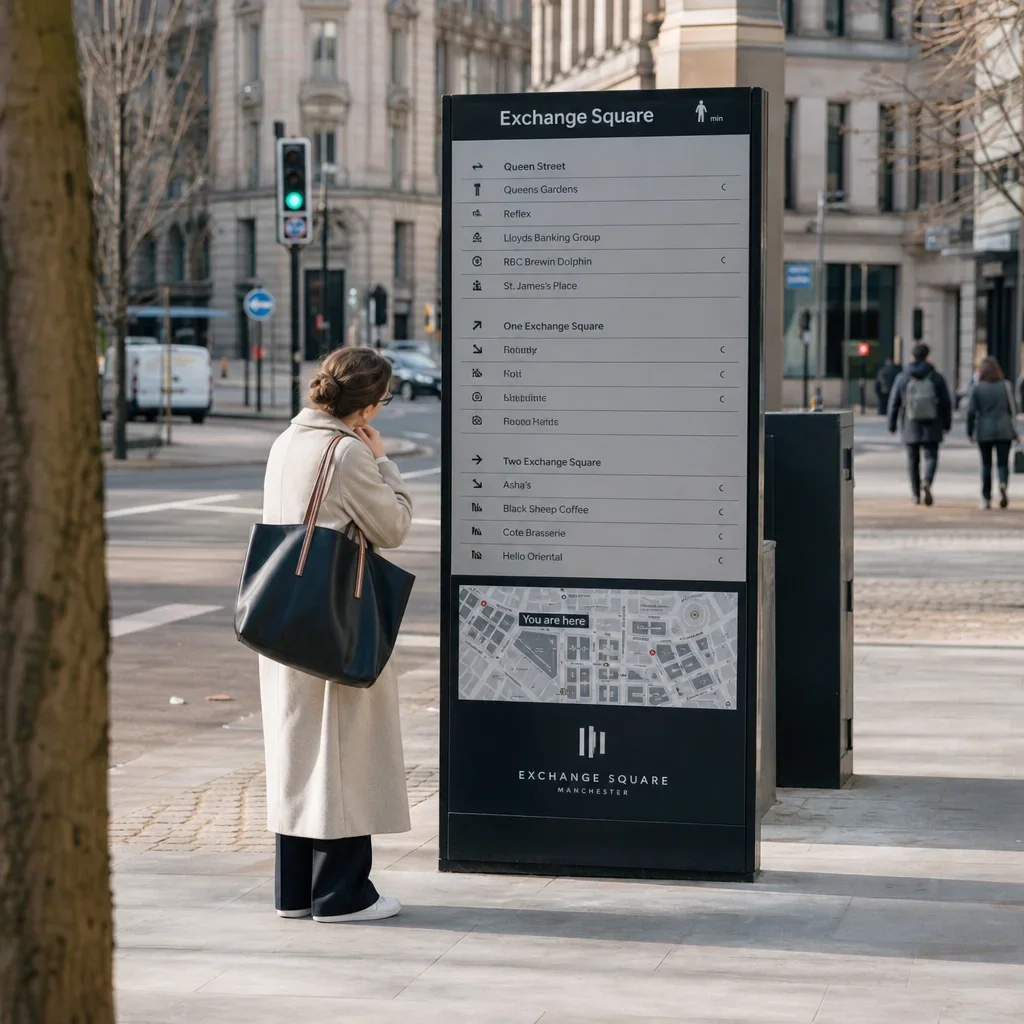
20/10 vision means distance detail is sharper than standard. A person with 20/10 vision may notice fine lettering, distant signs, or scoreboard detail sooner than someone with 20/20.
20/40 vision often still feels functional indoors and at familiar distances. The trouble usually shows up with small street names, classroom boards, presentation slides, or night driving glare, where reduced sharpness and reduced contrast can combine.
20/100 vision means distance blur is hard to ignore. You may recognize a person across a room but miss facial detail, or see a road sign shape before you can read the words.
20/200 vision means the world is not dark, but distance detail is heavily reduced. Large objects remain visible, yet fine detail on signs, screens, or faces at distance may be unreadable or indistinct without correction.
Is 20/20 vision perfect vision? Not exactly
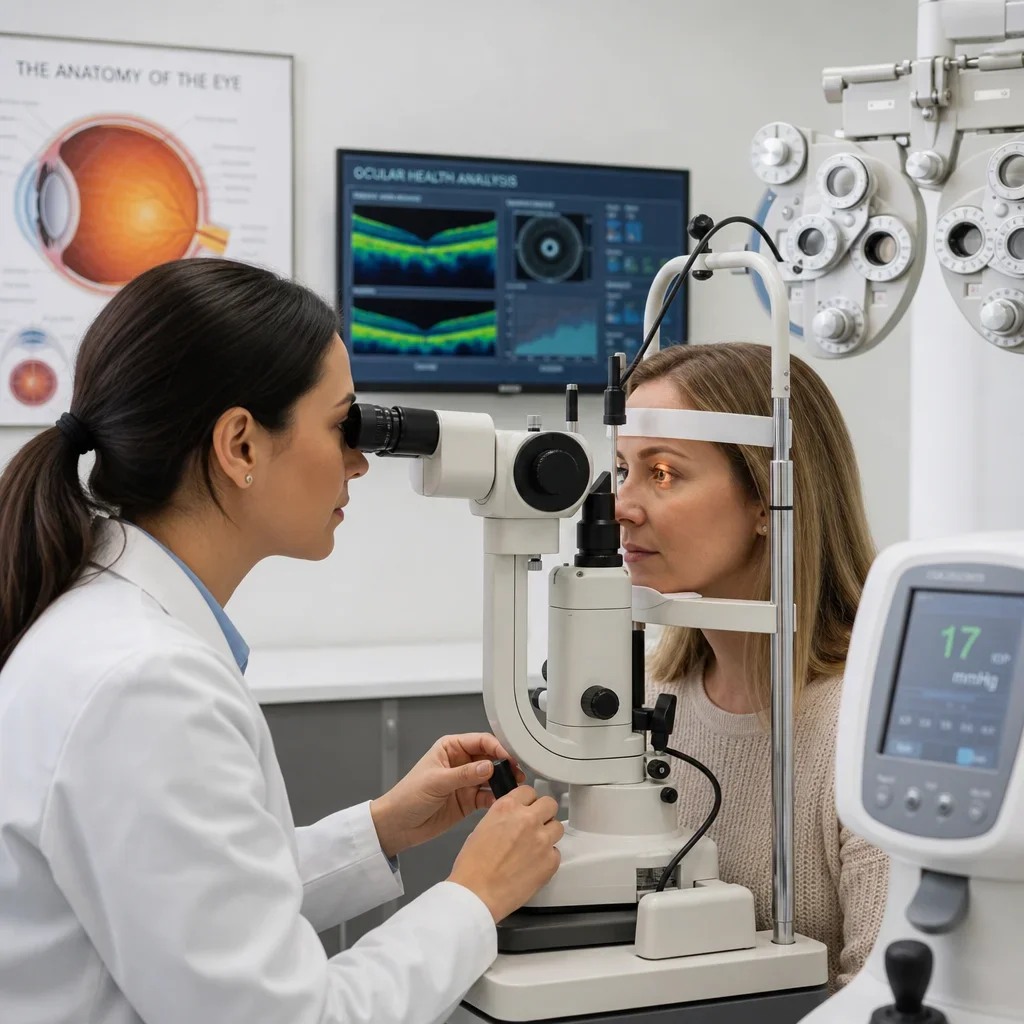
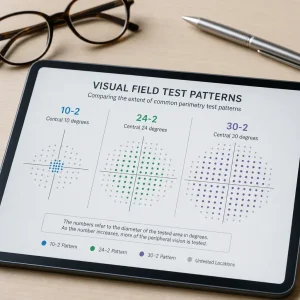
20/20 measures one thing only: distance detail under test conditions. It does not measure peripheral vision, depth perception, colour vision, contrast sensitivity, eye teaming, focusing flexibility, or retinal and optic nerve health.
You can have 20/20 vision and still need reading glasses. That is common with presbyopia, which is the age-related loss of near focusing ability that usually starts becoming noticeable in the 40s to 50s.
You can also have 20/20 vision and still wear glasses. Glasses may be for near work, astigmatism, night driving comfort, eye strain reduction, blue-light comfort preferences, safety use, or simply to give you stable vision over long workdays.
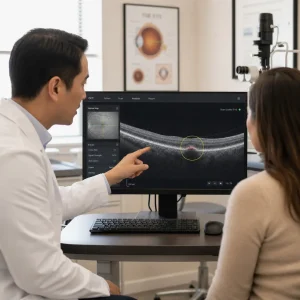
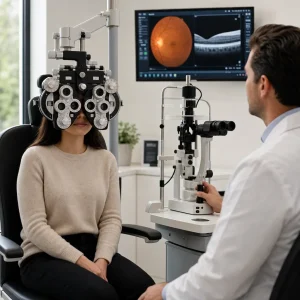
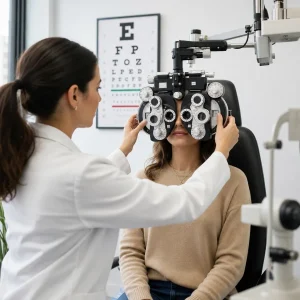
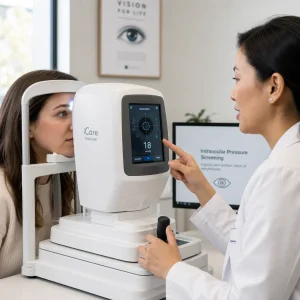
A comprehensive eye exam checks more than chart acuity. The optometrist may also evaluate refraction, eye coordination, eye health, and intraocular pressure, which is the pressure inside the eye.
20/20 vision is not the same as your glasses prescription
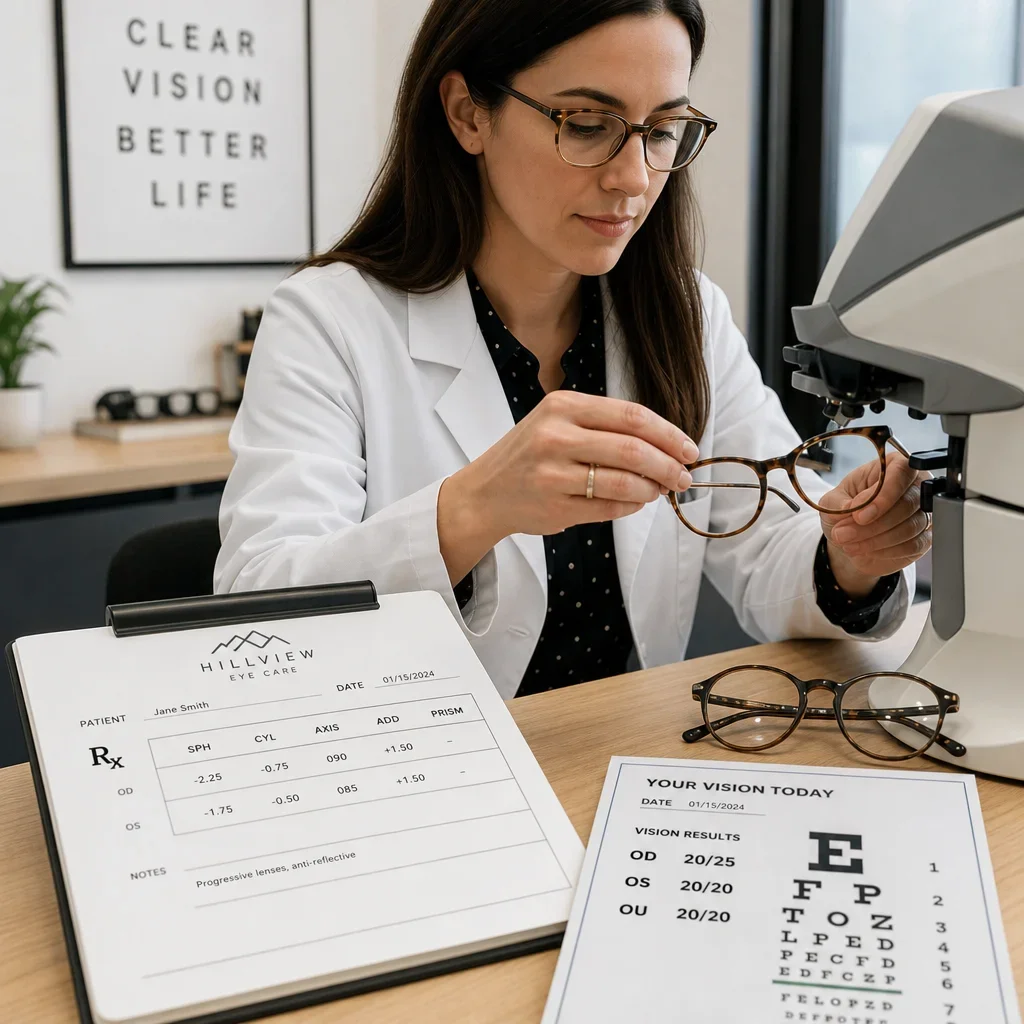
A visual acuity score is the result you achieved on a chart. A prescription is the lens power needed to focus light properly on the retina. Those are related, but they are not interchangeable.
There is no exact universal conversion from 20/100 vision to a glasses prescription. The same is true for 20/200 vision. Two people can share a similar prescription and test at different acuities, and two people with the same chart result can need different prescriptions.
That is because acuity is affected by more than simple lens power. Myopia means nearsightedness. Hyperopia means farsightedness. Astigmatism means the eye has different focusing power in different meridians. Presbyopia affects near focus with age. Dry eye, cataracts, amblyopia, retinal disease, and other issues can also reduce chart scores.
If you are asking whether 20/100 means nearsighted or farsighted, the chart alone cannot answer that. We would need to see your refraction, which is the lens measurement taken during an eye exam, to say for sure.
Do you need glasses if you have 20/25, 20/40, or even 20/20 vision?
Maybe, and the deciding factors are your symptoms, your tasks, your age, whether one or both eyes are affected, and whether that score was corrected or uncorrected. A 20/25 result may bother one person very little and frustrate another every day.
Many people wear glasses and still measure 20/20 with correction. That is the point of prescription lenses. Single-vision lenses correct one main range. Progressive lenses correct multiple distances in one lens, usually distance, intermediate, and near.
A 20/40 result often justifies an eye exam if you are squinting, getting headaches, missing street signs, struggling at night, or feeling eye fatigue after screen use. A 20/20 result can still coexist with a need for reading glasses, astigmatism correction, or computer support lenses.
The first signs of needing glasses are usually practical. Squinting, blurred distance, holding reading farther away, headaches, eye strain, and worse vision at night are all common reasons to book an exam.
Is 20/200 legally blind? What legal blindness usually means
20/200 in the better-seeing eye with best correction is a commonly used threshold in many legal and administrative definitions of blindness. Visual field restriction can also matter, so legal blindness is not based on acuity alone.
20/100 is generally not described as legally blind based on acuity alone. 20/50 is also not legally blind based on acuity alone. The exact wording and eligibility rules can vary by jurisdiction and by program, so disability forms and legal documentation should come from a professional exam and the relevant governing source.
If you are worried about documentation, workplace forms, school accommodations, or disability eligibility, book a proper eye exam rather than relying on a home 20 200 vision test or an online result.
Can you drive with 20/40, 20/100, or 20/200 vision?
Driving standards depend on jurisdiction, license class, whether your vision is corrected, and whether one eye or both eyes are considered. That is why broad online answers are often wrong for Ontario.
A 20/40 result may or may not meet a specific driving standard depending on the full context. A 20/100 or 20/200 result should never be assumed to meet driving requirements without an in-person exam. Night glare, contrast sensitivity, peripheral vision, and binocular performance also matter for real driving safety.
If driving is the concern, the safe next step is a professional eye exam in Waterloo rather than a phone-based 20 100 vision test or a guessed chart result from home.
How to do a home 20/20 vision check with a chart or phone
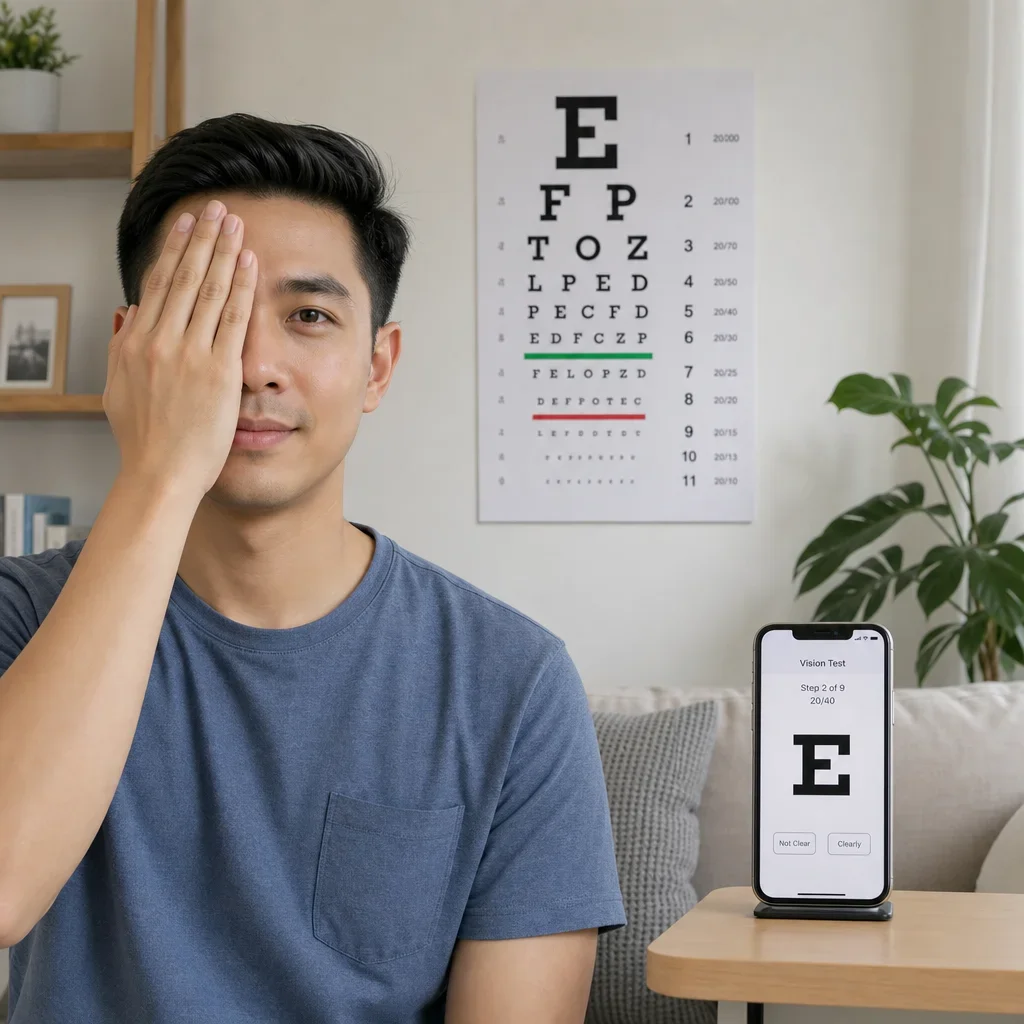
A home 20 20 vision check can only screen distance acuity roughly. It cannot replace a comprehensive eye exam, and it cannot diagnose eye disease.
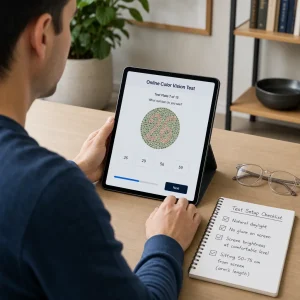
For a basic home test, use a chart that clearly states its required distance. Most home charts are designed for 10 feet or 20 feet, and a phone or tablet test only works if the app or site is calibrated for your screen size.
Test one eye at a time in even lighting. Wear your usual glasses or contact lenses if you want to check corrected vision. Remove them only if you also want to compare uncorrected vision.
Record the smallest line you can read without squinting or leaning. If the result is worse in one eye, clearly changed from your usual, or does not match how you function day to day, it is worth having that checked properly.
A printed 20 20 vision test chart is better than a random screen image, but only if the print scale is accurate. A phone can be useful for rough screening, yet screen zoom, viewing distance, and brightness make it the least reliable option.
> Home test limit: Do not use a home chart, free online vision test, or eye test on phone free app to decide whether you are safe to drive, whether a child is fine, or whether blurred vision is harmless.
Why home eye chart results are often wrong
Wrong testing distance is one of the biggest errors. If you stand too close, the chart seems easier. If you stand too far, it seems harder. A few feet of error can change the result meaningfully on a small home setup.
Wrong chart scale is another common problem. A screenshot, resized PDF, or browser zoom can ruin a 20 20 eye test chart instantly because the letter sizes no longer match the labelled acuity.
Lighting changes the result. Dim rooms, glare on glossy paper, and backlit screens all affect how clearly letters are seen. Squinting, peeking around the cover, or testing both eyes together also makes the result look better than it really is.
Memorizing lines is common, especially with repeated testing. Children do this. Adults do it too. That is why a pass on an eye test chart online free tool is not enough for school, work, or health decisions.
Use this checklist before trusting any home result:
- Correct chart distance was measured
- Chart printed at full scale or properly calibrated
- One eye tested at a time
- Normal room lighting used
- No squinting or leaning forward
- Usual glasses or contacts worn if checking corrected vision
- No line memorization from repeated tries
- No decisions made about driving or eye health from the result alone
Near vision vs distance vision: why you can pass one and struggle with the other
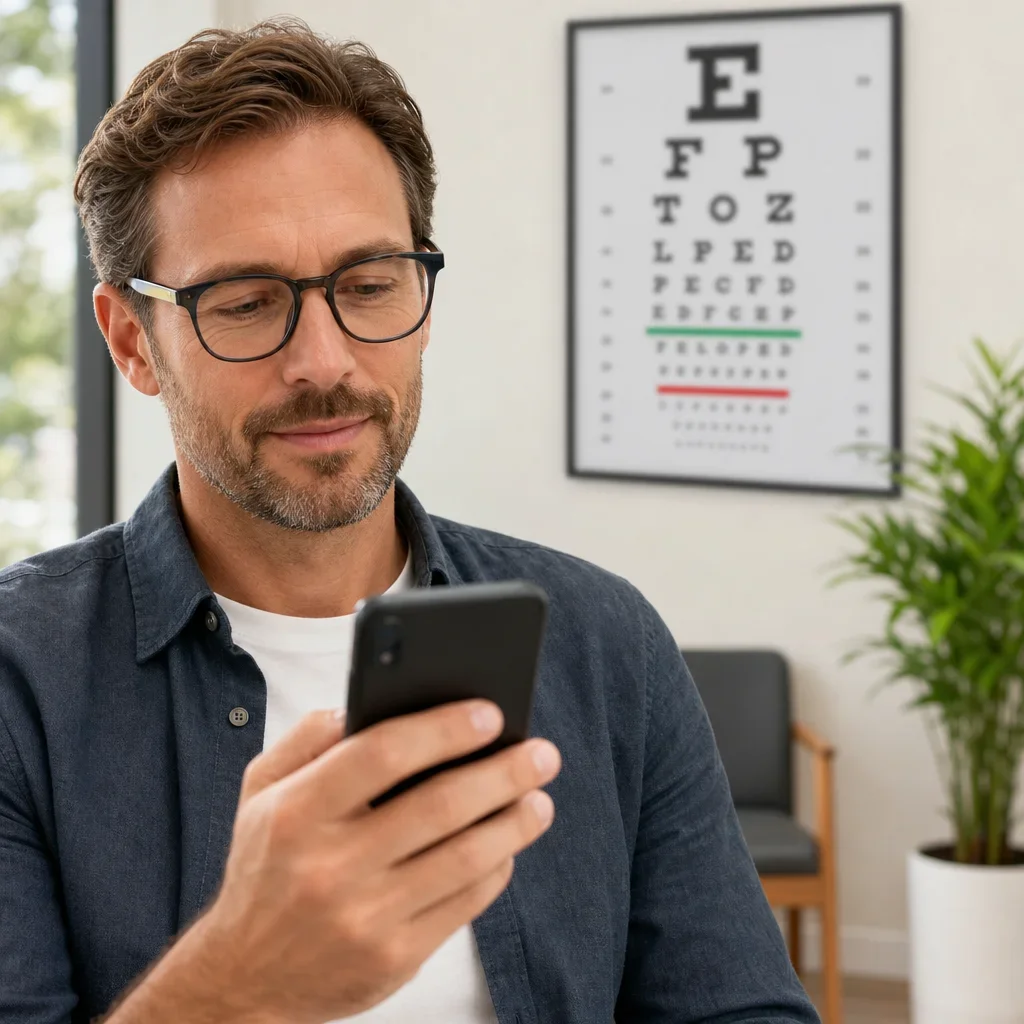
A standard Snellen chart measures distance vision, not near reading performance. That is why you can pass a distance 20/20 vision test and still struggle with menus, phone text, or computer work.
Near vision is often checked with a different chart and different notation. You may hear about near-point testing or reading charts instead of a distance 20 20 vision chart. The exact format can vary by clinic.
Presbyopia is the usual reason adults say, “Distance is fine, but I need readers.” It is not the same as myopia or hyperopia. It is the lens inside the eye becoming less flexible with age.
That is also why someone can have 20/20 distance acuity and still need reading glasses, office lenses, or progressive lenses. The chart score alone does not answer every functional vision problem.
What causes worse-than-20/20 vision?
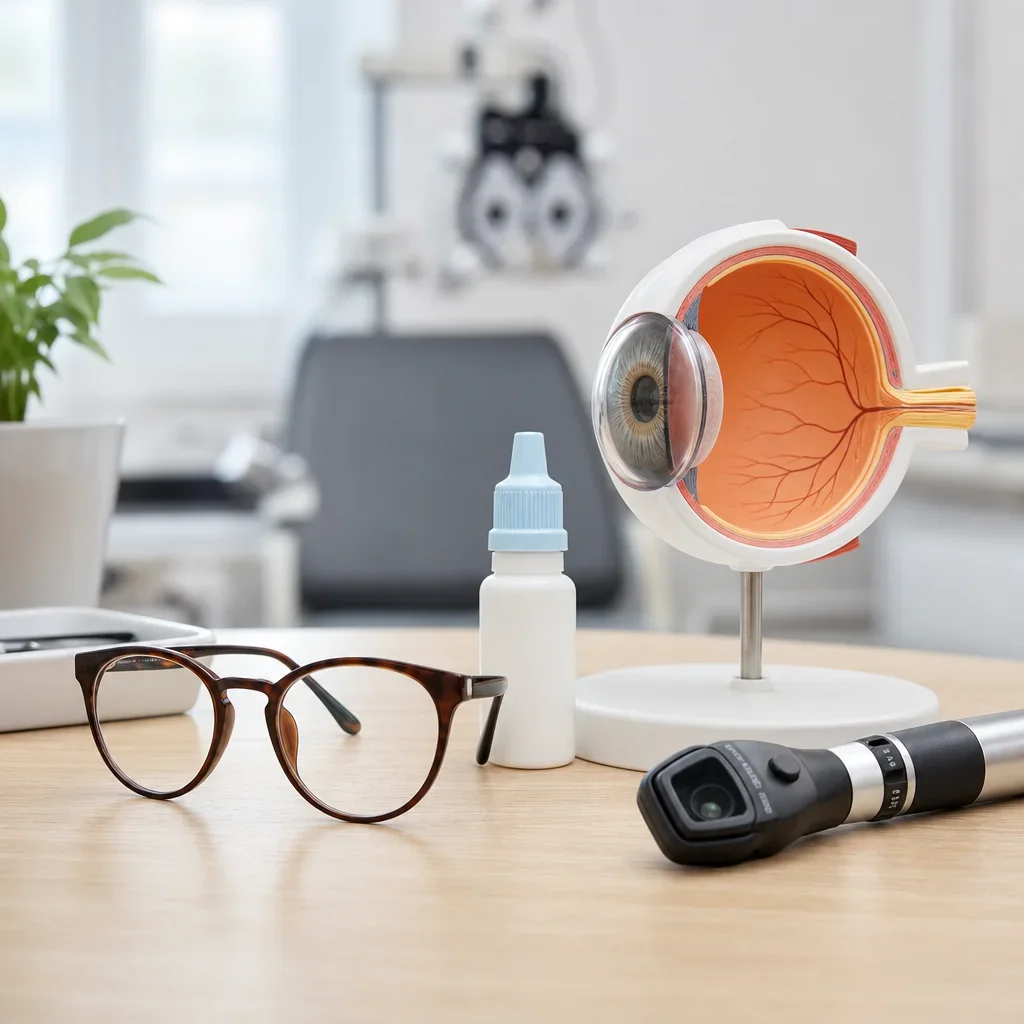
The most common causes are refractive errors. Myopia blurs distance. Hyperopia can blur near, distance, or both depending on age and amount. Astigmatism can blur and distort at multiple distances. Presbyopia mainly affects near work.
Low visual acuity can also come from eye health problems. Cataracts can scatter light and reduce clarity. Dry eye can make vision fluctuate. Glaucoma can damage the optic nerve. Diabetic eye disease and macular disease can reduce central detail. Amblyopia can leave one eye weaker even with glasses.
A low Snellen score is not a diagnosis by itself. The optometrist has to determine whether the cause is refractive, ocular health related, or both.
When low visual acuity needs urgent attention
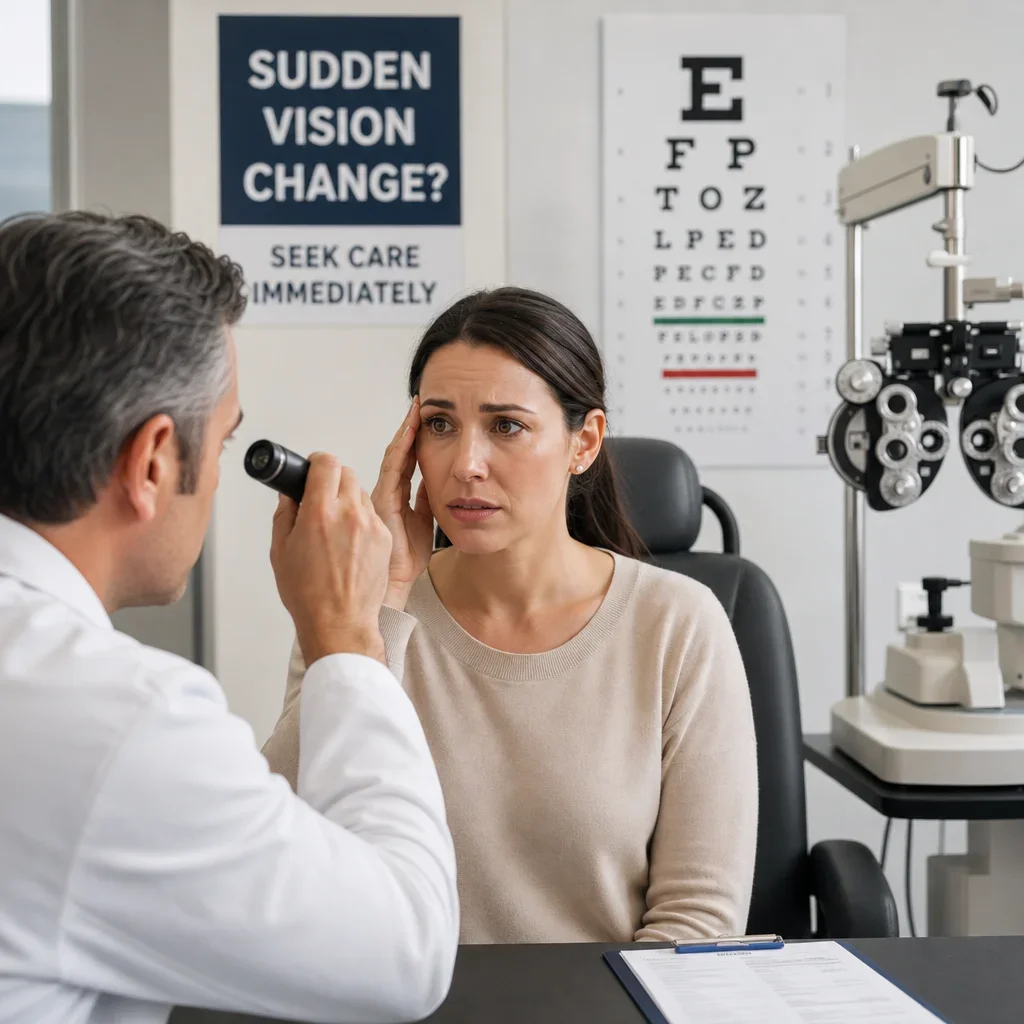
Sudden vision loss needs urgent medical attention the same day. The same applies to sudden blur in one eye, flashes with a curtain-like shadow, painful red eye with reduced vision, new double vision, severe distortion, or vision change with stroke-like symptoms.
Routine blur that has been stable for months is different from sudden change over minutes, hours, or a day or two. Stable blur still deserves an eye exam, but sudden change needs faster assessment.
If the problem is abrupt, painful, one-sided, or paired with neurologic symptoms, do not wait on a home 20 20 vision snellen chart result. Seek urgent medical evaluation.
How vision can be corrected or improved
Reduced visual acuity can often be improved with the right correction, but the treatment depends on the cause. Glasses, contact lenses, and refractive surgery can help refractive blur. Cataracts, retinal disease, glaucoma, and other medical causes need medical management based on the diagnosis.
A 20/200 result can sometimes improve dramatically with glasses or contact lenses if uncorrected refractive error is the main problem. In other cases, 20/200 cannot be fully corrected because the limitation is not optical. That is exactly why a chart score should not be treated like a diagnosis.
Be skeptical of miracle claims. Eye exercises, odd internet tricks, or supplements do not restore every person to 20/20. Real improvement starts with finding the actual reason the vision is reduced.
Snellen alternatives: charts for kids, non-readers, and different test settings
A standard letter chart is not ideal for every patient. Children, non-readers, and people with language barriers may do better with symbol-based or direction-based charts.
Tumbling E charts use the letter E in different directions. Landolt C charts use a ring with a gap in different positions. LEA symbols use simple shapes that children can match or name. These alternatives test acuity without requiring fluent letter recognition.
Metric notation is also common outside U.S. phrasing. Snellen chart 6/6 is the same idea as 20/20. 6/9 is worse than 6/6. 6/12 is worse again. That is why you may see both systems discussed when people compare eye test chart numbers.
The 5 Snellen scale wording is not a separate eye disease scale. People usually mean a chart tested at 5 metres, or they are mixing notations they saw online. The key is the ratio itself and the testing distance used to generate it.
When to book an eye exam in Waterloo
Book an exam if signs look blurred, night driving feels harder, one eye seems weaker, readers are becoming necessary, a child is struggling with board work, or your home chart result does not fit what you are experiencing. An eye exam is also the right step if your vision changed suddenly or you are unsure whether the issue is glasses, eye strain, or eye health.
We handle the full process under one roof in Waterloo. That means the exam, frame fitting, lens measuring, and lens dispensing can stay in one place instead of sending you across town. If glasses are needed, we measure PD, or pupillary distance, fit the frame properly, and explain lens options in plain language.
If you already have a prescription, bring it with your current glasses and your insurance card. If you do not, start with the exam. We can then explain what the chart result means, whether you need single-vision lenses, readers, progressive lenses, or no glasses at all.
FAQ
What does 20/20 vision mean?
It means you can read at 20 feet what a standard observer can read at 20 feet on a Snellen chart. It describes distance visual acuity, not total eye health.
What is 20/20 vision on a Snellen chart?
It is the line labelled for standard normal distance acuity on the chart. In metric notation, it is commonly written as 6/6.
Which is better, 20/20 or 20/40?
20/20 is better. The smaller second number indicates sharper distance acuity.
What does 20/10 vision mean?
It means you can see at 20 feet what a standard observer would need to move to 10 feet to see. That is better than 20/20.
What does 20/100 vision mean?
It means you need to be at 20 feet to see what a standard observer can see at 100 feet. Distance detail is significantly reduced.
What does 20/200 vision mean?
It means you need to be at 20 feet to see what a standard observer can see at 200 feet. That is a severe reduction in distance acuity.
Is 20/200 legally blind?
20/200 in the better-seeing eye with best correction is a commonly used legal threshold in many contexts. Exact definitions can vary by jurisdiction and by visual field criteria.
Do I need glasses if my vision is 20/25?
Not always. Some people function well without glasses at 20/25, while others notice blur, fatigue, or night trouble. Symptoms and exam findings decide that.
Do I need glasses if my vision is 20/40?
Often it is worth checking. If you are squinting, missing signs, or struggling at distance, glasses may help, but the optometrist needs to determine the cause.
Can I wear glasses and still have 20/20 vision?
Yes. Many people measure 20/20 with their glasses or contacts on. That is corrected vision.
Can I have 20/20 vision and still need reading glasses?
Yes. Distance acuity and near focusing are different. Presbyopia commonly causes this in adults over time.
How do I test my vision at home?
Use a properly scaled chart at its stated distance, test one eye at a time, use good lighting, and note whether you tested with or without correction. Treat the result as a rough screen only.
Can I test my vision with my phone?
You can screen it roughly, but phone tests are less reliable because screen size, zoom, brightness, and testing distance are easy to get wrong.
What is the difference between 20/20 vision and perfect vision?
20/20 is standard distance acuity. Perfect vision would also include healthy eyes, comfortable focusing, good contrast, normal peripheral vision, and more. A Snellen score alone cannot prove all of that.
What is the 5 Snellen scale?
Usually it refers to Snellen testing done at 5 metres, not a special grading system. The result still depends on the ratio shown, such as 5/5 or its equivalent.
If you are still trying to make sense of a chart score, the next practical step is simple: book a comprehensive eye exam and get the result interpreted in context. A chart line is useful. It is just not the whole story.