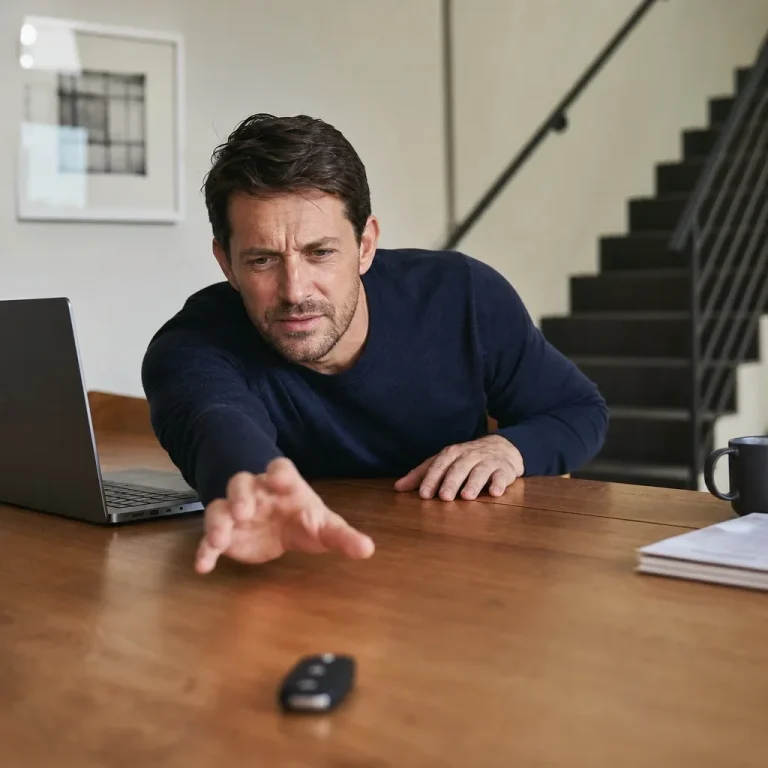
Most people think a depth perception test is just a vision sharpness check. It is not. A proper depth perception test looks at how both eyes and the brain work together to judge space, distance, and 3D relationships.
What a depth perception test checks
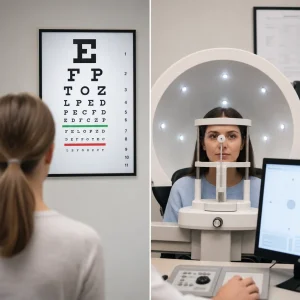
A depth perception exam checks stereopsis, which is the brain’s ability to combine the two eyes’ slightly different views into one 3D image. Stereopsis is different from visual acuity, so a person can read the 20/20 line and still have trouble judging distance or catching a ball.
A depth perception eye test also looks at binocular vision, which means how well the eyes aim, focus, and work as a team. If one eye is blurry, turned, suppressed, or seeing a very different prescription, depth judgment can drop even when each eye seems fine on its own.
A depth eye test does not measure every way people judge distance. Even with reduced stereopsis, many people still use monocular depth cues like size, overlap, shadow, perspective, and motion to function day to day.
A professional exam is useful because the problem may come from prescription blur, eye alignment, focusing, amblyopia, eye health, or a neurologic issue. That is why we do not treat a failed home check as a diagnosis by itself.
Signs you may have poor depth perception
Poor depth perception often shows up as misjudging curbs, stairs, parking distance, pouring liquids, or reaching for objects accurately. Some people also notice headaches, eye strain, or double vision during close work or driving.
Children can show it differently. They may seem clumsy, avoid ball sports, lose their place when copying from a board, tilt the head, close one eye, or complain that reading feels uncomfortable.
Symptoms can stay subtle for years because the brain learns workarounds. They usually stand out more during sports, driving, shop work, lab work, gaming, or school tasks that need quick hand-eye timing.
Sudden new symptoms matter more than long-standing stable ones. A depth judgment problem that starts abruptly, especially with double vision, vision loss, head injury, severe headache, or eye pain, needs urgent assessment rather than a practice test.
How depth perception works
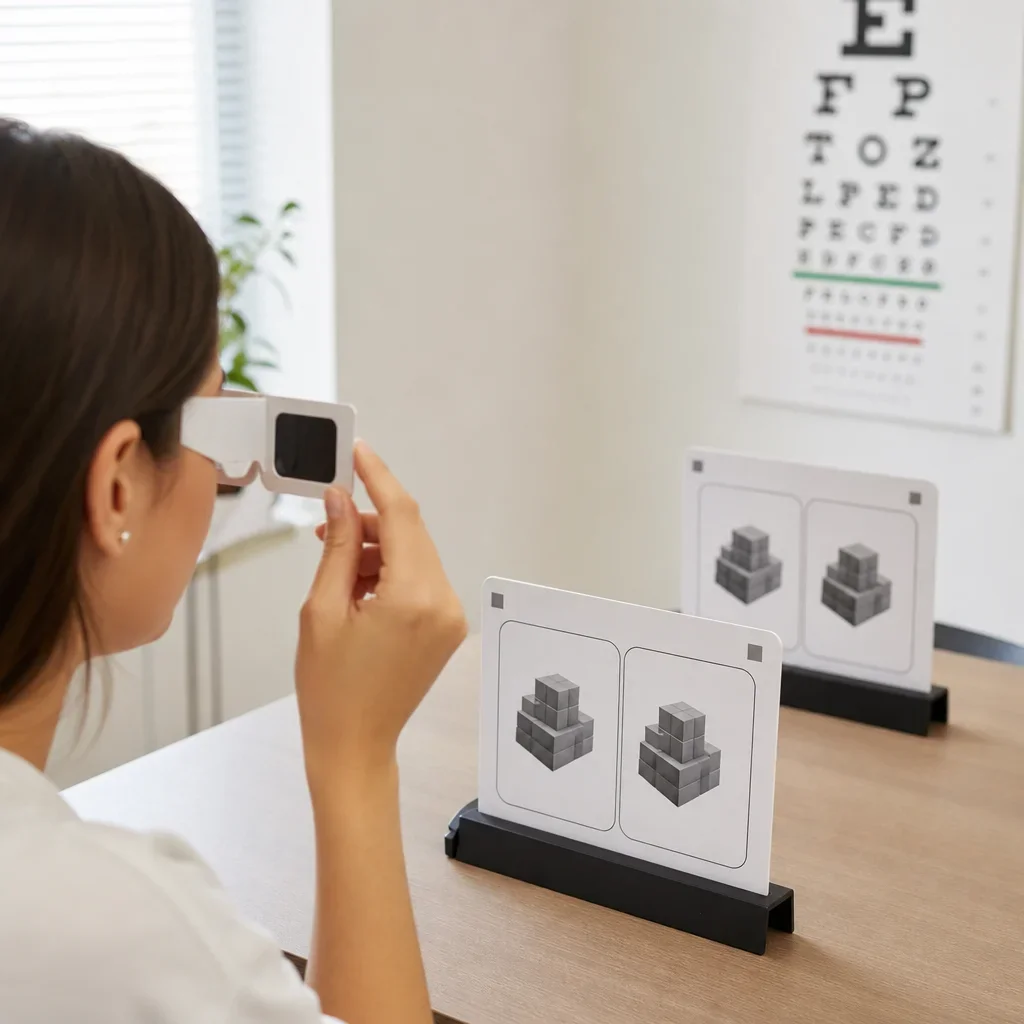
Depth perception works because each eye sees a slightly different image, and the brain compares those two views to estimate distance. That is the basis of a 3d depth perception test and other stereo tests used in clinic.
Clear vision in both eyes is part of the system, but it is not the whole system. Good depth judgment also depends on eye alignment, smooth eye movements, accurate focusing, and healthy visual processing in the brain.
A 3d perception test is trying to see how small a depth difference you can detect, not just whether letters look sharp. In clinic, results are often described in seconds of arc, which is a unit for very fine differences in binocular depth judgment.
People with weak stereopsis may still function well in familiar settings by relying on one-eye clues. That is why a binocular vision test online free or a home screen test can miss real problems, or suggest a problem when the setup is off.
How to test your depth perception at home
A home depth perception test can only screen for a possible issue. It cannot tell you the cause, and it should not replace an eye exam if symptoms are real.
A simple finger-and-target check is the safest place to start. Sit or stand in good light, wear your usual glasses or contacts, keep both eyes open, hold one finger roughly 15 to 20 cm from your face, and line it up with a small target farther away. Then slowly move your finger to touch the target without rushing.
A normal result on that home check usually feels smooth and accurate with both eyes open. If you overshoot, hesitate, see doubling, or feel much less certain with both eyes than expected, that is a reason to book a depth perception eye exam rather than repeat the test all week.
A second self-check is to place a small object like a coin or pen cap on a table and reach for it naturally, then repeat while covering one eye and then the other. This is not a scored depth perception practice test, but a clear difference between both-eyes-open and one-eye viewing can tell you that binocular cues are helping more than you realized.
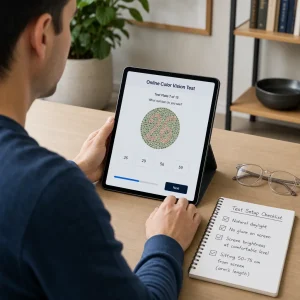
A circle depth perception test or depth perception test online can be harder to trust because screen size, viewing distance, image scaling, and glare all change the result. If an online image uses red-green or polarized glasses, the wrong glasses or wrong screen brightness can make the target disappear even when your vision is fine.
Why a home or online depth perception test can be misleading
Home tests produce false alarms more often than people expect. The usual reasons are wrong viewing distance, poor lighting, dry eye, fatigue, outdated glasses, screen glare, image compression, or simply misunderstanding the instructions.
A depth perception test online can also miss a real problem. Mild binocular issues may only show up under stress, at distance, during reading, or on a more sensitive office test rather than a simple phone or laptop screen.
Printable pages and apps are not standardized across every device. A depth perception chart on one screen may not match the intended size on another, so a pass or fail result at home may mean more about setup than about vision.
Trying to memorize a depth perception test with answers is the wrong approach when safety matters. For school, work, sports, or driving concerns, the goal is not to game the task. The goal is to find out why distance judgment feels off.
Troubleshooting a failed home test
A failed home check is worth repeating once under better conditions before you panic. Good lighting, a clean screen, your current prescription, comfortable posture, and rested eyes can change the result right away.
Dry eye can blur one eye intermittently and mimic a binocular problem. If one image fades in and out, looks ghosted, or clears after blinking, the test may be picking up unstable vision rather than a true stereopsis loss.
New eyewear can temporarily make space feel different. We see this with stronger prescriptions, progressive lenses, larger frame changes, and lens designs that shift how objects seem positioned until the brain adapts.
Closing one eye slightly without realizing it can ruin a home result. If you catch yourself squinting, tilting the head, or turning the phone to one side, stop there and book an exam instead of forcing more attempts.
How optometrists test depth perception in an eye exam

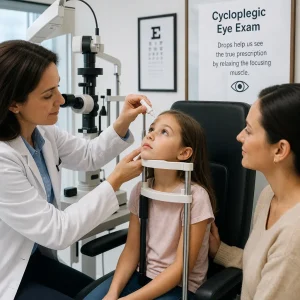
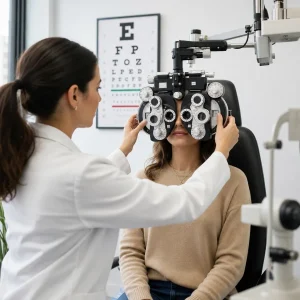
Yes, an optometrist can test for depth perception. In practice, depth perception testing is usually one part of a broader eye exam when symptoms, child development concerns, binocular vision complaints, or workplace screening issues are present.
The stereopsis portion itself often takes about 5 to 15 minutes, while a comprehensive eye exam usually runs about 30 to 90 minutes depending on symptoms and how much additional testing is needed.
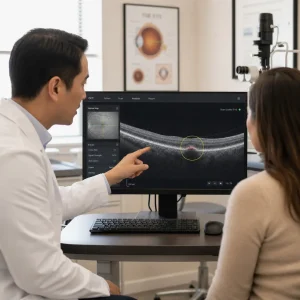
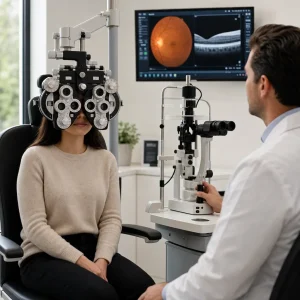
The exam is painless and noninvasive. The optometrist may measure visual acuity, perform a refraction, check eye alignment, assess focusing and eye movements, screen eye health, and then interpret the depth perception exam in that full context.
Dilation is usually not required for stereopsis testing itself. The optometrist decides whether dilating drops or other tests are needed based on age, symptoms, medical history, and eye health findings.
At our Waterloo clinic, we usually start with the full picture rather than a stand-alone online-style screening. If depth judgment feels off, we want to know whether the issue is coming from the prescription, eye teaming, the lenses you are wearing now, or something that needs medical attention.
Common office tests: dots, circles, flies and 3D images
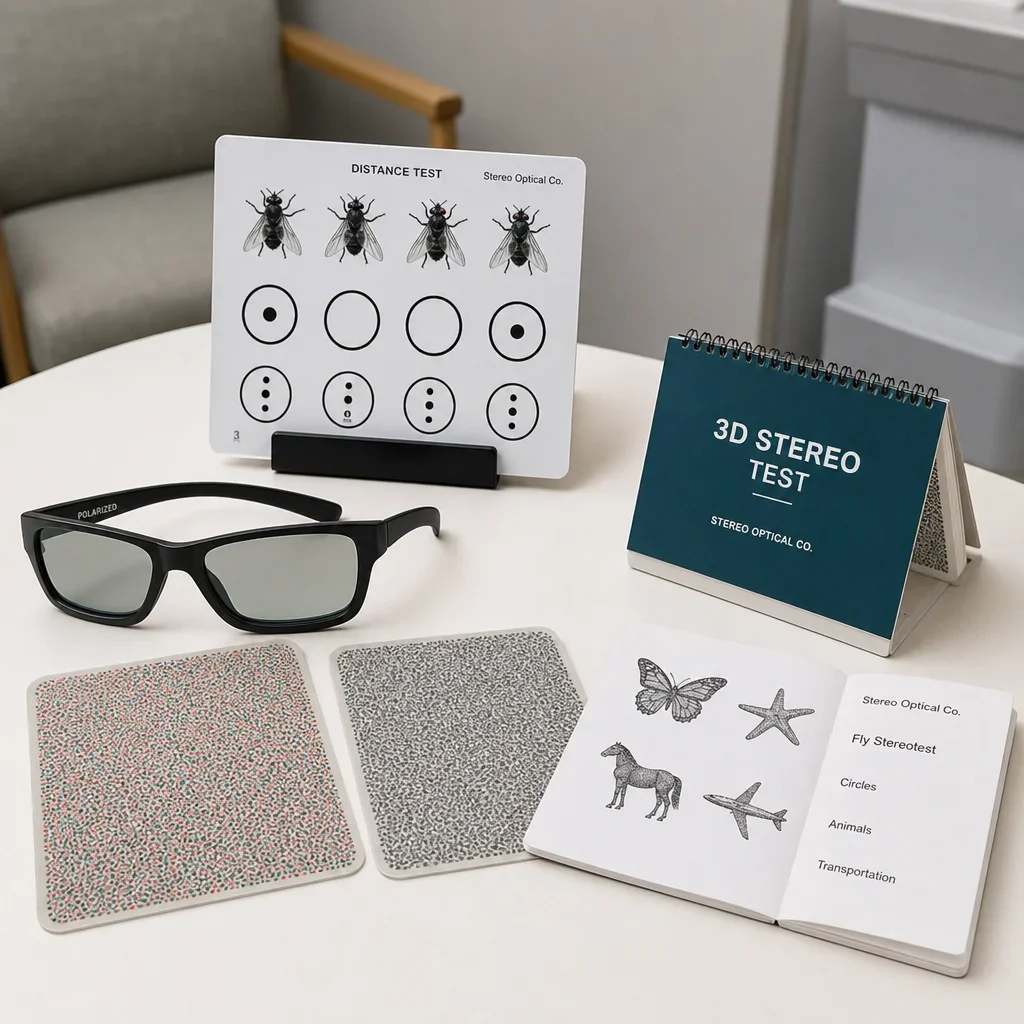
Most office tests fall into four groups: contour-based stereotests, random-dot stereotests, plate tests, and real-depth tests. Each one checks stereo vision a little differently, which is why the optometrist may use more than one.
The Titmus depth perception test is the one many adults remember as the fly or circle test. You wear polarized glasses and identify which part of a fly, animal, or set of circles appears raised or closer. That is why people also search for a circle depth perception test or depth perception eye test circles.
Random-dot tests remove many of the visible outlines that make guessing easier. In a depth perception test with dots, the target is hidden inside a field of dots, and it only appears if binocular stereo vision is working well enough to detect it.
Other tests you may hear about include TNO, Lang, and Frisby. Some use red-green glasses, some use no glasses, and some rely on real physical depth rather than printed or polarized separation.
The patient task is usually simple. You may point to the raised circle, name the picture that pops out, identify a hidden shape, or say which image looks closer. The test feels easy when stereo vision is present and much less obvious when it is not.
Comparison of common office depth perception tests
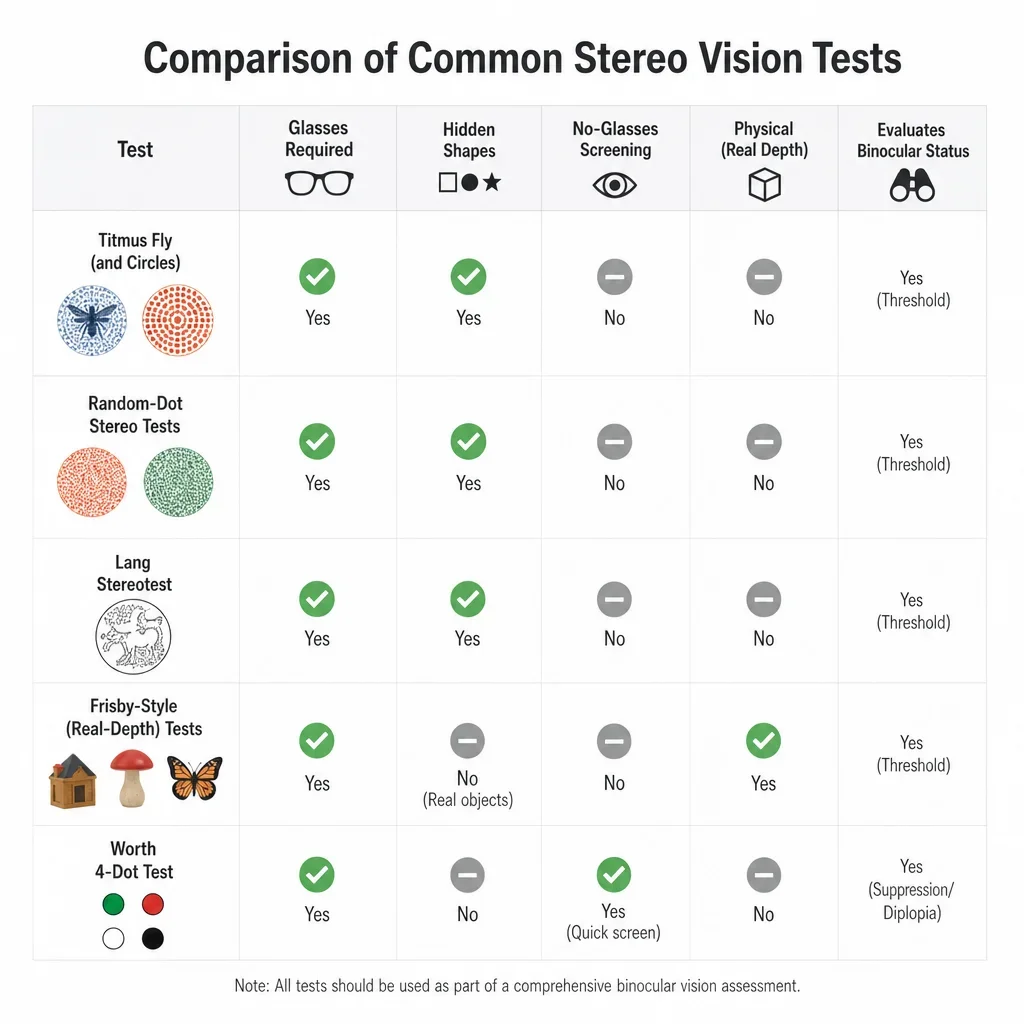
| Test type | Typical age/use | How it works | Best for | Limits |
|---|---|---|---|---|
| Titmus fly and circles | Older children and adults | Polarized glasses with raised-looking fly, animals, or circles | Quick clinic screening and easy patient understanding | Visible outlines can allow some guessing |
| Random-dot stereo tests | Children and adults | Hidden shapes or targets inside dot patterns, often with special glasses | Reducing contour clues and checking finer stereopsis | Setup and instructions matter |
| Lang stereotest | Young children and screening | Hidden images viewed without glasses | Fast screening in kids who resist glasses-based tests | Not a full explanation of cause |
| Frisby-style real-depth tests | Children and adults | Real physical depth in clear plates or targets | Useful when glasses-based tests are difficult | Less common in some offices |
| Worth 4-dot test | Children and adults | Red-green lights check whether both eyes are used together or if one is suppressed | Binocular status and suppression, not stereopsis alone | Not a direct stereo score |
What your results may mean
A result on a depth perception chart is not a diagnosis by itself. It tells the optometrist whether stereopsis seems normal, reduced, inconsistent, or absent on that specific test, under those viewing conditions.
Lower performance can point toward a binocular vision problem, blur in one eye, unequal prescriptions, suppression, amblyopia, strabismus, or another visual issue. It can also reflect fatigue, poor understanding of the task, or an unhelpful test choice for that patient’s age.
A normal depth perception score is not one universal number that applies to every test, every age, and every situation. Scores are often reported in seconds of arc, but the meaning depends on which test was used and the clinical context around it.
Failing a stereopsis test does not prove that you have one specific eye disease or that you cannot function normally. It means the optometrist should look further at alignment, prescription, eye health, and how both eyes work together.
Can you have 20/20 vision and still fail a depth perception test?
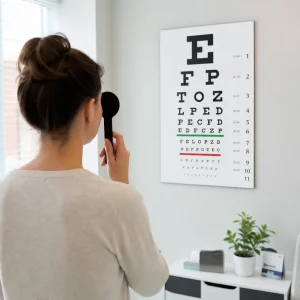
Yes. You can have 20/20 vision and bad depth perception because sharp sight in each eye is not the same as good teamwork between both eyes.
We see this with eye turns, amblyopia, suppression, unequal prescriptions between the two eyes, poor eye teaming, and some neurologic or post-injury cases. A person may read the chart well one eye at a time and still struggle with stereo targets when both eyes are tested together.
Blurry vision from an outdated prescription can also interfere. If one eye is consistently clearer than the other, the brain may not combine the two images as well as it should.
What can cause poor depth perception?
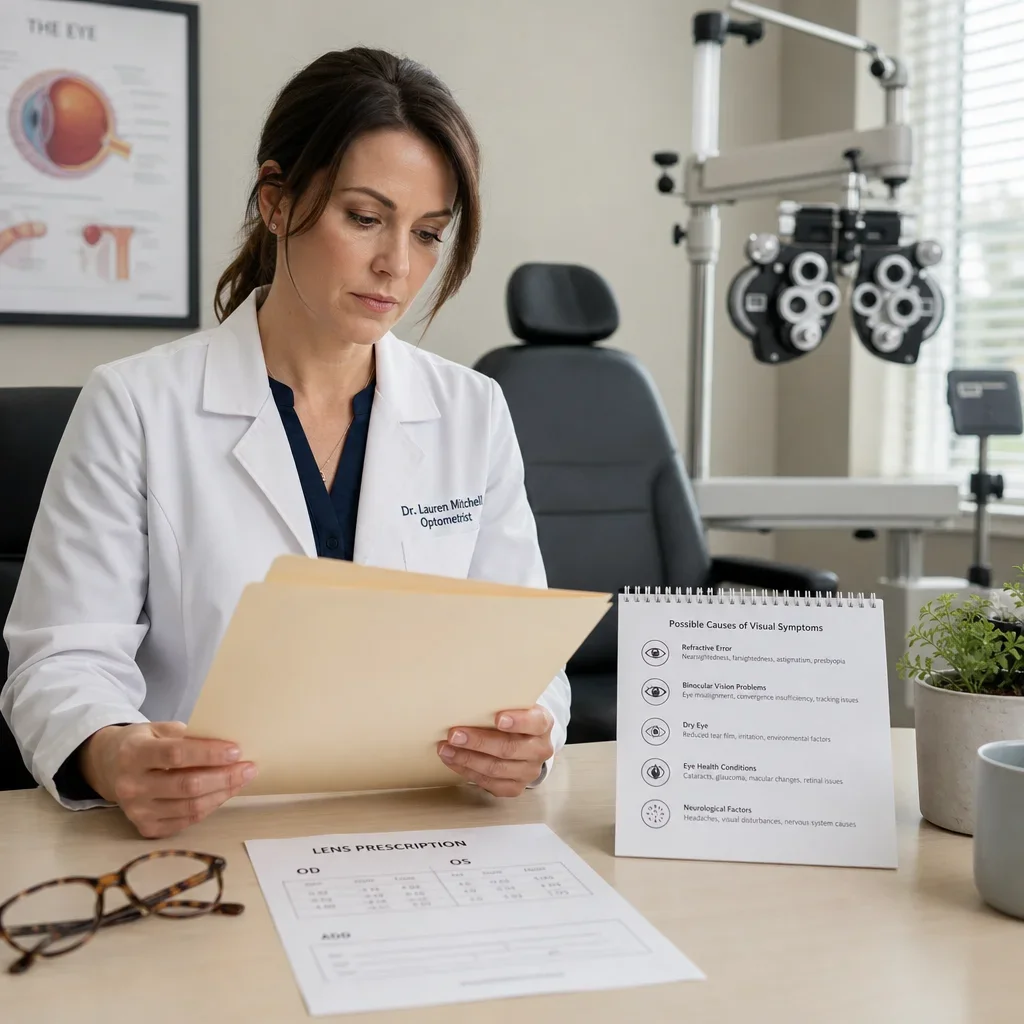
The common causes fall into five main groups: optical blur, binocular vision problems, reduced vision in one eye, eye disease or injury, and neurologic or temporary situational factors. That is why a full eye exam tells us more than a deep perception test done casually at home.
Optical blur includes outdated glasses, uncorrected refractive error, anisometropia, and new lenses that are not centered or fitted well. Even a good prescription can feel wrong if the PD, frame position, or lens design does not match how the patient actually wears the glasses.
Binocular vision causes include strabismus, poor eye teaming, focusing problems, suppression, and a history of double vision. These are some of the most common reasons someone can see fairly clearly but still do poorly on a depth of vision test.
Reduced vision in one eye from amblyopia, cataract, retinal disease, corneal problems, or old injury can lower stereopsis because the brain is not getting two equally usable images. Monocular vision can also remove true stereopsis, although people may still judge distance with one-eye cues.
Neurologic and situational causes include concussion, stroke, nerve palsy, alcohol, sedating medication, poor sleep, and low light. This article cannot diagnose neurologic disease, but sudden change always raises the urgency.
Why glasses can throw off depth perception
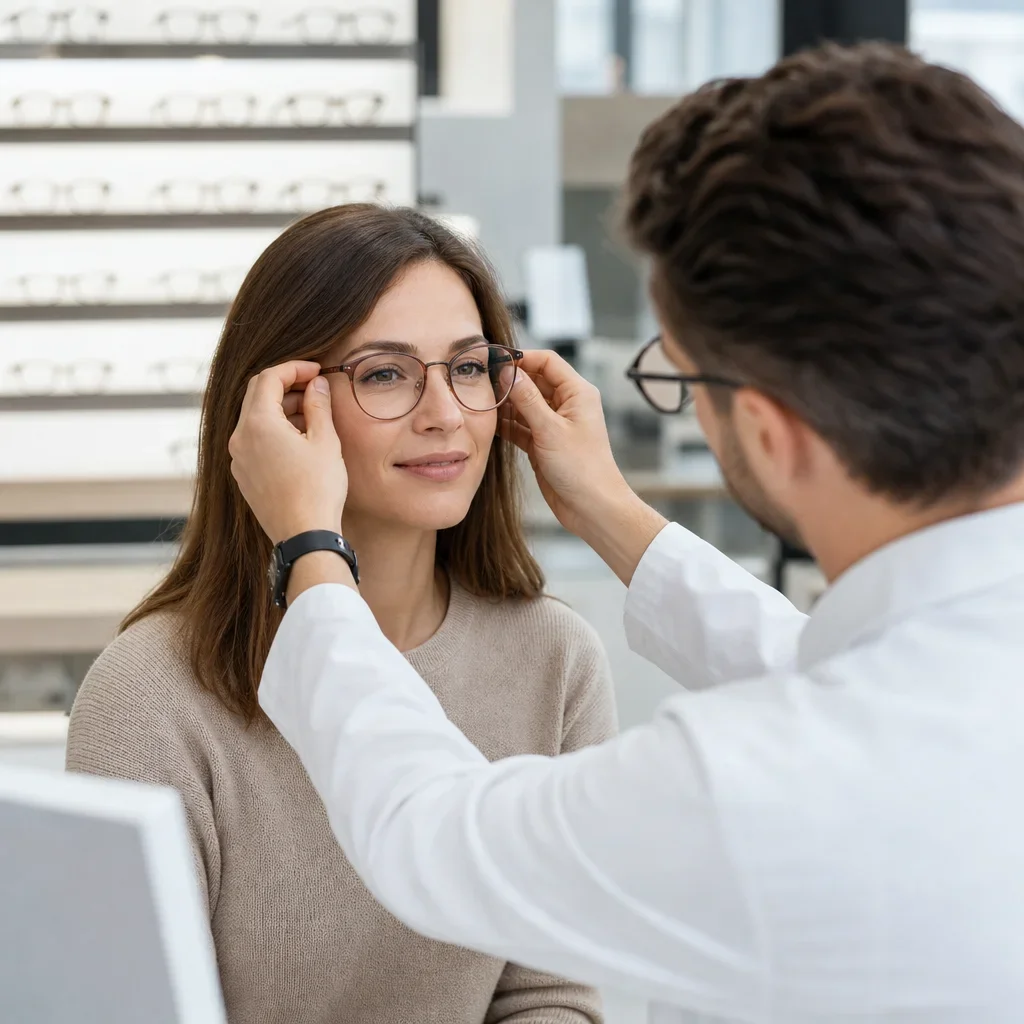
Glasses can make depth feel off for a few days to a couple of weeks when the prescription changes, the lens design changes, or the fit is not right. The biggest adjustment complaints usually show up in the first 1 to 14 days.
A stronger prescription, a large difference between the two eyes, new progressive lenses, or a significant frame shape change can all alter how space feels. Floors may look tilted, stairs may feel closer, and parking distance can seem strange until the brain adapts.
Properly prescribed glasses can also improve depth perception when blur or imbalance was the real problem. If both eyes see more clearly and more evenly, the brain has a better chance to combine the images well.
Accurate measurements matter here. PD, fitting height, frame wrap, lens material, and how the frame sits on the nose all affect where you look through the lens. In our shop, this is one reason we measure, fit, adjust, and troubleshoot eyewear in person rather than guessing from an old order.
Can poor depth perception be treated or improved?
Sometimes yes, but treatment depends on the cause. The options can include updated glasses or contacts, prism, amblyopia care in selected cases, binocular vision treatment, medical care for eye disease, or referral for surgical or neurologic assessment.
Glasses can help if the problem comes from blur, unequal prescriptions, or a lens setup issue. They do not fix every depth perception problem, especially if the main issue is long-standing suppression, eye turn, or reduced vision in one eye.
Prism lenses can help some patients by improving alignment or comfort, but they are prescribed case by case after testing. We would need to see your prescription and exam findings to say whether prism is even appropriate.
Vision therapy or binocular treatment may help selected patients with eye teaming and binocular vision disorders. It should be presented as one possible treatment path, not a universal fix and not a promise of normal stereopsis for everyone.
Some people improve, some adapt, and some keep reduced stereopsis long term. In those cases, treatment may focus more on comfort, safety, and better day-to-day function than on fully restoring normal 3D vision.
Driving, sports, school and work
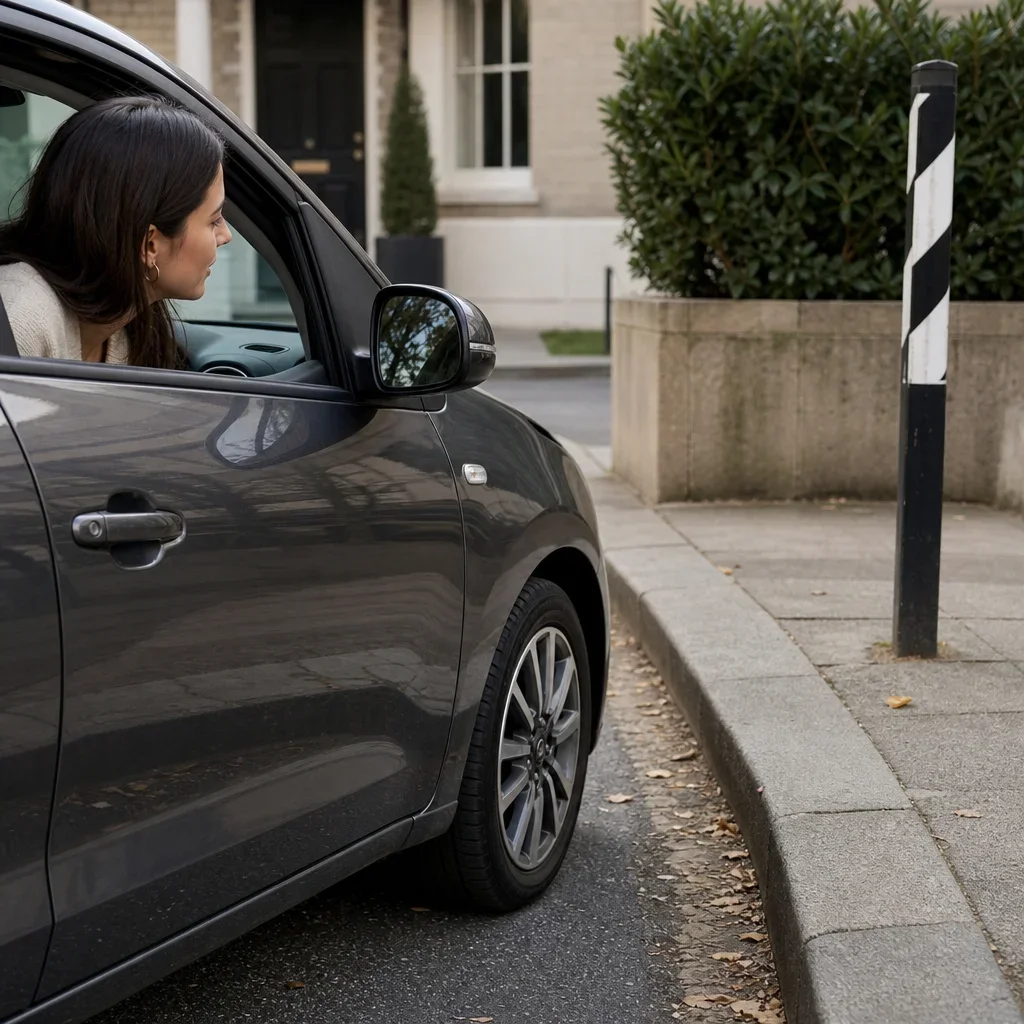
Poor depth perception can affect driving, ball sports, stairs, reading comfort, lab work, and any task that depends on fast distance judgment. The effect ranges from mild inconvenience to a real safety issue, depending on how severe the problem is and how suddenly it started.
Some people with reduced stereopsis still drive and function well by using other cues like motion, size, lane markings, and familiar spacing. Others struggle with parking, lane changes, following distance, or judging speed at intersections.
Children may show the problem in school before anyone notices it in sports. Copying from board to desk, catching objects, or moving through busy spaces can become tiring when the eyes do not team well.
If distance judgment feels newly worse while driving, do not try to train around it on your own. Book an assessment promptly, and avoid risky situations until you know whether the cause is your eyewear, your binocular vision, or something more serious.
When depth perception problems are urgent vs routine
Routine booking makes sense for long-standing clumsiness, gradual sports trouble, stable issues with new glasses, a child who avoids hand-eye tasks, or repeated home-test concerns without sudden vision change. Those problems still deserve a proper exam, but they are usually not emergency situations.
Same-day or emergency care is more appropriate for sudden double vision, sudden vision loss, a new eye turn, severe headache with visual changes, eye pain with vision change, symptoms after head injury, one-sided weakness or numbness, or flashes and floaters with a curtain-like shadow. Those are not watch-and-wait symptoms.
A sudden depth perception problem can reflect a broader eye or neurologic issue, especially when it appears with other symptoms. If that is your situation, urgent medical assessment matters more than finding a better depth perception practice test.
If the problem feels less urgent but still persistent, a comprehensive eye exam is the right next step. In one visit, we can check prescription, eye alignment, visual acuity, eye movements, and overall eye health instead of treating each piece separately.
Who should book a depth perception eye exam?
Children with suspected eye teaming issues, adults with new distance-judgment trouble, people adapting poorly to new glasses, patients after injury, athletes, and anyone who failed a screening are all good candidates for a depth perception eye exam.
Adults can absolutely be tested, and children can too. The optometrist chooses the test style based on age, attention, symptoms, and whether the goal is quick screening or deeper binocular vision assessment.
A comprehensive exam is usually more useful than repeating multiple versions of a 3D vision test online. The office exam can connect the symptom to its likely cause, which is the part home testing cannot do.
For Waterloo and Kitchener patients, the practical next step is simple. Bring your current glasses, any old prescription you have, and details about when the problem shows up most. That gives the optometrist and optician something concrete to compare.
What to expect at Premier Optical
We combine a licensed optometrist, experienced opticians, frame fitting, and an in-house lens lab under one roof. That matters when a depth perception complaint turns out to involve both the eye exam and the eyewear.
If your glasses are part of the problem, we can review the prescription, measure how the frame sits, check PD and fitting, and see whether the lenses themselves may be contributing. That saves patients from being sent across town between the exam room and the dispensary.
We also direct-bill many insurance plans where eligible, and we can handle eyewear troubleshooting in the same visit when that is appropriate. We would still need to see your prescription and symptoms to say what testing or lens changes make sense.
FAQ
What is a depth perception test?
A depth perception test checks how well both eyes and the brain judge distance and 3D relationships. It measures stereopsis, not just letter-chart sharpness.
How can I test my depth perception at home?
You can try a simple finger-and-target check or a reach-for-a-small-object check in good lighting while wearing your usual correction. A home test can screen for a concern, but it cannot diagnose the cause.
Is an online depth perception test accurate?
It can be useful as a rough screen, but it is not reliable enough to rule problems in or out. Screen size, distance, glare, image quality, and wrong glasses can all change the result.
Can you have 20/20 vision and bad depth perception?
Yes. A person may see clearly with each eye alone and still have poor stereopsis if the eyes do not work together properly.
What are the signs of poor depth perception?
Common signs include trouble with stairs, curbs, parking, pouring, catching, reaching, and judging distance. In children, clumsiness, avoiding ball sports, or reading discomfort can also be clues.
What happens if you fail a stereopsis test?
It means more assessment is needed. The result may point toward blur, unequal prescriptions, amblyopia, strabismus, suppression, or another binocular vision issue, but the test alone does not diagnose the cause.
Can an optometrist test for depth perception?
Yes. An optometrist can include stereopsis testing as part of a broader eye exam and interpret it along with alignment, refraction, eye movements, and eye health findings.
How do eye doctors check depth perception?
They use stereo tests such as circles, random dots, fly tests, and other 3D targets, often with polarized or red-green glasses. They may also check alignment, focusing, and suppression at the same visit.
Can glasses fix bad depth perception?
Sometimes. Glasses can help when blur or unequal prescriptions are the cause, but they do not correct every binocular vision problem.
Why do my glasses throw off my depth perception?
New prescriptions, progressive lenses, frame changes, uneven power between the eyes, and fitting issues can all make space feel different during adaptation. If it does not settle, the fit and lenses should be checked.
Can poor depth perception be improved or trained?
Some cases improve with the right treatment, especially when the cause is optical or binocular. Other cases are managed rather than fully corrected, and some people rely on compensating cues long term.
Can you drive if you have poor depth perception?
Some people can function well using other cues, while others cannot do so safely. A new or worsening problem should be assessed promptly rather than guessed at.
Is a depth perception test part of a regular eye exam?
It can be, especially if symptoms, child development concerns, or binocular vision complaints are present. The optometrist decides what testing is appropriate for the visit.
How long does a depth perception test take?
The stereo portion often takes about 5 to 15 minutes, while a full eye exam commonly takes about 30 to 90 minutes depending on what else needs to be checked.
Does depth perception testing hurt?
No. It is typically painless and noninvasive. Dilation is not usually needed for stereopsis testing itself, though the broader exam may involve other tests if clinically indicated.
If your depth judgment feels off, do not focus on passing a test. Focus on finding the reason. A proper eye exam gives you that answer much faster than repeating home screens ever will.